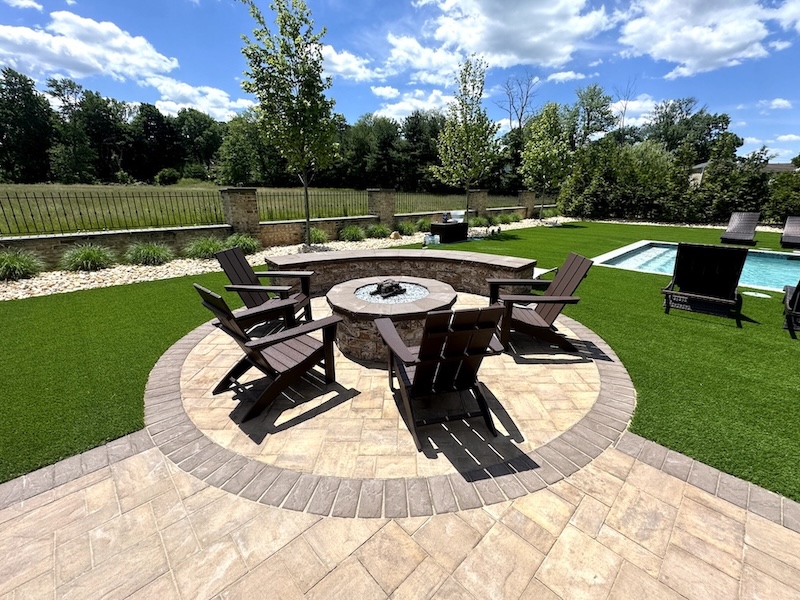
Professional Fire Pit Installation in North Jersey Built to Last Every Season
Schedule Your Free AssessmentA custom fire pit lets you use your backyard well past summer. Whether it's fall nights with family or winter get-togethers, a fire pit adds real value to your outdoor space. This page covers fire pit installation in North Jersey, from material options to base prep, permits, and what to expect when our masonry crew handles the build.
The Right Fire Pit Materials Protect Your Investment for Years
Natural stone, brick, and concrete block are the go-to materials for masonry fire pits in North Jersey. Each of them can withstand repeated exposure to high heat without cracking or degrading. That's especially important when you're burning a fire every weekend from September through March.
A stainless steel liner sits inside the walls and takes the direct heat, so the masonry doesn't have to. Without one, even solid stone can wear down faster than it should.
So that you are aware, standard concrete blocks are not rated for fire pit use. They can crack or pop apart under high temperatures. We see it on older DIY builds in Ridgewood and Montclair frequently. Fire-rated materials cost a bit more upfront, but they last for years without needing replacement.
A full custom fire pit or outdoor fireplace with a seating wall and stone veneer is a meaningful project, and many of our customers use financing to make the timeline work without stretching their budget. We partner with Acorn Finance, which lets you compare pre-qualified offers from multiple lenders in about a minute. The soft credit check will not affect your credit score. Explore financing options.
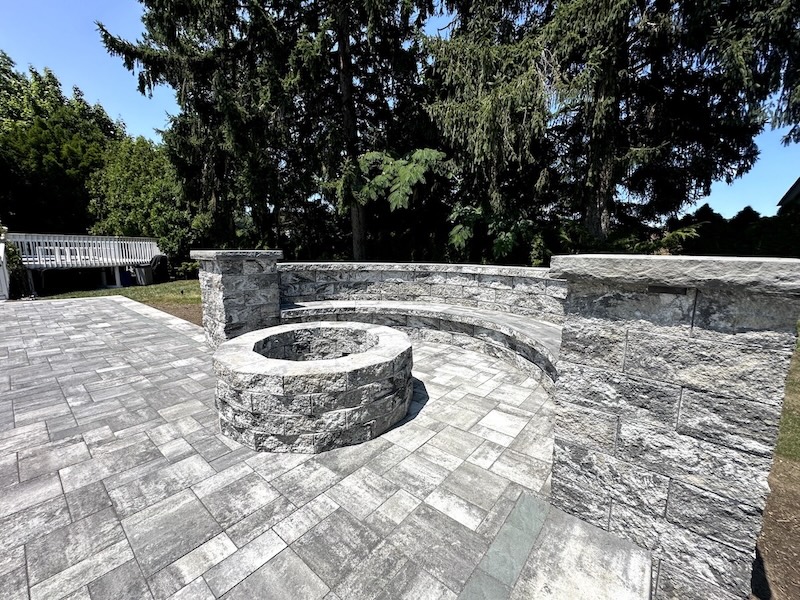
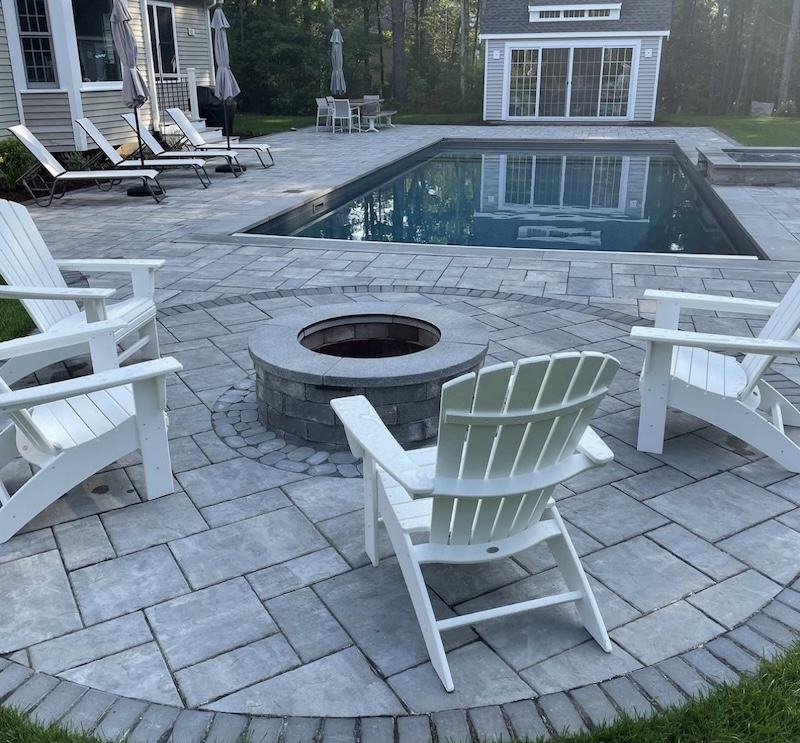
North Jersey Fire Pit Permits and Setback Rules You Need to Know
Permanent masonry fire pits in New Jersey require a permit under the Uniform Construction Code4. Gas-fueled fire pits fall under the same requirement, along with any local zoning rules your municipality enforces. It is not something you want to skip, because a failed inspection can mean tearing out finished work.
For recreational fires, the state sets a 3-foot diameter and 2-foot height limit. Approved fire pit containers need at least 15 feet of clearance from structures and property lines1. If your setup does not meet those standards, the setback jumps to 25 feet.
Keep in mind that North Jersey municipalities can add their own restrictions on top of the state code. Homeowners in Wayne and Wyckoff should check with their local building department before breaking ground. What's allowed in one town may not fly in the next one over.
Gas and Wood-Burning Fire Pits Each Serve a Different Purpose
We build two types of fire pits in North Jersey: gas and wood-burning. The type you choose depends on how you want to use your backyard. Gas runs on natural gas or propane. You press a button, the flame is on, and there is nothing to clean up after. No smoke, no ash, no chopping wood, and no hauling firewood.
People get nostalgic about wood-burning. It's a different atmosphere entirely. But wood smoke can carry fine particle pollution, according to the EPA3, and that can matter when your neighbor's deck is 30 feet away. We hear about it frequently from homeowners in Essex County and parts of Hudson County, where the lots are closer together.
A gas fire pit requires a licensed professional to connect the gas supply lines, a separate trade from the masonry work itself. Our crew handles the coordination between both, so the project can stay on schedule, and you are not chasing down a second contractor on your own.
Proper Base Prep Prevents Cracking in North Jersey's Freeze-Thaw Cycles
What sits underneath a fire pit matters just as much as the stone or brick on top. We begin by excavating several inches below grade and filling the area with compacted crushed stone. That layer gives water somewhere to go instead of sitting under the structure and freezing.
To create a flat, stable surface for the fire pit walls, we add leveling sand on top of the crushed stone. Without it, even a small slope can cause uneven settling over time.
North Jersey's clay-rich soils make base preparation more involved than in sandier regions. The ground here holds moisture, and when that moisture freezes and thaws through winter, it can push a fire pit out of level or crack the mortar joints. We encounter this frequently on properties in the Ramapo Valley and along the Passaic River basin, where water tables tend to be higher. Additional drainage planning may be required for those jobs.
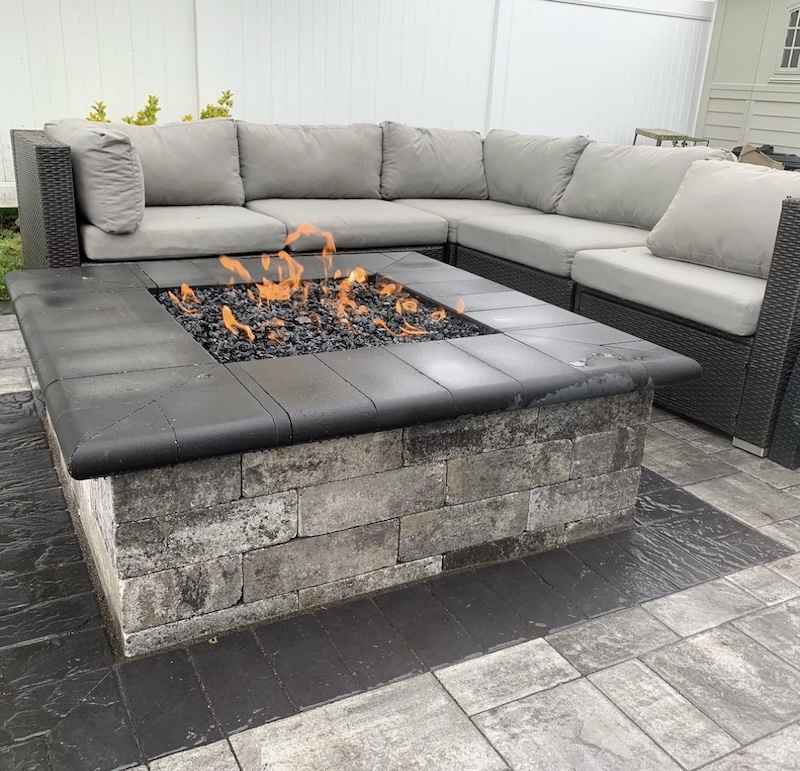
Simple Seasonal Care Keeps a Masonry Fire Pit in Top Shape
A fire pit that gets regular attention between seasons will last significantly longer than one that does not. Most of the work takes less than an hour and requires no special tools.
After each use, let the ashes in a wood-burning fire pit cool completely before removing them. It sounds basic, but leftover ash holds moisture, and moisture trapped against masonry can cause surface damage over time. In winter, a weather-resistant cover keeps snow and ice from sitting directly on the stone and mortar.
Each spring, we recommend inspecting the mortar joints for any cracks that may have developed over winter. North Jersey's freeze-thaw cycles are hard on exposed masonry, and small cracks can turn into loose joints if left alone. Repointing early is a straightforward fix compared to rebuilding a section later. For gas fire pits, check the connections and burners before your first use of the season.
The U.S. Fire Administration2 also recommends keeping fire extinguishing tools nearby during every use. Homeowners from Summit to Mahwah can benefit from scheduling a quick visual inspection each spring before lighting up for the season.
What Do You Need for Fire Pit Installation in North Jersey?
- Check your local municipal fire codes and NJ Uniform Construction Code permit requirements before any work begins.
- Choose a location at least 15 to 25 feet from structures, fences, and property lines.
- Select fire-rated masonry materials such as natural stone, concrete block, or brick, along with a stainless steel liner.
- Excavate the site and install a compacted gravel base, at minimum 6 to 8 inches deep, for proper drainage.
- Build the fire pit walls using heat-resistant mortar with ventilation openings built into the design.
- For gas fire pits, have a licensed professional connect the supply lines before the structure is finished.
- Schedule a final inspection with your local building department before the first use.
Frequently Asked Questions
Do I need a permit to install a fire pit in North Jersey?
Yes, permanent masonry and gas fire pits require a permit under New Jersey's Uniform Construction Code. Contact your local building department before starting any work. Requirements can vary between municipalities, so it is worth confirming the rules for your specific town.
How far does a fire pit need to be from my house in New Jersey?
Approved fire pit containers must be placed at least 15 feet from any structure or property line. Non-approved setups require a minimum of 25 feet. Some North Jersey municipalities enforce stricter setback rules, so check with your local building department to be sure.
What type of fire pit works best in North Jersey's climate?
A masonry fire pit built on a compacted gravel base handles the region's freeze-thaw cycles well. The base allows water to drain instead of pooling and freezing beneath the structure. Gas fire pits are a popular choice for homeowners with smaller lots where smoke and setback distances are a concern.
Can a masonry contractor install a gas fire pit?
A masonry contractor builds the fire pit structure itself. Gas line connections require a licensed plumber or gas professional. Many North Jersey masonry contractors coordinate both trades on a single project so you do not have to manage separate schedules.
When is the best time to install a fire pit in North Jersey?
Late spring through early fall is the best window. The ground is workable, mortar cures properly in warmer temperatures, and you can enjoy the fire pit the same season it is installed. Scheduling earlier in the season helps avoid the summer backlog most contractors deal with.
How do I maintain my masonry fire pit?
Let ashes cool completely before removing them. In winter, use a weather-resistant cover to protect from snow and ice. Each spring, inspect mortar joints for cracks and repoint early if needed. For gas fire pits, check connections and burners before your first use of the season.
See Our Work in Action
Ready for a Fire Pit Installation?
If you've got a project you've been putting off, or something that needs attention now, we're here to help. No pressure, just honest advice.
Financing options are available. See your monthly payment options.
Need A Mason Contractor? Request An Estimate!
Fill out the form and we'll get back to you promptly.
Fire Pit Installation North Jersey
Looking for a fire pit that actually holds up in North Jersey? Our crew handles everything from permits to base prep to the final inspection. Give us a call or text.