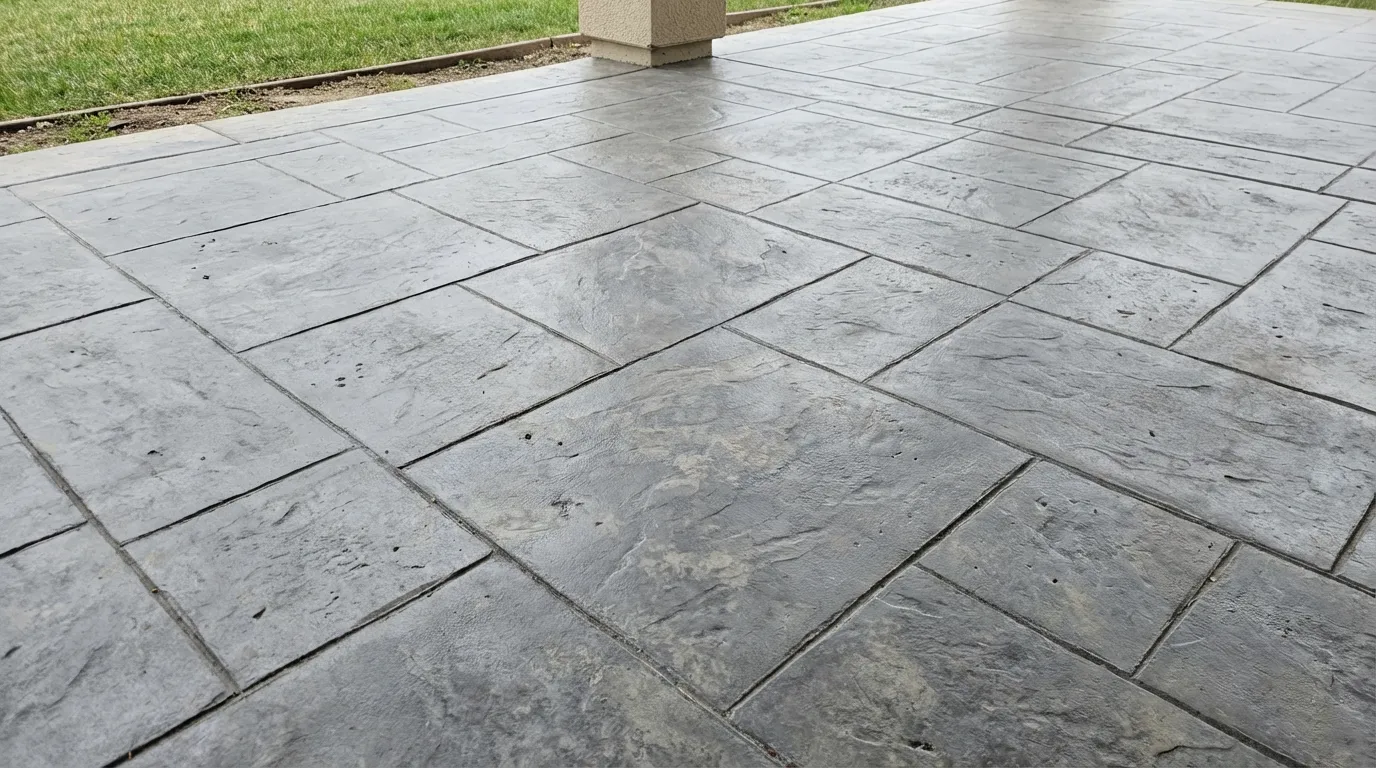
Stamped Concrete Installation in Totowa, NJ Serving North Jersey
Considering stamped concrete? Learn how North Jersey's climate affects durability and why many homeowners choose pavers instead.
Stamped concrete comes up a lot when homeowners start looking at patio or driveway options. It looks great in photos. The patterns can mimic stone, brick, or slate, and the upfront cost is usually lower than natural materials.
But here in North Jersey, there are a few things worth knowing before you commit. The weather puts decorative concrete through a lot. And once it's poured, your options for fixing problems are limited.
We get calls about stamped concrete regularly. And honestly, most of those conversations end with homeowners choosing pavers instead. Not because stamped concrete is bad. It just doesn't always hold up the way people expect it to in this climate.
Why Stamped Concrete Can Be Tricky in North Jersey
The biggest issue is freeze-thaw cycling. Water gets into the surface, freezes, expands, and cracks the slab. Bergen and Passaic counties can see dozens of freeze-thaw cycles in a single winter. That's a lot of stress on a decorative surface.
Once a stamped slab cracks, the repair options aren't great. You can't pull out one section and replace it like you would with a paver. A patch rarely matches the original color or pattern. So a small crack can turn into an eyesore pretty quickly.
Sealing is the other thing. Stamped concrete needs to be resealed every two to three years to protect the color and surface. Skip a cycle and the color fades, the surface gets rough, and moisture starts doing damage underneath. That's ongoing maintenance most homeowners don't expect when they sign up for the project.
Salt is another factor. A lot of homeowners across Essex and Morris counties use rock salt or ice melt on their driveways and walkways during winter. That eats away at stamped concrete faster than standard broom-finish slabs. It pits the surface and breaks down the sealer.
Why Many North Jersey Homeowners Go With Pavers Instead
Pavers handle North Jersey weather differently. Each unit sits individually on a compacted base, so when the ground shifts with freeze-thaw, the pavers move with it instead of cracking.
If one paver does crack or stain, you pull it out and drop in a new one. Ten minutes. No color matching issues, no visible patch. That alone is a big deal for homeowners who want something that looks good long-term without constant upkeep.
There's no resealing schedule either. Pavers can be sealed if you want a wet look or extra protection, but they don't require it the way stamped concrete does. Less maintenance over the life of the patio or walkway.
Pattern and color options go further than most people expect. Brick, cobblestone, herringbone, running bond. Natural stone looks without the natural stone price. You can mix colors and patterns in ways that stamped concrete can't match once the mold is set.
That same logic applies to driveways. Paver driveways can flex with ground movement instead of cracking, and a single damaged paver can be swapped out without redoing the whole surface.
We install a lot of paver patios, walkways, and driveways across Bergen, Passaic, Essex, and Morris counties. If you're comparing the two, we're happy to walk you through both options and help you figure out what fits your property and your budget. Give us a call or text and we can set up a time to take a look.

Pavers vs. Stamped Concrete in North Jersey
| Factor | Stamped Concrete | Pavers |
|---|---|---|
| Freeze-thaw durability | Prone to cracking from repeated cycles | Individual units flex with ground movement |
| Repairs | Patches rarely match the original color or pattern | Pull out one unit, drop in a new one |
| Sealing | Resealing required every 2-3 years | Optional, not required |
| Salt/ice melt damage | Pits the surface and breaks down the sealer | Minimal impact on paver surfaces |
| Upfront cost | Typically lower | Similar or slightly higher depending on material |
| Long-term maintenance cost | Higher due to resealing and limited repair options | Lower, minimal upkeep needed |
| Design flexibility | Patterns set at pour, can't change later | Mix colors, patterns, and layouts anytime |
| Lifespan in NJ climate | 15-25 years with proper maintenance | 30+ years with replaceable units |
| Appearance over time | Color fades without consistent resealing | Holds color, weathers naturally |
Stamped concrete is one finish within our full range of concrete services, and we're happy to talk through what holds up best around here.
Frequently Asked Questions
What is the downside of stamped concrete?
The main downside is cracking, especially in climates with freeze-thaw cycles like North Jersey. Once a stamped slab cracks, repairs are difficult because patches rarely match the original color or pattern. It also needs resealing every two to three years to maintain its appearance, and salt damage during winter can pit the surface and fade the color faster than expected.
Which is better, pavers or stamped concrete?
Pavers tend to perform better in North Jersey's climate. They flex with ground movement instead of cracking, individual units can be replaced if damaged, and they don't require routine resealing. Stamped concrete can look great initially, but the long-term maintenance and repair limitations make pavers a more practical choice for most homeowners in this area.
What is the lifespan of stamped concrete?
A well-installed stamped concrete slab can last 15 to 25 years with proper maintenance. That means resealing on schedule and avoiding heavy salt use in winter. In North Jersey, the freeze-thaw cycles tend to shorten that lifespan compared to milder climates. Pavers, by comparison, can last 30 years or more because damaged units are replaceable without affecting the rest of the surface.
How often does stamped concrete need to be sealed?
Every two to three years. Sealing protects the color and surface from moisture, UV, and salt damage. If you skip a cycle, the surface can start to fade, roughen, and absorb water. That leads to faster cracking in cold weather. It's an ongoing cost and time commitment that many homeowners don't factor in at the start.
What is a cheaper alternative to stamped concrete?
Concrete pavers can be a cost-competitive alternative, especially when you factor in long-term maintenance. The upfront cost may be similar or slightly higher depending on the material, but you avoid the recurring expense of resealing every few years. And if a repair is needed down the road, replacing a few pavers costs far less than patching or resurfacing a stamped slab.
More Concrete Services
Need a Concrete Estimate?
If you've got a project you've been putting off, or something that needs attention now, we're here to help. No pressure, just honest advice.
Need A Mason Contractor? Request An Estimate!
Fill out the form and we'll get back to you promptly.