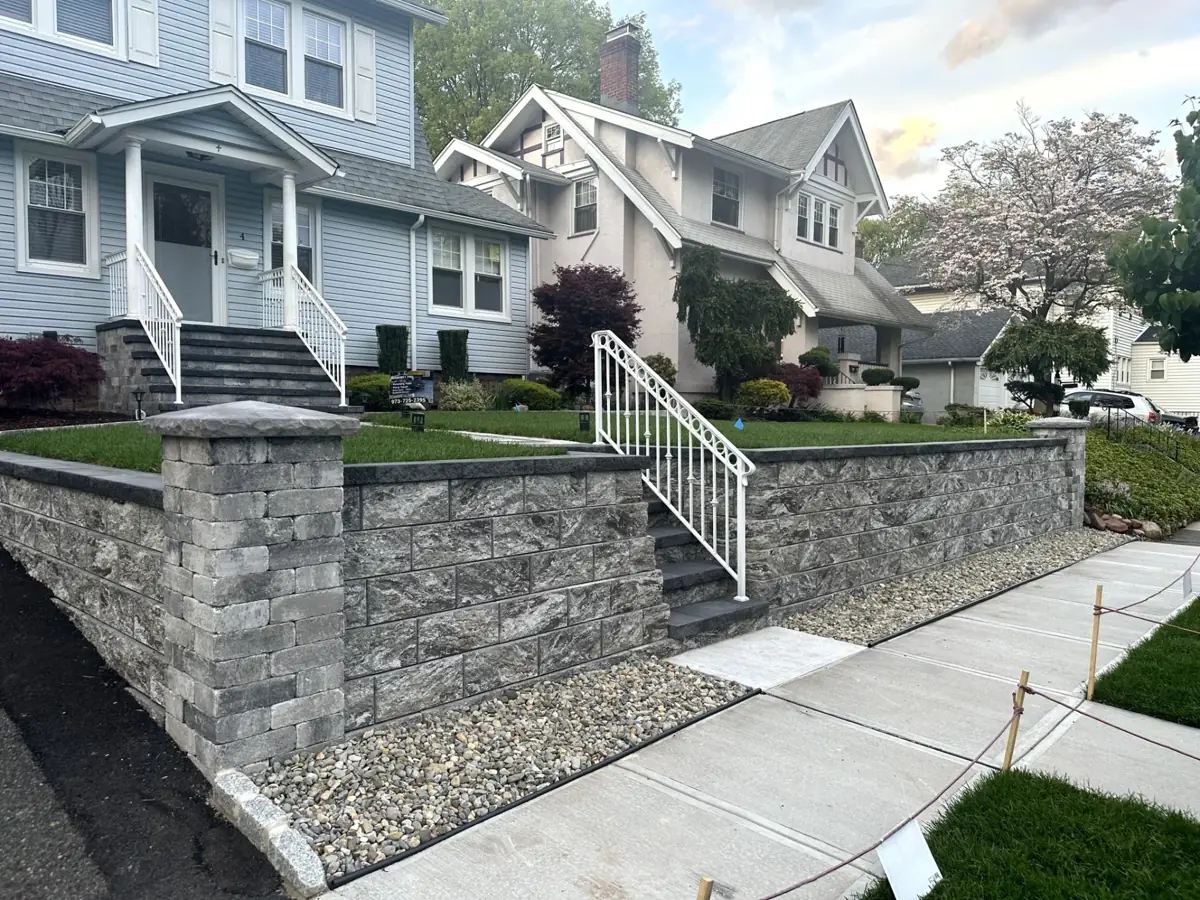
Retaining Wall Installation in Totowa, NJ Serving North Jersey: Strong Walls That Protect Your Property
Got a slope in your yard that's washing away? You're not alone. Sloped lots and hilly terrain are common across North Jersey. A retaining wall holds back the soil, stops erosion, and can turn a steep hillside into usable outdoor space. We handle the permits, design, and construction for properties throughout Passaic, Bergen, Essex, and Morris counties. Our walls meet NJ building codes and are built to stand for decades.
Get a Free Site EvaluationWall height is the number that changes everything on a retaining wall project. Once a wall goes over four feet, it usually has to be designed by an engineer with stamped plans, and it also calls for a lot more backfill, drainage stone, and geogrid running back into the slope. That is not an upsell, it is what keeps the wall standing. We build walls on both sides of that line across Totowa, Wayne, and Little Falls, and if someone is close to four feet we will tell them honestly whether dropping a few inches or stepping the wall makes more sense than paying for the engineering. As a masonry contractor in Totowa, we design every wall around the slope and drainage of your yard.
Proper Drainage Prevents Retaining Wall Failure
Water is the biggest threat to any retaining wall. When it builds up behind the structure, pressure starts to build. That's what causes walls to crack, bulge, or eventually give out altogether.
A lot of walls we get called to look at in Montclair, Wayne, and Morristown have the same problem. Either there's no drainage behind them, or it wasn't done right. The wall looked fine for a year or two, then started leaning. By that point, the damage is done. If your wall is already leaning or cracking, our retaining wall repair work starts by finding out why it moved before anything is rebuilt.
We put gravel behind every wall we build so water has a path to escape. A pipe at the base directs it toward an outlet away from the structure. Fabric keeps soil from working its way into the gravel and clogging things up over time.
North Jersey gets over 45 inches of rain each year. Clay soils in Essex and Morris counties hold onto that moisture, which makes the pressure problem worse. Add in our freeze-thaw cycles, and a wall without proper drainage doesn't stand a chance.
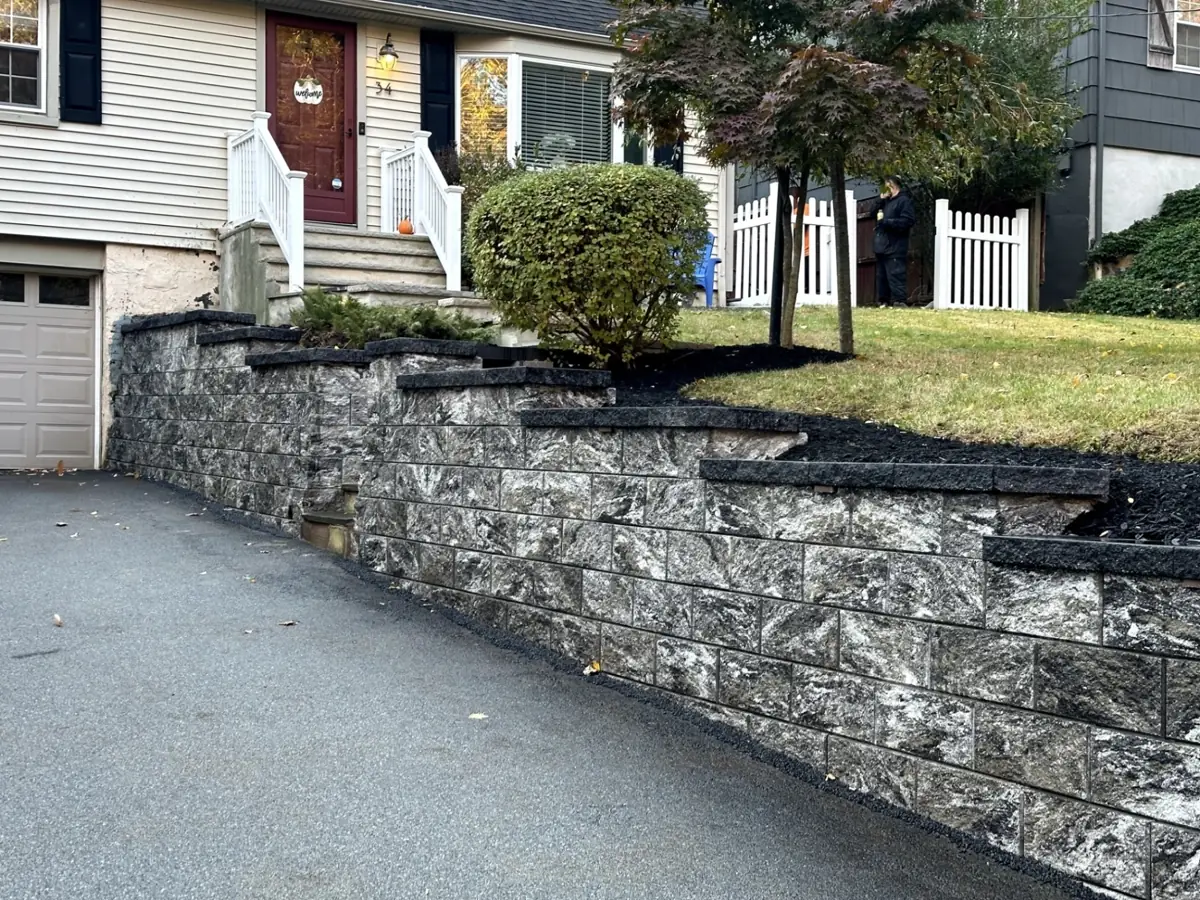
Walls Over Four Feet Require Engineering in North Jersey
Planning a wall that's four feet tall or higher? You'll need an engineer involved. New Jersey requires it. The state follows International Residential Code Section R404.4³, and walls at that height must have a licensed professional engineer sign off on the design.
This applies to a lot of projects in towns like Paramus, Ridgewood, and Hackensack. A homeowner wants to level out a slope for a patio or pool deck. From the yard it doesn't look like much, but the measurements put it over the threshold. You'll need permits from both the building and engineering departments before breaking ground.
A four-foot wall is holding back thousands of pounds of soil, and that load increases when it rains. The engineering determines how the wall handles that pressure without sliding forward or tipping over time. Footing depth, reinforcement, drainage. All of it gets calculated based on the conditions at your property.
Our team works with engineers regularly, and we can help coordinate that side of things. If you're unsure whether your project falls into that category, give us a call or text and we can take a look at the site.
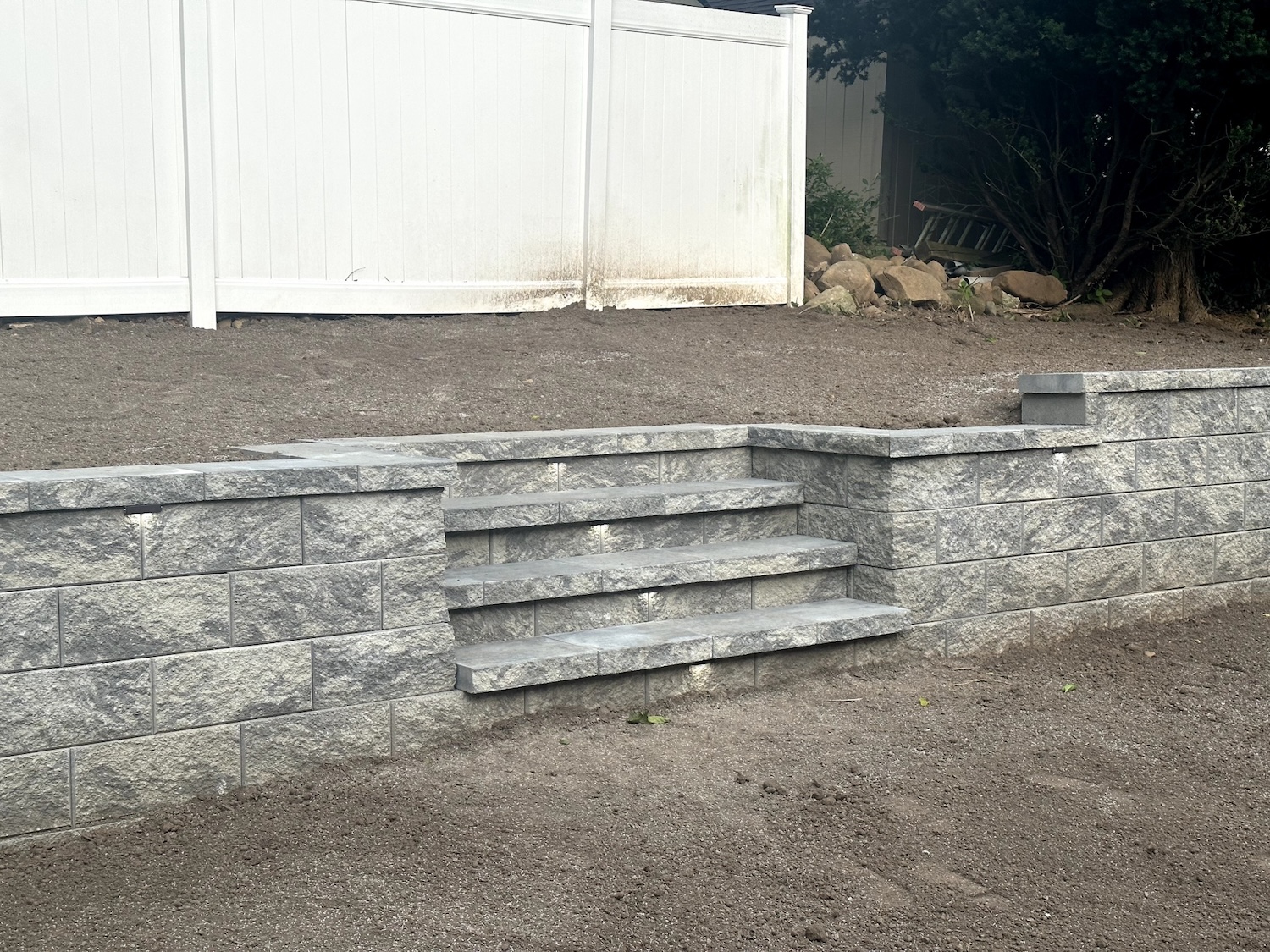
The Right Wall Type Depends on Your Property's Slope
Block, stone, poured concrete, and gabion are common methods for building retaining walls. Which one makes sense for your property? That depends on the slope and the soil.
We primarily build segmental block walls in Bergen and Essex Counties. They work well on residential lots with moderate grades and hold up through our winters without cracking.
Steeper terrain needs something stronger. Out in Ringwood and West Milford, we've had to anchor walls into the hillside with reinforcement¹. The grade out there doesn't forgive shortcuts.
Your yard might need something else entirely. We won't know until we see it. Give us a call or text, and we can walk the property with you.
Professional Installation Extends Wall Lifespan to 50+ Years
Concrete, stone, segmental block, and timber are common materials for retaining walls. How long each one lasts depends on the installation.
Concrete and stone walls typically last 50 to 100 years. Segmental block walls fall in the 25 to 50 year range. Timber walls have the shortest lifespan at 15 to 25 years.
We primarily build with segmental block and stone in Passaic, Bergen, Essex, and Morris Counties. Both hold up well through our freeze-thaw cycles when installed with proper base work and drainage.
We've replaced walls that failed after just a few years. The materials weren't the problem. The base wasn't compacted. The drainage wasn't there. Those are the details that determine whether a wall lasts five years or fifty.
Your wall should outlast you. That's the standard we work toward. Give us a call or text, and we can talk through what a long-lasting wall looks like for your property.
A properly built retaining wall can be a meaningful investment, especially on larger or engineered projects. We offer financing through our partner Acorn Finance so you can spread the cost over time without paying everything up front. Checking your pre-qualified offers will not affect your credit score. Learn more about financing options.
A Solid Base and Footing Keep Your Wall Standing
We primarily install walls in Hawthorne, Madison, and Short Hills where soil testing is often required before construction begins. The results indicate what the ground can handle and whether additional preparation is needed.
New Jersey regulations require footings to extend at least three feet below grade in flood hazard areas.⁴ NCMA guidelines call for a minimum of six inches of compacted gravel base for most residential walls.² We follow both standards.
Walls that skip these steps tend to fail early. We've replaced retaining walls across North Jersey that were only a few years old. The blocks looked fine. The base underneath wasn't compacted, and there was no gravel to speak of.
Your wall sits on top of that base every single day. It carries the full load. Get it wrong and the problems show up fast. Get it right and the wall stays put for decades.
Give us a call, and we can walk through what proper base work looks like for your property.
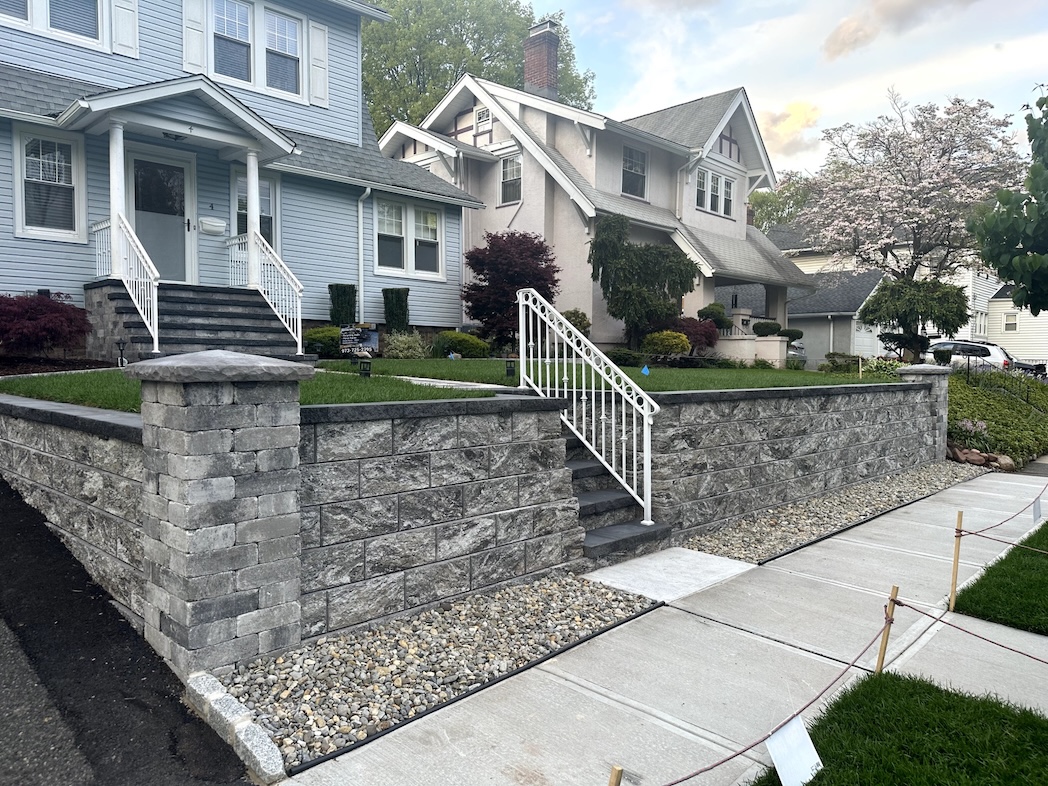
Do I need drainage for a retaining wall in North Jersey?
Yes. Every retaining wall requires drainage to prevent water from accumulating behind it. Water trapped behind a wall exerts pressure, which over time causes cracking, bulging, and failure.
Proper drainage for a retaining wall includes:
- Gravel fill behind the wall to give water a path to escape
- A perforated drain pipe at the base is angled toward a safe outlet
- Filter fabric over the gravel to prevent soil from clogging the system
- Surface grading that directs rainwater away from the wall
Walls over four feet in North Jersey require engineered drainage plans. Clay soils common in Bergen and Passaic Counties hold water and need extra attention during installation.
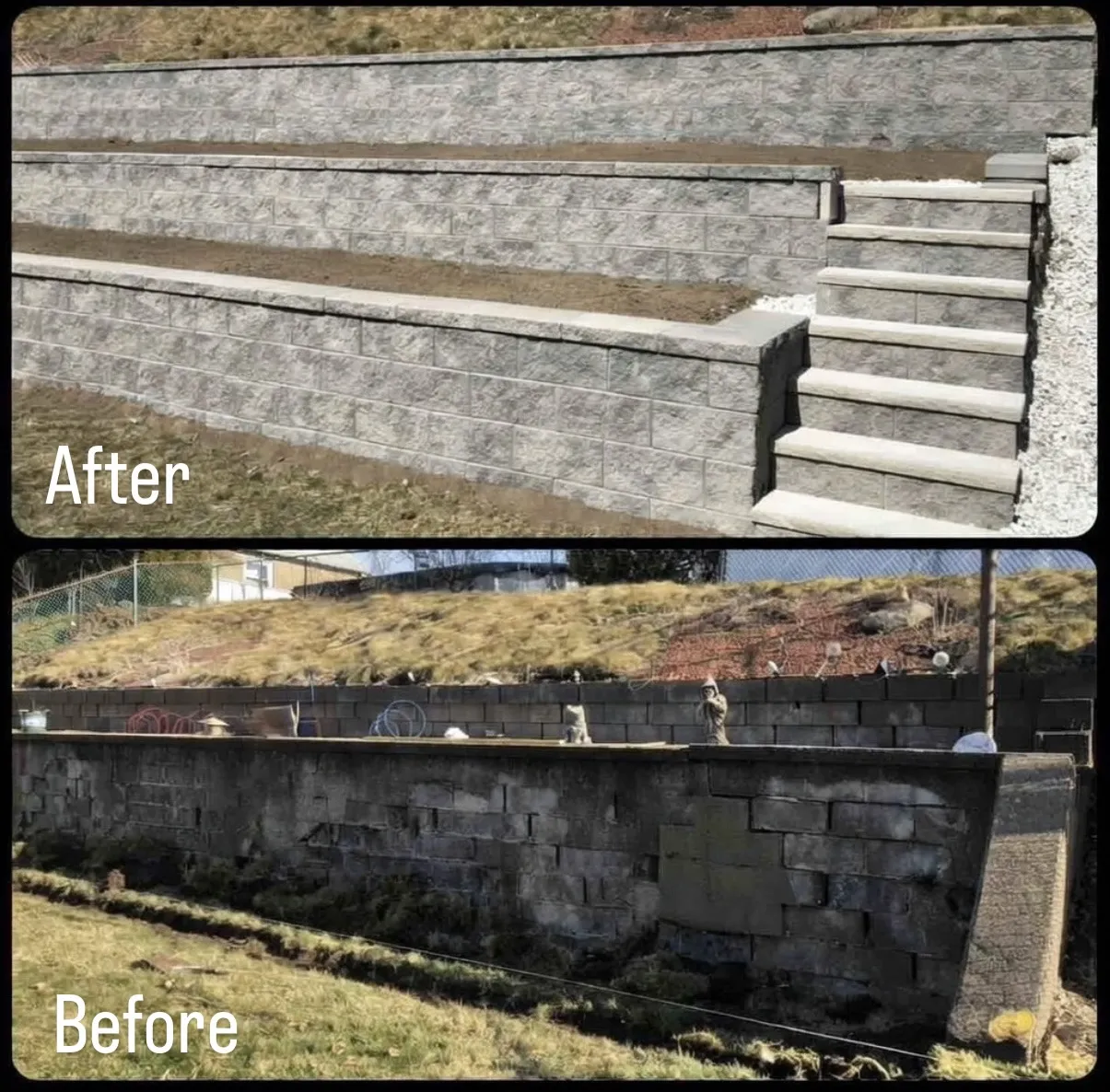
Before & After: Franklin Lakes, Bergen County
A complete retaining wall and staircase rebuild, from crumbling concrete to a clean, structurally sound installation.
Watch Our Retaining Wall Projects Work in Action
Frequently Asked Questions
Do I need a permit for a retaining wall in North Jersey?
Walls under four feet typically require a zoning permit only. Walls four feet or taller require construction permits and engineering approval in most New Jersey municipalities. Check with your local building department before starting.
How deep should a retaining wall footing be in North Jersey?
Footings typically extend at least three feet below grade for stability. Frost line depth and flood hazard regulations in New Jersey affect the final requirement. We evaluate each property and follow state and local codes.
What type of retaining wall lasts longest?
Concrete and natural stone walls last 50 to 100 years. Segmental block walls last 25 to 50 years or more. Timber walls have the shortest lifespan at 15 to 25 years.
Can a retaining wall increase my home value?
Yes. A well-built retaining wall can add value by creating usable outdoor space and improving curb appeal. Buyers in North Jersey often view quality hardscaping as a sign that the property has been well maintained.
What causes retaining walls to fail?
Poor drainage, inadequate base preparation, lack of reinforcement, and improper soil compaction are the primary causes. Most failures we see trace back to shortcuts during installation.
What are alternatives to a retaining wall?
Options include terracing with multiple smaller walls, slope planting with deep-rooted vegetation, gabion baskets, geocell systems, and regrading the property. The right choice depends on the slope, soil, and how you intend to use the space.
Ready for a Retaining Wall That Lasts?
If you've got a project you've been putting off, or something that needs attention now, we're here to help. No pressure, just honest advice.
Financing options are available. See your monthly payment options.
Need A Mason Contractor? Request An Estimate!
Fill out the form and we'll get back to you promptly.