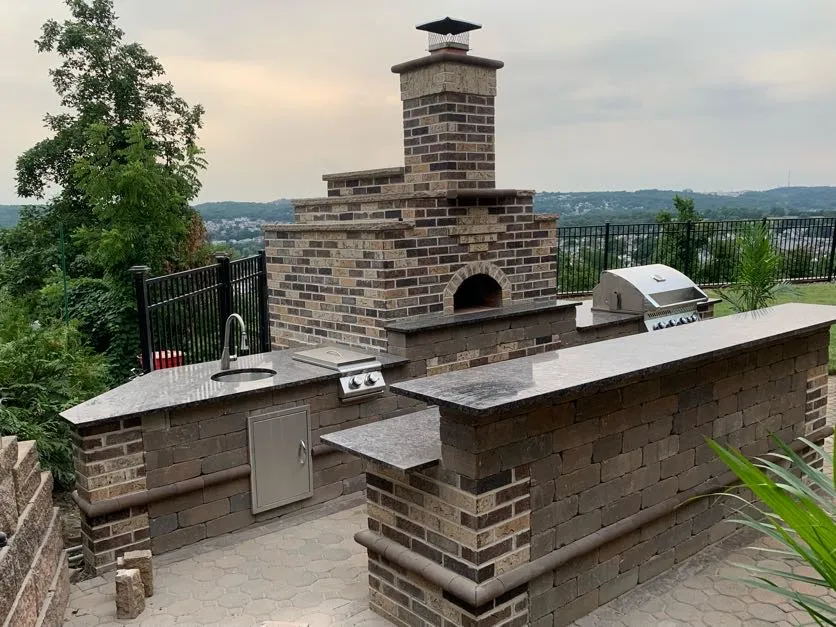
Outdoor Kitchen Installation in Totowa, NJ Serving North Jersey: Built to Last Every Season
Custom masonry islands, stone veneer, and fire features designed to handle NJ weather and weekend hosting.
Call or Text (973) 725-2395An outdoor kitchen extends your living area and adds real value to your property. But in North Jersey, where freeze-thaw cycles, heavy rain, and humidity are part of the deal, cutting corners leads to cracked countertops and crumbling masonry within a few years. We build outdoor kitchens the same way we build everything else as a masonry contractor based in Totowa: on a solid base.
We build outdoor kitchens with reinforced masonry foundations[4], proper footings below the frost line, and materials rated for our climate. No shortcuts that fall apart after the first winter.
Masonry Foundations Built for NJ Weather
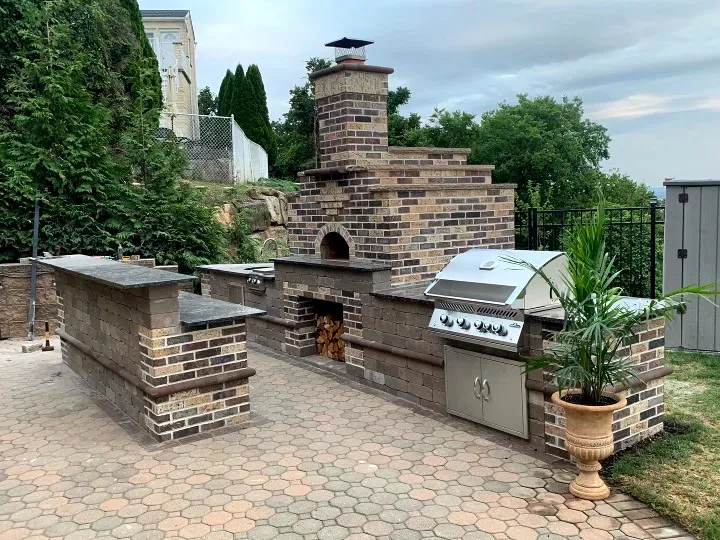
Every outdoor kitchen we build starts with concrete masonry block (CMU) construction. Per NJ DCA standards[2], footings must extend 36 inches below grade to get below the frost line.
We follow CMHA TEK 05-03A guidelines[4] for reinforced masonry, including vertical rebar and grouted cells at corners and beside openings. This prevents the shifting and cracking that plagues DIY and prefab outdoor kitchens.
The result: a structure that handles thousands of freeze-thaw cycles without moving.
Building Permits & Code Compliance
Most outdoor kitchens in North Jersey require permits, especially when gas, plumbing, or electrical work is involved. Per NJ Residential Code[5], any structure with utility connections triggers subcode inspections.
Towns in Morris, Bergen, and Essex counties each have their own zoning requirements. Morristown may require a 15-foot setback from property lines; Wayne might allow 10 feet. Some municipalities restrict outdoor kitchen placement near pools or property boundaries.
We handle the permit process as part of our service. We know the inspectors, the requirements, and how to get approvals without delays.
Layout & Sizing Guidelines
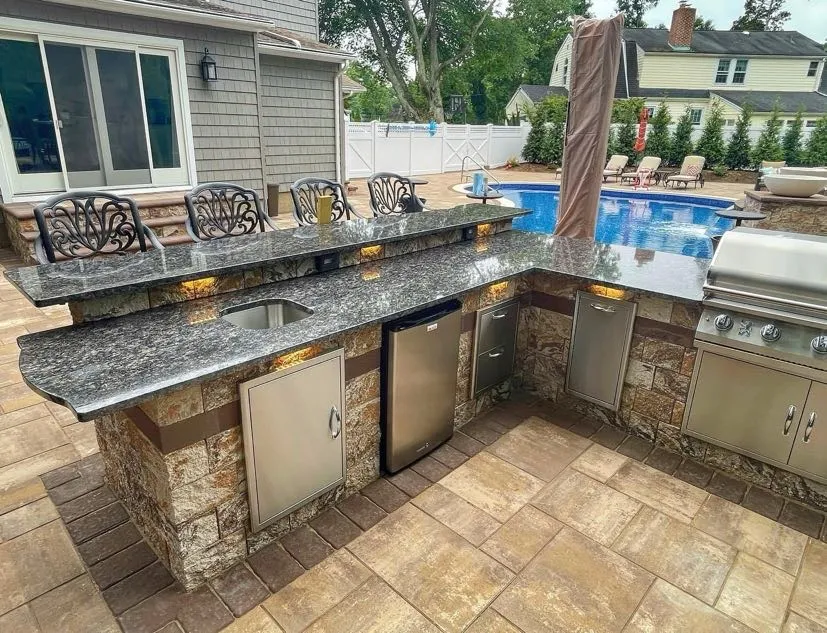
NKBA kitchen planning guidelines[3] recommend 42 inches of aisle space for one cook, 48 inches for two. Landing areas of at least 15 inches should flank each side of the cooking surface.
For typical North Jersey backyards, we often recommend L-shaped layouts for properties in Wyckoff and Glen Rock, U-shaped configurations for larger lots in Chatham and Madison. Most suburban lots accommodate an 8-12 foot island comfortably.
We design layouts that maximize function without overwhelming your outdoor space, leaving room for seating, landscaping, and foot traffic.
Why Hire a Licensed Contractor?
DIY outdoor kitchens fail for predictable reasons: skipped footings, materials not rated for freeze-thaw, poor drainage, and unpermitted gas work. According to This Old House[7], these shortcuts lead to expensive repairs within 3-5 years.
Bergen and Passaic counties have clay-heavy soil that shifts seasonally. Without proper footings and drainage, even well-built structures can heave and crack. We understand local soil conditions and build accordingly.
A licensed mason ensures your kitchen is built to code, properly permitted, and designed to last decades, not just a few summers.
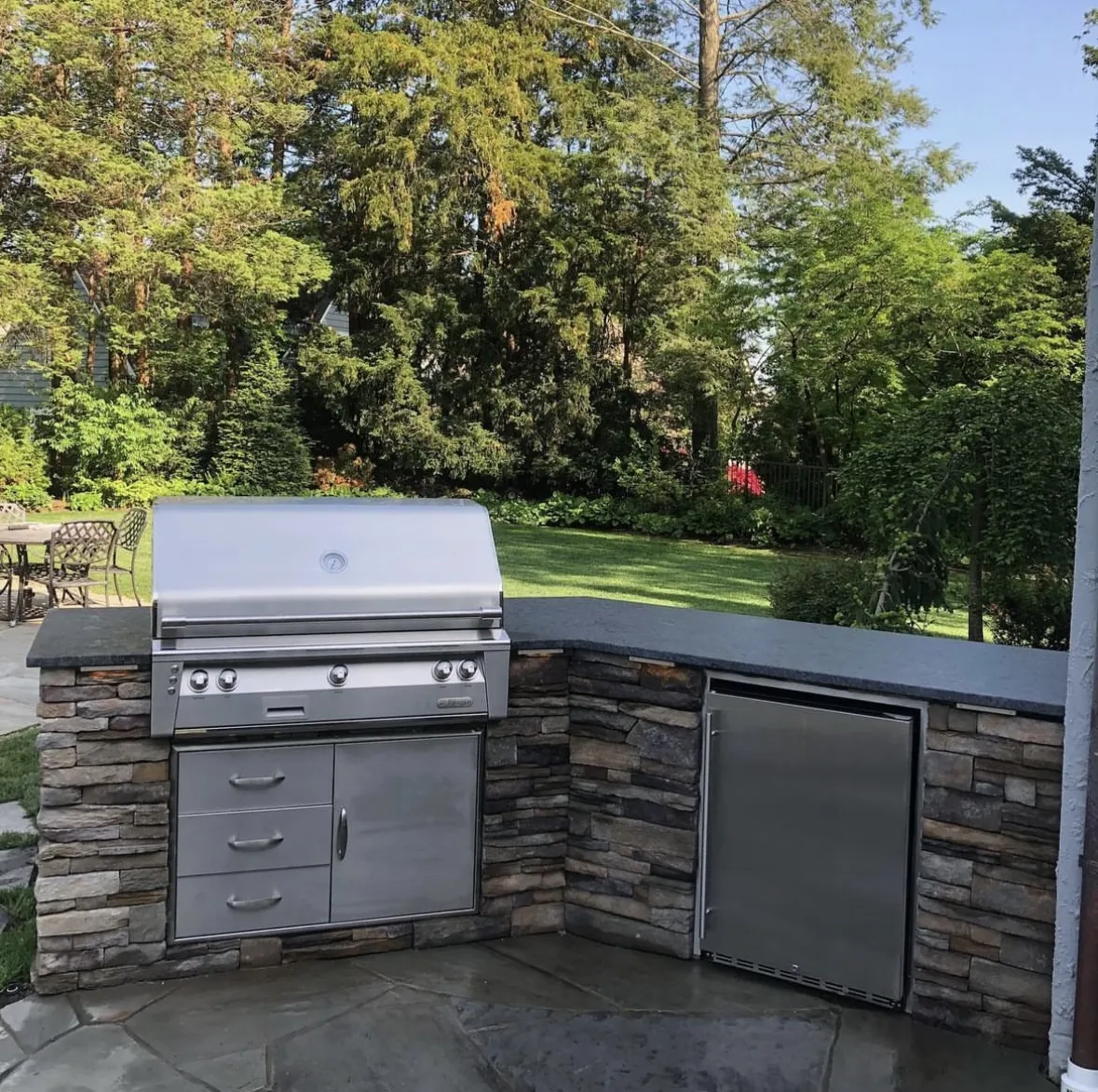
Value & Return on Investment
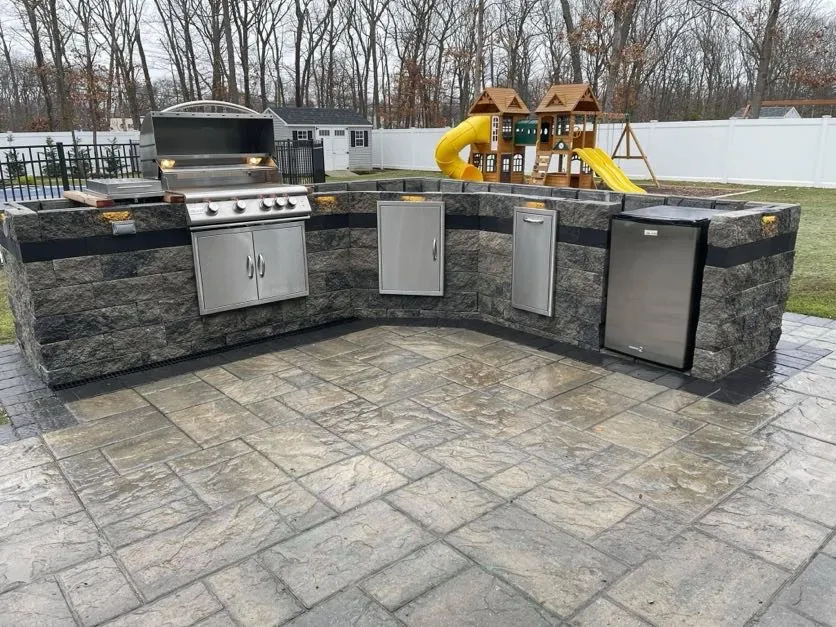
The NAR 2023 Remodeling Impact Report[1] shows outdoor kitchens recover 100% of their cost at resale, with a "Joy Score" of 9 out of 10, one of the highest-rated home improvements.
In Bergen and Essex counties, buyers expect move-in-ready outdoor spaces. Properties in Maplewood, Livingston, and Short Hills with quality outdoor kitchens sell faster and command premium prices.
Beyond resale value, you're adding usable living space for entertaining, family dinners, and weekend cooking. That's functionality that pays dividends every season.
An outdoor kitchen is one of the larger investments you can make in your backyard, and we make it easier with financing options through our partner Acorn Finance. Pre-qualification uses a soft credit check, so checking your offers will not affect your credit score. Explore financing for your outdoor kitchen project.
Footing Requirements for NJ Outdoor Kitchens
Every outdoor kitchen we build follows this process to ensure long-term stability:
Check Local Requirements
Verify municipality's footing depth and zoning setbacks
Determine Frost Line
36 inches below grade per NJ DCA standards
Excavate Properly
Dig below frost line to undisturbed soil
Pour Reinforced Footings
Concrete footings sized for masonry load with rebar
Set First Course
Lay first course of block into footing, verify level
See Our Outdoor Kitchens In Action
Frequently Asked Questions
Do I need a permit to install an outdoor kitchen in North Jersey?
Yes, most North Jersey municipalities require permits for outdoor kitchens, especially when gas lines, electrical, or plumbing are involved. Towns like Wayne, Montclair, and Glen Rock each have specific zoning and setback requirements. We handle the permit process as part of our service.
How far should an outdoor kitchen be from my house in North Jersey?
Most NJ towns require outdoor kitchens to be at least 10 feet from the main structure, though this varies by municipality. Fire codes and property line setbacks also apply. We verify your local requirements before design begins.
Do outdoor kitchens in North Jersey need footings?
Yes. New Jersey's 36-inch frost line means outdoor kitchen structures need proper footings to prevent shifting and cracking. We pour reinforced concrete footings below the frost line for every masonry kitchen we build.
Should I hire a contractor or DIY my outdoor kitchen?
DIY outdoor kitchens often fail within a few years due to skipped footings, improper drainage, or materials that can't handle freeze-thaw cycles. Hiring a licensed mason ensures your kitchen is built to code, properly permitted, and designed to last decades.
What size outdoor kitchen works for a typical North Jersey backyard?
Most North Jersey backyards accommodate an 8-12 foot island or L-shaped layout. NKBA guidelines recommend 42 inches of aisle space for one cook, 48 inches for two. We design layouts that maximize function without overwhelming your outdoor space.
Ready to Get Started?
If you've got a project you've been putting off, or something that needs attention now, we're here to help. No pressure, just honest advice.
Financing options are available. See your monthly payment options.
Need A Mason Contractor? Request An Estimate!
Fill out the form and we'll get back to you promptly.