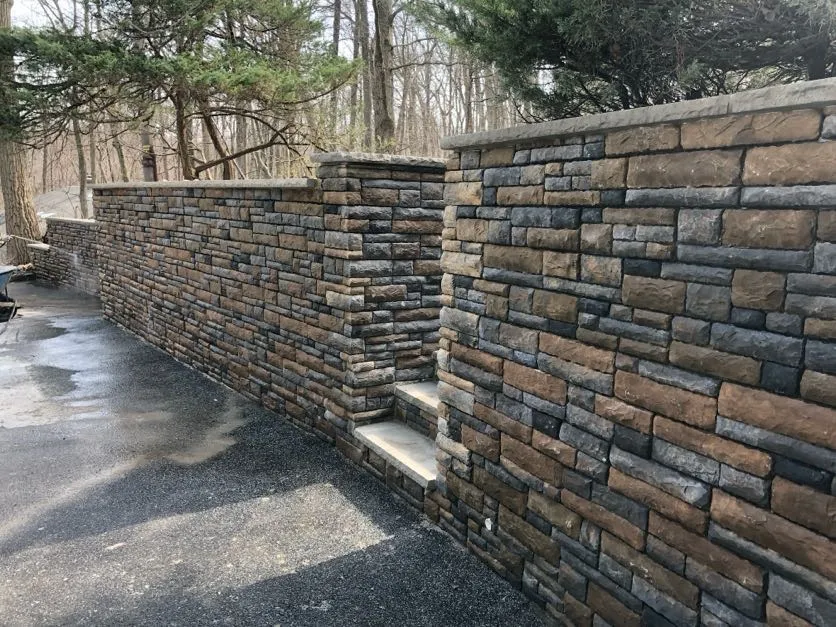
Custom Hardscaping and Masonry for Bergen County Homes, from Ridgewood to Fort Lee
Serving all 70 municipalities with expert hardscape and masonry work built for North Jersey conditions.
Bergen County1 stretches from the Palisades Cliffs to the Ramapo foothills. It comprises 70 municipalities and has some of the most diverse housing stock in North Jersey. You'll find prewar Tudors in Ridgewood, sitting a few towns over from split-levels in Paramus.
This page covers the masonry installations Bergen County homeowners ask us about most. Paver patios. Walkways and driveways. Retaining walls on sloped lots. Outdoor fireplaces and full kitchen builds. Basement waterproofing and patio waterproofing. Each one has its own set of local factors that affect how the job is done right.
Bergen County's 70 boroughs and townships each have their own building department. Permit forms, fees, and turnaround times change from one town to the next. The soil here adds another layer. Boonton and Rockaway series clays, formed from glacial till, retain more water and become harder through freeze-thaw cycles. A crew that doesn't account for that is setting up a callback.
Tight lot lines in towns like Bergenfield, Teaneck, and Dumont also affect how we stage equipment and coordinate around your neighbors. These are things you learn from working in the county, not from reading about it.
We're available for on-site walkthroughs across Bergen County. Eastern Palisades communities to the western Ramapo foothills. Send us a few photos or give us a call or text and we can go from there.
Thinking About a Project? Check Availability
Call or text us directly or scroll down to request your free estimate.
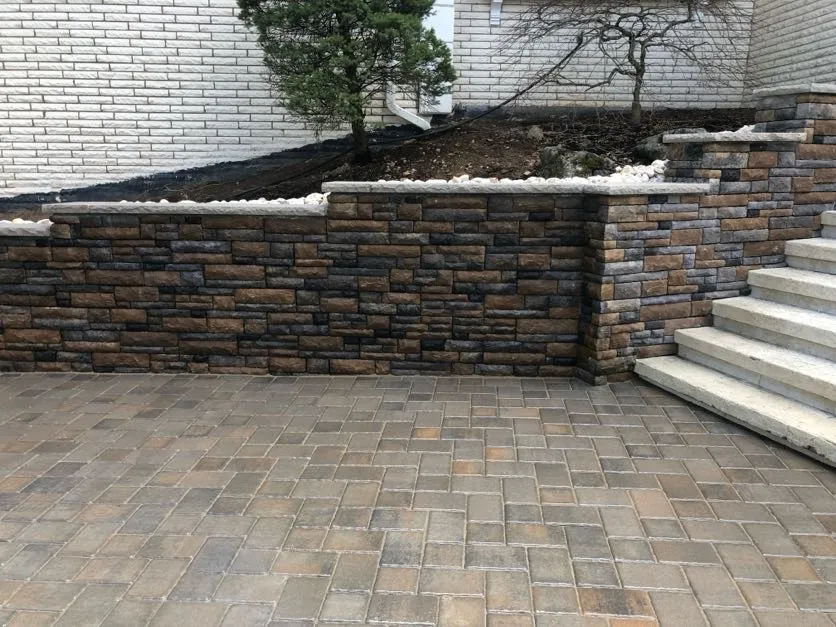
Paver Patios and Walkways That Survive 35+ Freeze-Thaw Cycles Each Winter
Thinking about replacing that cracked concrete patio? If you own a Colonial in Glen Rock or a Tudor in Ridgewood, you already know what North Jersey winters can do to a slab. One season of freeze-thaw is enough to open up cracks. A few more, and the surface begins to break apart.
Interlocking pavers handle this differently. Each unit moves independently through freeze-thaw cycles instead of cracking as a single piece. If one paver is damaged, remove it and replace it. No tearing out the whole surface.
Bergen County sees roughly 48 inches of rain per year2 and anywhere from 35 to 45 freeze-thaw cycles each winter. That combination is hard on any outdoor surface. The difference between a patio that holds up and one that doesn't usually comes down to what's underneath it.
For Bergen County's clay-heavy soils, we install a compacted gravel base several inches thick. That base prevents water from pooling under the pavers and allows the surface to flex without shifting. We finish the joints with polymeric sand, which locks units together and keeps weeds from pushing through.
If you're still in the budgeting phase, here's a breakdown of what a paver patio costs in North Jersey and the factors that move the number.
Retaining Walls Engineered for Bergen County's Glacial Clay Soils
Sloped yards are common in western Bergen County. Mahwah, Ramsey, Saddle River, Franklin Lakes. Many of these properties sit on land that drops several feet between the house and the property line. Without proper wall construction, that soil moves.
Bergen County's Boonton series soils formed from glacial till containing shale, basalt, and diabase3. They're acidic and clay-heavy. When it rains, they hold water. When that water freezes, the soil expands and pushes against anything in its path. A retaining wall that doesn't account for this kind of lateral pressure will lean, crack, or fail within a few years.
Walls over 4 feet typically require engineered drawings and municipal review in most Bergen County boroughs. That's not red tape for the sake of it. At that height, the soil pressure behind the wall can be significant, and the footing, drainage, and reinforcement all need to be sized correctly.
Properties near the Ramapo Valley County Reservation in Mahwah and the Campgaw Mountain area often have steeper grades and heavier clay content. We've worked with homeowners in Saddle River's larger estate lots where a single wall project involved managing grade changes across 50 or more linear feet.
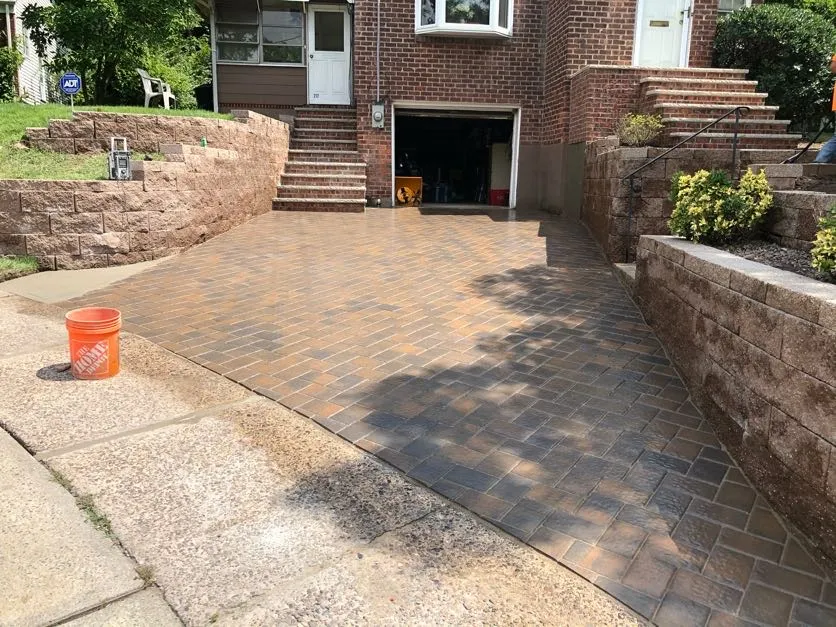
Outdoor Kitchens and Fireplaces Built to Handle North Jersey's Four-Season Weather
Outdoor kitchen projects have been in high demand in the past few years. Homeowners in Paramus, Fair Lawn, and Teaneck are investing in backyard space they can actually use from April through November. Families near Overpeck County Park and Van Saun County Park tend to spend a lot of time outside, and a well-built outdoor kitchen makes that easier.
Masonry-built outdoor kitchens and fireplaces use stone, brick, and concrete block. These materials handle summer heat above 95 degrees and winter lows well below freezing. Prefabricated metal alternatives don't perform as well in this climate.
Here's the thing most people don't think about until it's too late: winterization. All plumbing lines, grout joints, and stone countertops need annual sealing before the first frost. Without it, moisture gets into small cracks and expands when it freezes. That causes spalling on stone surfaces and cracked grout lines by spring.
Spring and early fall are the best windows for concrete curing on these projects. Mid-project winter pauses add cost and timeline delays. If you're thinking about a kitchen or fireplace build, planning around the weather saves you money.
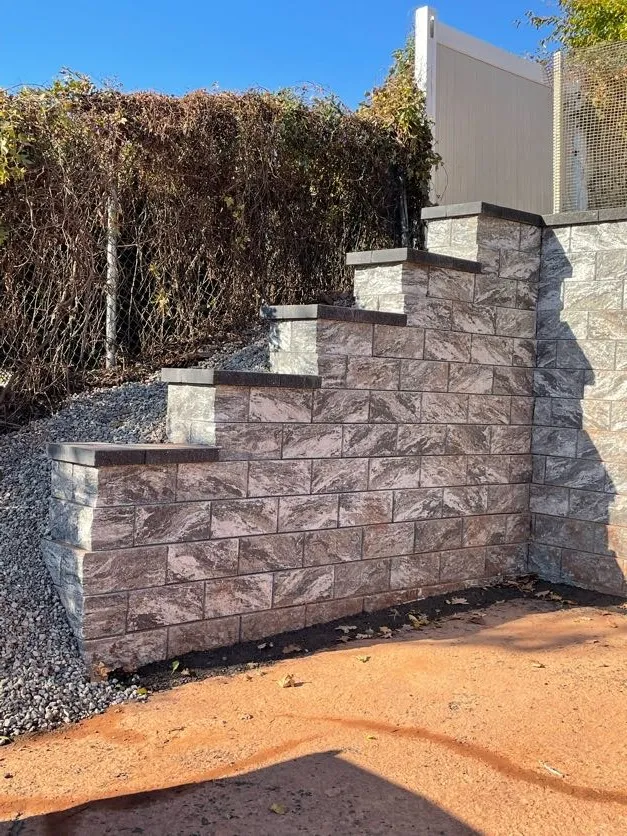
Driveway Installations Matched to Bergen County Home Styles and Lot Sizes
Many Bergen County driveways are asphalt that has passed its life expectancy. Cape Cods in Bergenfield, Colonials in River Edge, and split-levels in Dumont. The asphalt is installed, lasts 15 to 20 years, and then begins to crumble at the edges. Road salt can speed that up. A concrete driveway is a durable alternative that stands up to North Jersey winters when poured correctly.
Paver driveways outlast asphalt in this climate. They resist salt damage, and they're repairable. If a tree root pushes up a section, you pull those pavers, fix the base, and reset them. With asphalt, a root heave means patching or repaving.
Many Bergen County boroughs have narrow lot frontages. In Bergenfield, Dumont, and Hackensack, 50 to 75 feet of frontage is common. That means careful layout planning so the driveway works with the house, the sidewalk, and whatever space is left for landscaping.
Some towns require a soil erosion certification from the Bergen County Soil Conservation District in Oradell4 for projects that disturb a significant amount of ground. We handle permit coordination as part of the project, so you don't have to chase paperwork between offices.
Questions About Permits? We Can Help
Give us a call or text, or fill out the form below, and we handle permits across all 70 Bergen County towns.
What Bergen County Permit Rules Mean for Your Masonry Project
Bergen County has 70 municipalities5. Each one runs its own building department with its own forms, fees, and review timeline. There is no single county-wide permit office for residential construction. Every project goes through the borough or township where the property sits.
All 70 municipalities follow the New Jersey Uniform Construction Code6. The code itself is consistent across the state, but how quickly your application gets reviewed and what supporting documents are required can vary from town to town.
Not every masonry project needs a permit. A standard at-grade paver patio usually does not. But retaining walls over 4 feet, outdoor kitchens with gas or electric hookups, and any structural masonry work will trigger a UCC review. Hackensack, Teaneck, and Fair Lawn each have distinct requirements and turnaround times.
Projects involving soil disturbance may also require Bergen County Soil Conservation District certification. We know the process in each municipality we work in, and we can tell you upfront whether your project needs a permit and what the timeline looks like.
Serving Properties Across Bergen County, from Hackensack to Mahwah
Bergen County covers a lot of ground. The eastern edge runs along the Hudson River waterfront: Fort Lee, Edgewater, Palisades Park. The suburban center includes Paramus, Hackensack, and Teaneck. Head west and you reach the wooded hills near Mahwah, Ramsey, and Saddle River, close to the 1,373-acre Campgaw Mountain Reservation7.
That geographic spread means the soil conditions, lot sizes, and home styles change as you move across the county. A paver patio in Paramus near Van Saun County Park sits on different ground than a retaining wall project in Saddle River. The permitting process is different too. Each municipality has its own building department, its own forms, and its own review speed.
We've worked on properties along the Kinderkamack Road corridor, near Ridgewood's prewar downtown, and on estate lots in the Saddle River and Upper Saddle River area. That kind of county-wide experience means we already know what to expect when we pull up to your property.
Bergen County Municipalities We Serve
Ready to Start? Schedule Your Estimate
If you've got a project you've been putting off, or something that needs attention now, we're here to help. No pressure, just honest advice.
Need A Mason Contractor? Request An Estimate!
Fill out the form and we'll get back to you promptly.
See Our Bergen County Work in Action
Frequently Asked Questions
Do I need a permit for a paver patio in Bergen County?
Most Bergen County municipalities do not require a permit for a standard at-grade patio. However, if your project includes retaining walls, electrical, or gas lines, a UCC review may be required. Always confirm with your borough's building department before starting work.
What is the best time of year to start a masonry project in Bergen County?
Spring and early fall offer the best conditions for concrete curing and base compaction. April through May and September through October are the most productive months. Summer work is possible with schedule adjustments. Winter pours require extra precautions and typically cost more.
How do Bergen County's clay soils affect paver and retaining wall installations?
Clay-rich glacial soils like the Boonton and Rockaway series retain water and heave during freeze-thaw cycles. Without a properly compacted gravel base and geotextile fabric, pavers will settle and walls will shift. Base preparation is the most important step in any hardscape project on Bergen County soil.
How long does an outdoor kitchen last in New Jersey weather?
A masonry outdoor kitchen with annual sealing and proper winterization can last 20 to 30 years. Key maintenance includes sealing stone countertops before the first frost, protecting plumbing lines from freezing, and covering appliances with breathable, vented covers rather than plastic tarps.
Which Bergen County towns have the strictest masonry permit requirements?
Requirements vary across all 70 municipalities. Larger towns like Hackensack, Teaneck, and Fort Lee tend to have more detailed review processes. Any project involving walls over 4 feet or gas and electric hookups will generally require a permit regardless of which borough you're in.
Will heavy equipment damage my lawn or driveway during installation?
Tight lot lines in boroughs like Bergenfield, Dumont, and Teaneck require careful staging plans. We use plywood sheeting to protect lawns and run smaller equipment like mini excavators and walk-behind compactors on most Bergen County residential lots. Access and staging are part of every project plan we put together.