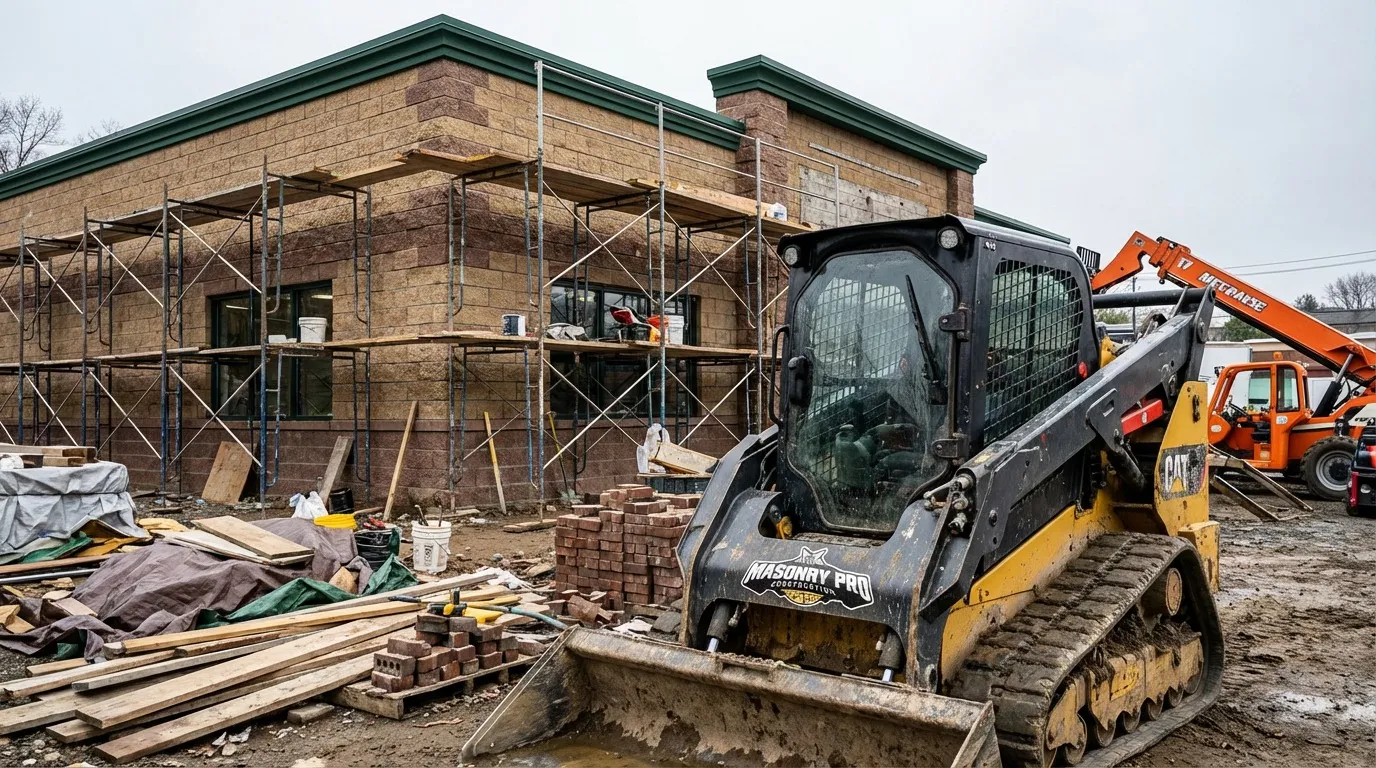
Commercial Masonry & Concrete in Totowa, NJ Serving North Jersey
Built to Last
In North Jersey, commercial buildings face tough winters, freeze-thaw cycles, and strict building codes. Commercial masonry and concrete covers CMU wall construction, concrete slabs, block foundations, and structural repairs.
We work on warehouses, retail strip centers, municipal buildings, schools, and parking structures. Most projects start with a site assessment and permit review.
What Is Commercial Masonry & Concrete in North Jersey?
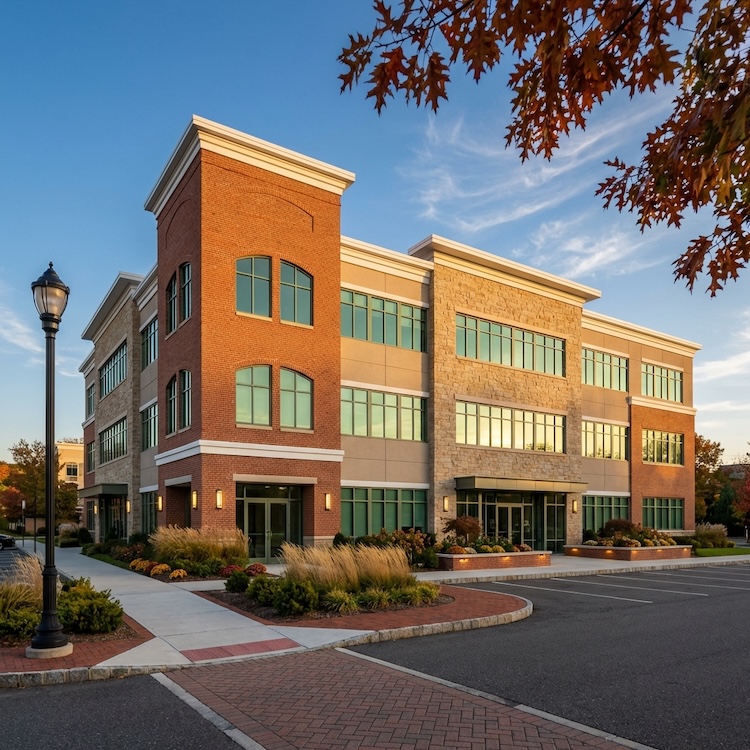
Commercial masonry and concrete covers the construction, repair, and renovation of structural walls, slabs, and foundations using brick, block, stone, or poured concrete. In North Jersey, commercial masonry contractors work on warehouses, schools, retail centers, and mixed-use buildings. Commercial clients get the same crew and standards as every other job from our Totowa, NJ masonry contractor team.
Licensed masons follow state and local building codes on every project.

Common Services
CMU block walls, concrete flatwork, structural masonry repair
Materials Used
Concrete masonry units (CMU), reinforced block, poured concrete
Key Compliance
NJ building code, ASTM material standards, OSHA safety rules
CMU Walls Are the Foundation of Commercial Construction
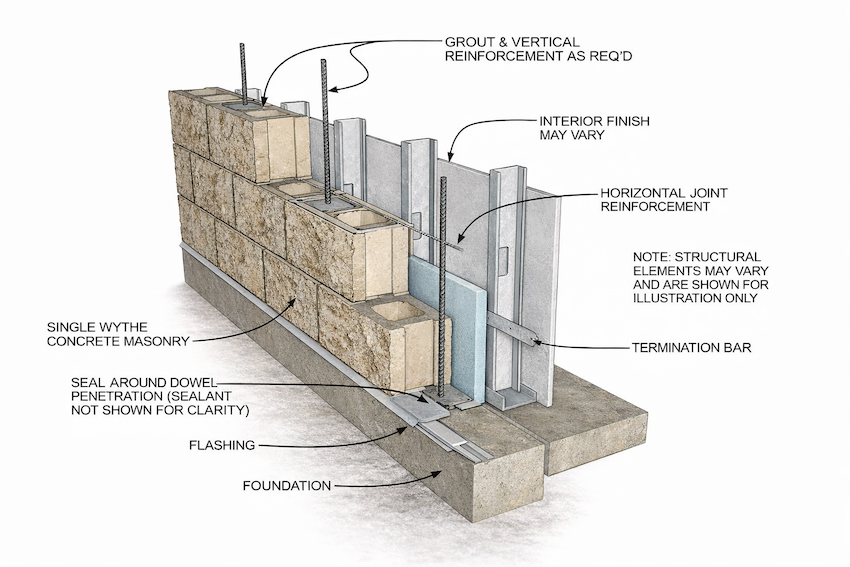
Concrete masonry units are the standard choice for load-bearing wall construction in North Jersey commercial projects. One material handles fire resistance, sound control, and structural load requirements at the same time.
Wayne and Passaic County projects frequently spec reinforced CMU for foundation and below-grade applications. For material standards, we follow ASTM International specifications throughout every project.

CMU Technical Specs
- Minimum compressive strength: 2,000 psi per ASTM C90
- Low-absorption, high-density profile for below-grade walls
- Fire resistance, sound control, and structural load capacity
- Standards per Concrete Masonry & Hardscapes Association
Three Types of Masonry Used in North Jersey Commercial Projects
Not every commercial project calls for the same material. Understanding the differences helps match the right approach to your structural and aesthetic needs.
Brick Masonry
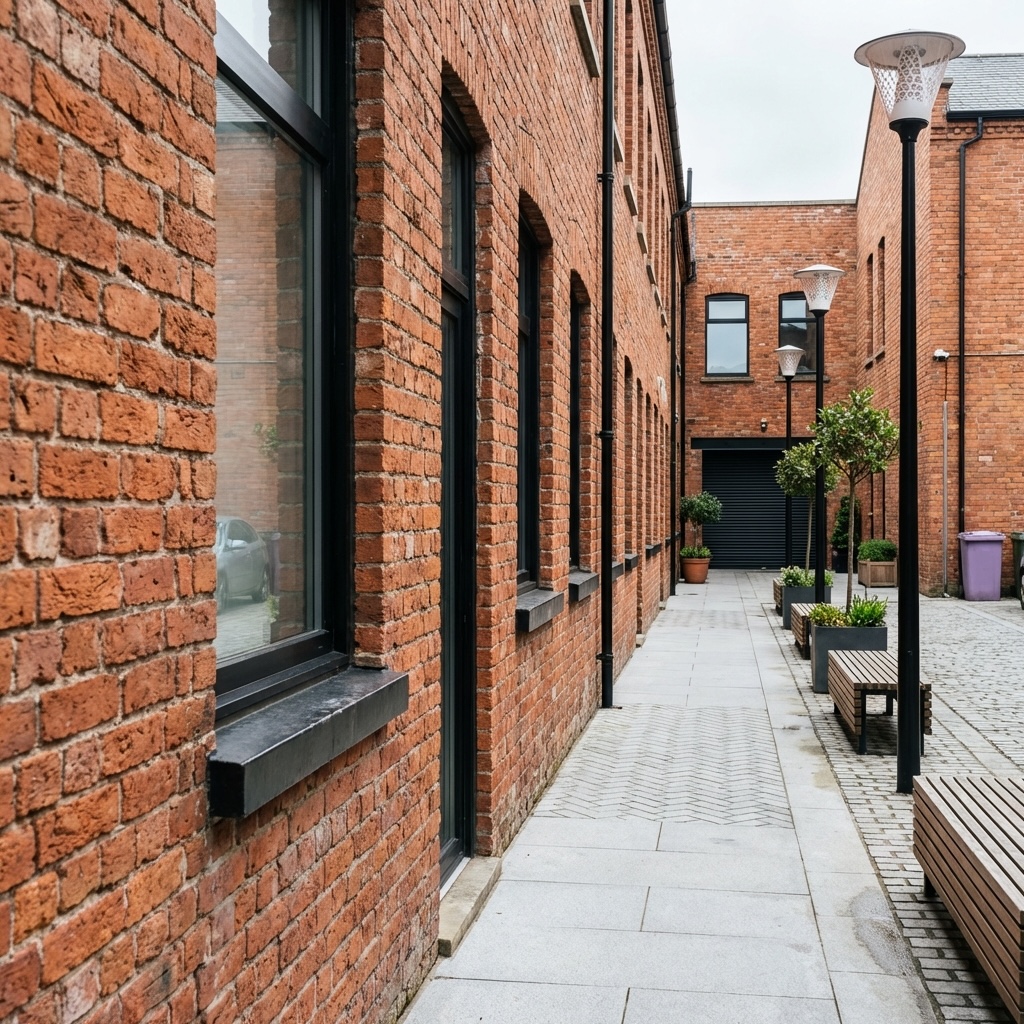
Veneer and aesthetic facades
Street-level storefronts, mixed-use building exteriors, decorative accent walls
CMU Block Masonry
Load-bearing structural walls
Warehouses, foundation walls, fire-rated partitions, below-grade construction
Stone Masonry
Decorative or retaining applications
Retaining walls, landscape features, decorative facades, monument signs
Bergen County and Essex County commercial corridors, including areas like Montclair and Ridgewood, frequently combine CMU structure with brick veneer. That combination works well for mixed-use streetfronts where structural performance and street-level appearance both matter.
Commercial Masonry Takes Skilled, Licensed Tradespeople
Commercial masonry is not general labor work. It involves structural load calculations, reinforcement placement, and code compliance at every stage.
New Jersey requires masonry contractors to carry state contractor registration and general liability insurance. The Masonry Society's TMS 402/602 standards govern structural masonry design and are referenced by the International Building Code.
Larger commercial projects across North Jersey often require certified masonry inspectors. We work with journeyman masons who understand both the code requirements and the craft behind them.
Credentials & Standards
- NJ state contractor registration
- General liability insurance
- TMS 402/602 structural masonry standards
- OSHA silica compliance (29 CFR 1926.1153)
- Journeyman masons on every crew
Our Commercial Masonry Process
Every commercial masonry job starts with a site assessment. Before any work begins, we review soil conditions, drainage, existing structural concerns, and permit requirements.
Site Assessment
Review soil conditions, drainage, existing structural concerns, and permit requirements before any work begins.
Scope & Permit Review
Accurate scope review following MCAA estimating best practices. Handle permit applications through your municipality's building department.
Material Specification
Select CMU, brick, stone, or poured concrete based on structural requirements, ASTM standards, and project specifications.
Safety Compliance
Document OSHA silica compliance (29 CFR 1926.1153), wall bracing, and scaffolding requirements before the first cut.
Construction
Licensed journeyman masons execute structural load calculations, reinforcement placement, and code-compliant construction.
Inspection & Closeout
Final inspection coordination with local building officials. Documentation of completed work for your records.
Job Site Safety Compliance Is Non-Negotiable
Professional commercial masonry crews follow OSHA standards for silica dust control, wall bracing, and scaffolding. That protects workers and limits owner liability.
Per OSHA 29 CFR 1926.1153, all contractors cutting or grinding concrete or masonry must implement dust controls and maintain written exposure control plans.
Bergen, Passaic, and Morris County projects are subject to NJ OSHA inspections. We document silica compliance before the first cut on every job.
Frequently Asked Questions
What does CMU mean in construction, and do I need it for my North Jersey project?+
CMU stands for concrete masonry unit, a standard block used for load-bearing walls in commercial construction. Most commercial buildings in North Jersey require CMU for structural strength and code compliance, especially for walls that carry floor or roof loads.
What are the three types of masonry used in commercial buildings?+
The three main types are brick masonry, concrete block (CMU) masonry, and stone masonry. Brick handles veneer and facade work. CMU handles structural load-bearing walls. Stone is used for decorative or retaining applications.
Why does commercial masonry cost more than other construction methods?+
Licensed tradespeople, ASTM-spec materials, equipment, and permit fees all factor into the cost. Commercial masonry also involves structural engineering requirements that residential work does not. The durability and longevity of a well-built masonry structure offset the upfront investment over time.
How do I know if a North Jersey masonry contractor is qualified for a commercial job?+
Look for NJ state contractor registration, commercial references, and documented OSHA safety practices. MCAA membership or certified mason credentials are also a strong indicator of professional standards. Ask specifically about experience with your project type, whether that's a warehouse, school, or retail center.
What is the first step to start a commercial masonry project in North Jersey?+
Schedule a site assessment. We review structural needs, permit requirements, site access, and material specifications before any work begins. That process gives you an accurate scope and prevents surprises during construction.
Do commercial masonry jobs in North Jersey require permits?+
Yes. Structural masonry work requires permits through your municipality's building department. A licensed contractor handles the permit application process and knows what each county requires before work can start.
Get a Free Commercial Estimate
Ready to discuss your commercial masonry project? Call or text us at (973) 725-2395 or fill out the form. We serve property owners and managers across Bergen, Passaic, Morris, and Essex counties.
Warehouses, retail centers, municipal buildings, schools, and parking structures: we handle it all with licensed crews and code-compliant construction.