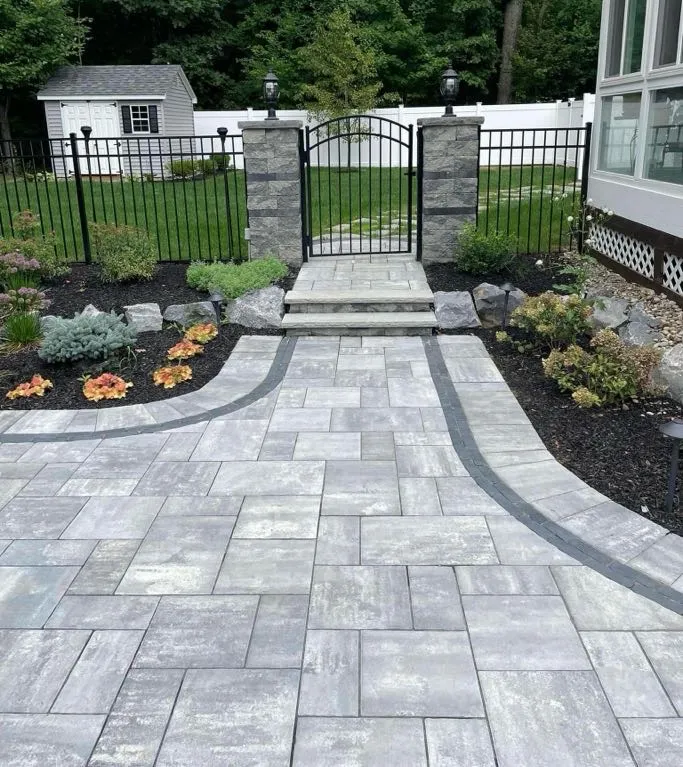
Paver Patios, Retaining Walls, and Masonry Installations Across Essex County, NJ
Serving all 22 municipalities with expert hardscape and masonry work built for Essex County's clay soil and terrain.
Essex County1 covers 22 municipalities across some of the most varied terrain in North Jersey. From the flat blocks of Newark to the wooded hillsides of Cedar Grove and Verona, lot sizes and ground conditions change from one town to the next. That range matters when it comes to masonry installations in Essex County.
This page covers paver patios, walkways, retaining walls, concrete and driveway work, fireplaces, outdoor kitchens, basement waterproofing, and patio waterproofing installations. Each one is shaped by local soil, slopes, and weather. And in this part of the state, all three can work against you if they're not accounted for.
For homeowners pricing out a backyard upgrade, here's a closer look at how much a paver patio runs here and what tends to push the number up or down.
Essex County sits on glacial clay soils that shift with moisture and freeze-thaw cycles. That directly affects how we prep a base for patios, walls, and driveways. Homes in towns like Montclair, West Orange, and Maplewood often sit on uneven lots with mature tree roots and aging drainage that has to be addressed before any work begins.
Every municipality in Essex County runs its own building department. Livingston has a different permit process from Bloomfield. South Orange handles things differently than Verona. We deal with that on every project, so you don't have to sort it out yourself.
Tight lot lines in neighborhoods such as Glen Ridge or Verona can also affect how equipment is staged. Side yard access, shared driveways, and setback requirements all factor into planning before any digging starts.
If you're considering a project on your Essex County property, we can schedule an on-site walkthrough to go over your scope and timeline.
Thinking About a Project? Check Availability
Call or text us directly or scroll down to request your free estimate.
Evaluating Your Property for Hardscape and Masonry Work
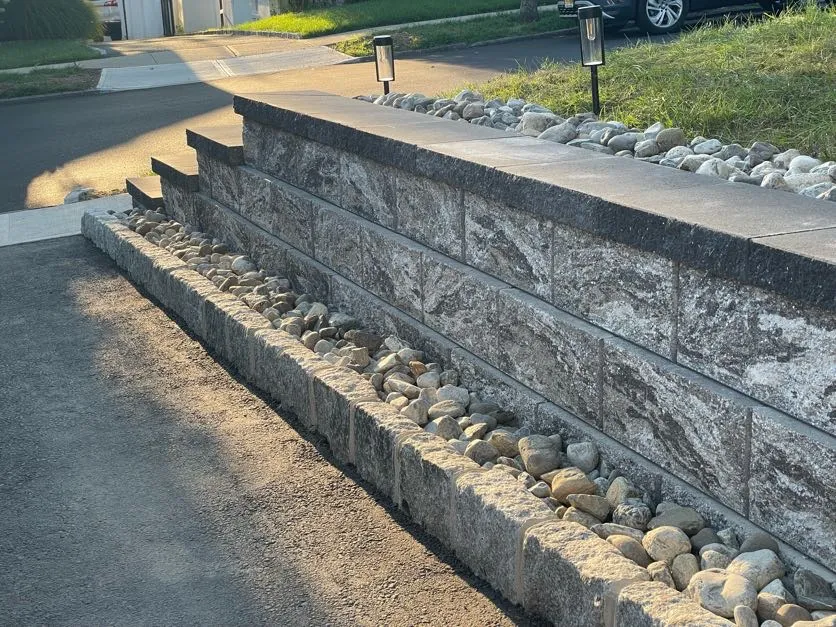
If you're in Livingston, Cedar Grove, or Caldwell and your yard slopes toward the house instead of away from it, that's worth looking into before it gets worse. The same goes for walkways that have settled, retaining walls that are starting to lean, or water that pools near your foundation after a heavy rain.
A lot of Essex County homes were built in the early-to-mid 1900s. The original grading on many of these properties was designed for a different time. Over the decades, soil settles, roots grow, and drainage patterns shift. What worked 60 or 70 years ago may now be sending water right toward your foundation.
Here's what to watch for on your own property:
- Walkway sections that rock or sit unevenly when you step on them
- Retaining walls with visible tilting or gaps forming between blocks
- Water sitting against the foundation or pooling in low spots after rain
- Cracked concrete along driveways or sidewalks that gets wider each year
If water is reaching your basement walls or floor, that may point to a waterproofing issue worth looking into.
These are signs the ground underneath is moving. And in most cases, the fix involves addressing what's below the surface, not just patching what you can see.
Choosing the Right Materials for Clay Soil and Freeze-Thaw Cycles
If you're upgrading a patio, paver driveway, concrete driveway, or retaining wall in Maplewood, South Orange, or Nutley, the material you pick matters more than most people expect. Not every product holds up the same way on clay subgrade, and Essex County's winters don't leave much room for shortcuts.
Concrete pavers, natural bluestone, and segmental retaining wall block are the most common options we install. Each one handles moisture, weight, and ground movement differently. Concrete pavers offer flexibility because individual units can shift slightly without cracking. Bluestone looks great but needs a stable, well-drained base to avoid splitting during freeze cycles. Segmental wall block is engineered to interlock under pressure, which is critical on slopes where soil exerts significant pressure against the structure.
Essex County can see 40 or more freeze-thaw cycles in a single winter3. That means the ground beneath your patio or wall is expanding and contracting repeatedly from late fall through early spring. The joint compound between pavers and the drainage behind walls must be selected to accommodate that kind of movement.
One issue that often arises in Montclair and Glen Ridge is material matching. Homes with original Tudor and Colonial facades may need stone or brick that complements the existing look. Color, texture, and cut style all factor in. We can walk you through samples on-site so you see how each option looks against your home's exterior before anything is ordered.
What to Expect Before Your Patio, Wall, or Outdoor Kitchen Project Begins
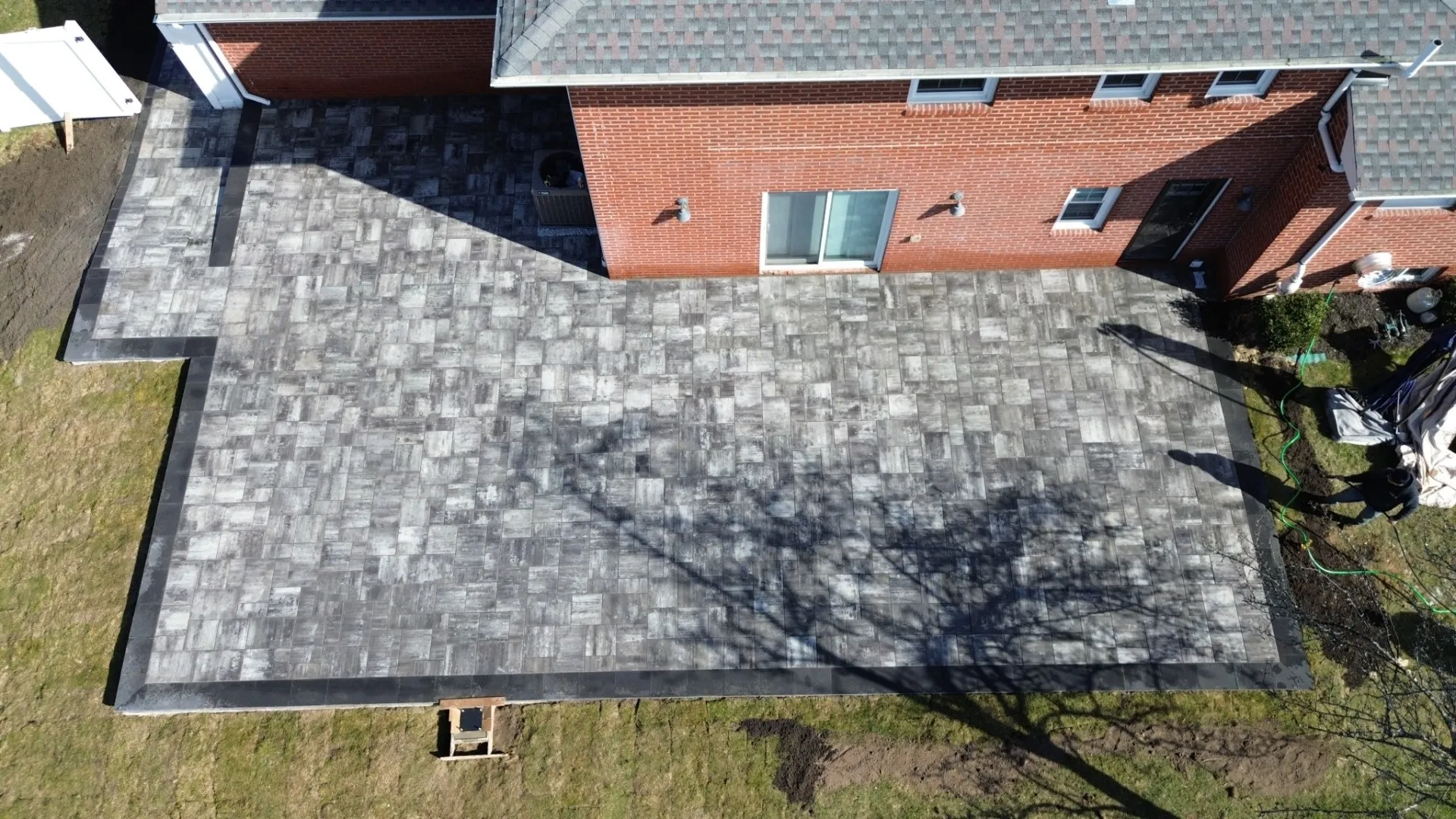
If your family in Bloomfield, West Caldwell, or Fairfield is planning a backyard project for spring or summer, there are a few things that need to happen before any equipment shows up.
First, New Jersey law requires calling NJ One Call at 811 at least three business days before any outdoor digging4. That applies to every residential property, regardless of the project size. Underground utilities such as gas, electric, and water lines are marked so the crew knows exactly where they are before excavation begins.
Permits are the other piece. Each Essex County town handles this through its own building department2. Verona has a different review process than Roseland. Essex Fells may move faster than Livingston. Structural retaining walls and projects that change the grading of your yard almost always require a permit. We handle the applications, but approval timelines vary. Some towns process permits in a few days. Others can take up to 20 business days.
If your property has narrow side yards or a shared driveway, equipment staging needs extra planning. A skid steer or mini excavator occupies space, and materials such as pallets of pavers or crushed stone need a place to sit during the project. On tighter lots, we may need to adjust delivery schedules or stage materials in phases.
It also helps to give your neighbors a heads-up before work begins. Especially on properties where access runs close to the lot line. A quick conversation goes a long way and avoids any surprises once the crew is on-site.
Questions About Permits? We Can Help
Give us a call or text, or fill out the form below, and we handle permits across all 22 Essex County towns.
How Paver Patios, Retaining Walls, and Fireplaces Are Installed on Local Properties
Whether you're adding a paver patio on a flat lot in Belleville or building a retaining wall on a slope near South Mountain Reservation, the installation process follows the same basic principle: what goes underneath determines how long everything on top will last.
Every project starts with excavation down to a stable subgrade. That means removing topsoil, roots, and any loose fill until we reach solid ground. From there, we build up with layers of compacted crushed stone, graded to pitch water away from the home. On clay soils like what we see across most of Essex County, that base layer often needs to be thicker than what you'd use on sandy or well-drained ground.
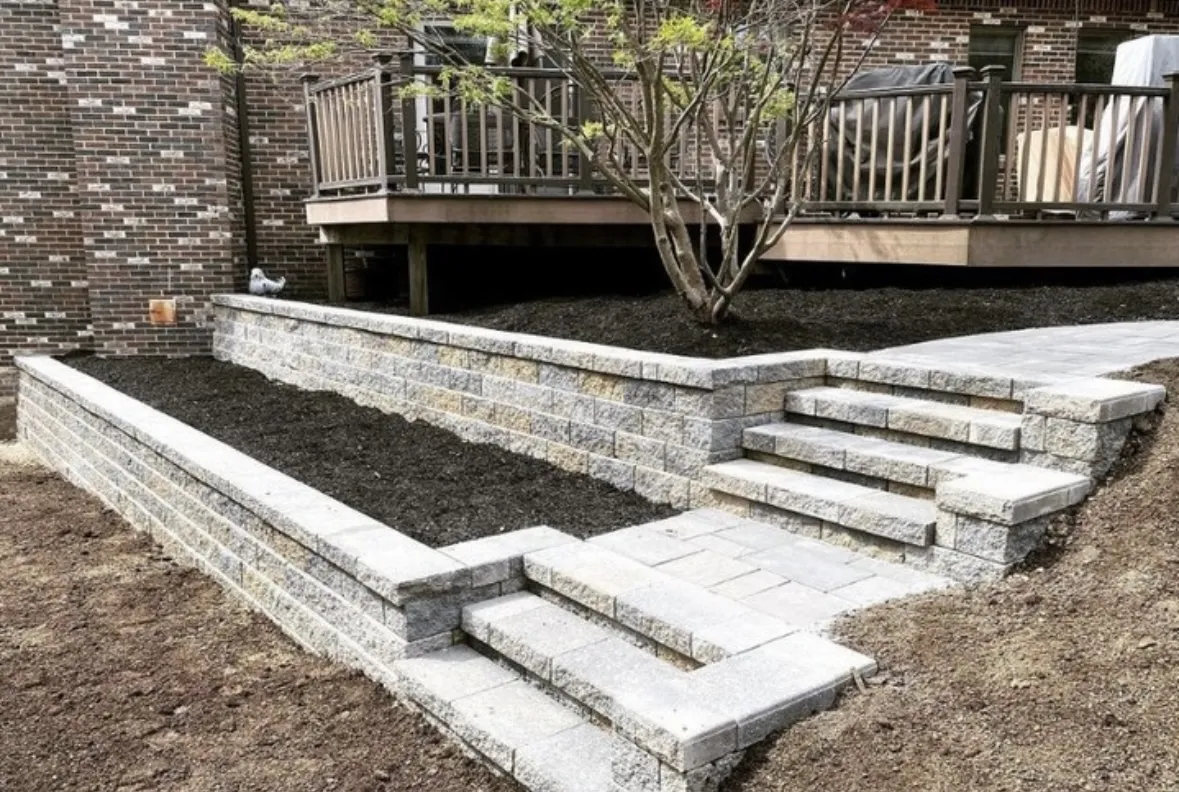
Retaining walls on hillside lots need more than just block and base. Properties along the Watchung ridgeline are common candidates for geogrid reinforcement, which is a mesh layer buried in the soil behind the wall to hold it in place. Perforated drain tile and washed stone backfill go behind the wall to keep water from building up pressure against the structure.
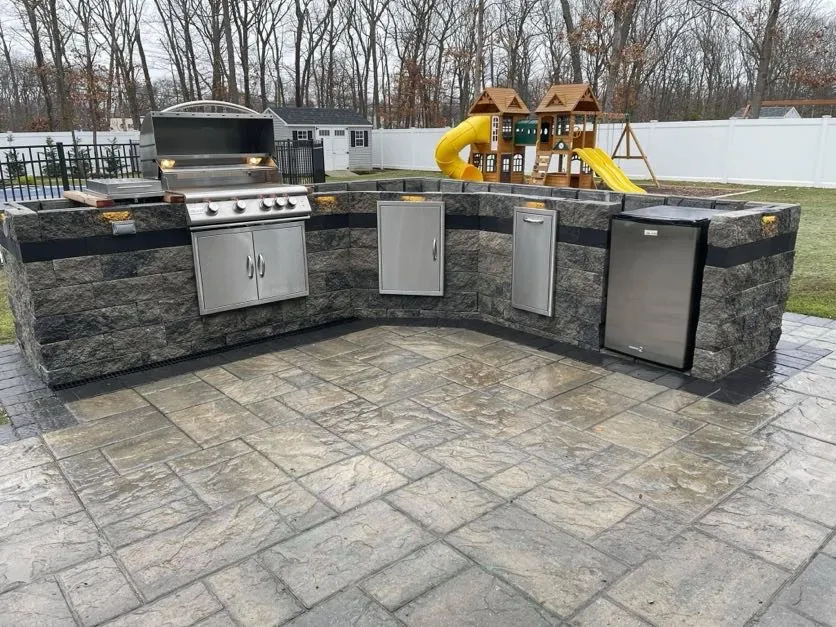
Outdoor kitchens and fireplaces require a stable pad before any stone or block is installed. On sloped properties, that sometimes means building a terraced retaining wall first, then leveling a section for the structure.
Paver patios on flatter lots in towns like Nutley or Bloomfield follow the same base prep but with less grading work. Once the pavers are laid, we lock them in with edge restraint and polymeric sand, which is a jointing material that hardens between the paver joints and helps prevent weed growth and insect activity.
Protecting Your Investment Through Essex County's Harsh Winters
Once your patio, wall, or outdoor kitchen is in place, winter is the season that tests it the hardest. Salt, snow load, and ice all take a toll on masonry surfaces, and how you maintain things during the cold months can affect how they look and perform for years.
Polymeric sand between paver joints can wear down over time, especially with heavy foot traffic or pressure washing. It's a good idea to check the joints each spring and reapply as needed. When clearing snow off a paver surface, use a plastic-edge shovel instead of metal. Metal blades can chip the paver faces and damage the joint sand.
Retaining walls need attention too. Weep holes and drain outlets along the base of the wall must remain clear through fall and winter. If leaves, debris, or ice block those openings, water backs up behind the wall. That creates hydrostatic pressure, and during spring thaw it can push the wall forward. A quick check before the ground freezes and again after snowmelt can prevent that.
Outdoor kitchens and fireplaces with natural stone veneer can benefit from a breathable sealant applied before the first hard freeze. The sealant helps prevent moisture from getting into the stone and expanding as temperatures drop. It does not change the stone's appearance and typically lasts a few seasons before needing reapplication.
Most of this is basic upkeep, not major work. A little attention in the fall and spring goes a long way toward getting the full lifespan out of your project.
Getting to Our Team from Anywhere in Essex County
We serve all 22 municipalities across Essex County, from Newark in the east to Fairfield in the northwest. Our shop is located at 36 Highview Ave in Totowa, just over the Passaic County line, which puts us within a short drive of most Essex County towns.
The Garden State Parkway runs north-south through the county and connects Irvington, Newark, East Orange, and Bloomfield. If you're coming from any of those areas, the Parkway to Route 46 West gets you to Totowa in about 20 minutes, depending on traffic.
Route 280 provides east-west access through the middle of the county, linking The Oranges, Livingston, and Roseland. From Livingston or Roseland, take 280 East to the Garden State Parkway North, then Route 46 West toward Totowa.
From the western side of the county, towns like Cedar Grove, Verona, and Caldwell are typically 10 to 15 minutes from our location. Fairfield residents can reach us in under 10 minutes via Route 46. Travel times within Essex County to our shop generally range from 10 to 30 minutes. For most projects though, we come to you.
All 22 Municipalities We Serve
Ready to Start? Schedule Your Estimate
If you've got a project you've been putting off, or something that needs attention now, we're here to help. No pressure, just honest advice.
Need A Mason Contractor? Request An Estimate!
Fill out the form and we'll get back to you promptly.
See Our Essex County Work in Action
Frequently Asked Questions
Do I need a permit for a paver patio or retaining wall in Essex County?
It depends on the town and the scope of the project. Most Essex County municipalities require permits for structural retaining walls or any project that changes the grading of your yard. Since all 22 towns operate their own building departments, requirements and timelines vary. A paver patio on a flat lot may not need one in some towns, while others require it regardless. We check with the local building department before every project and handle the application for you.
What time of year is best for outdoor masonry work in Essex County?
Spring through late fall is the best window for most outdoor masonry projects. Concrete and mortar need consistent temperatures above 40°F to cure properly, so winter installations are limited. Most homeowners who contact us during the colder months get scheduled for an early spring start. Booking ahead of the season is a good idea since our schedule fills up quickly once the weather turns.
How does Essex County's clay soil affect patio and wall installations?
Clay soil holds water and expands during freeze-thaw cycles, which can cause shifting and settling. To account for that, we excavate deeper than we would on sandier ground and build a thicker compacted stone base. Proper drainage behind retaining walls is also more involved on clay. Skipping those steps is why a lot of patios and walls in this area fail within a few years of installation.
Can an outdoor kitchen or fireplace be built on a sloped Essex County lot?
Yes, with proper site preparation. Hillside properties near South Mountain Reservation or along the Watchung ridgeline often need terraced retaining walls and a graded, level pad before any structure goes up. The design and engineering depend on the degree of slope and the soil conditions. We evaluate all of that during the on-site walkthrough.
How long does a typical paver patio or retaining wall project take in this area?
A small to mid-sized paver patio usually takes about 3 to 5 days once work begins. Larger retaining walls or outdoor kitchen builds can run 2 to 4 weeks depending on scope and site conditions. Keep in mind that permitting timelines are separate. Some Essex County towns turn permits around in a few days, while others may take up to 20 business days.
Are there HOA or historic district rules that affect masonry material choices?
Some Essex County neighborhoods do have material or color restrictions. Llewellyn Park in West Orange is a National Register Historic District, and Montclair's historic preservation ordinance covers several designated districts. Glen Ridge has similar considerations. If your property falls within one of these areas, it is a good idea to check with the local zoning office before selecting materials. We can help guide you through that process.