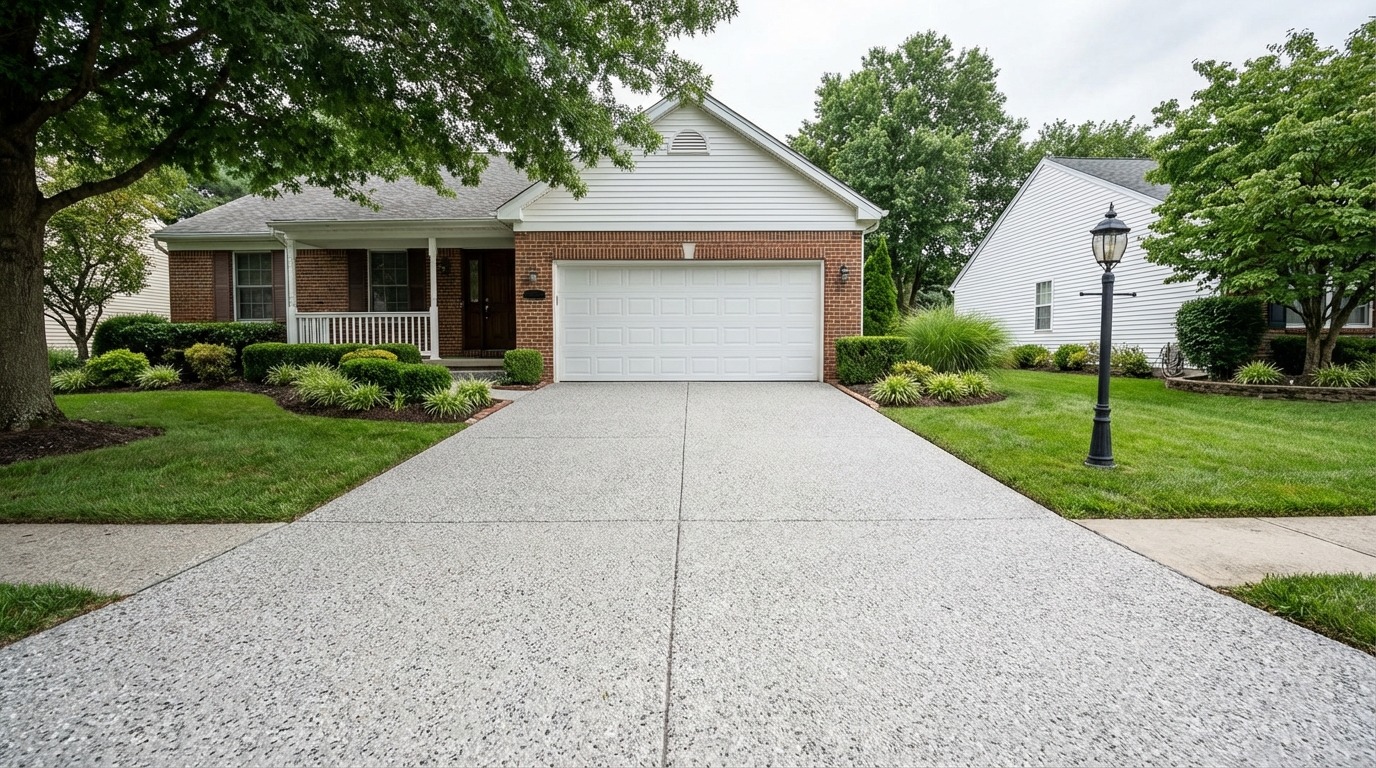
Concrete Driveway Installation in Totowa, NJ Serving North Jersey: Built for Daily Traffic
A concrete driveway must be poured correctly to hold up under daily vehicle traffic. We install and replace driveways for homeowners across Passaic, Bergen, Essex, and Morris counties.
Our crews follow ACI standards1 on every pour. Whether you're replacing a cracked surface or starting fresh, we build driveways designed to perform for decades.
Some homeowners prefer the look and flexibility of interlocking pavers over poured concrete. If you're comparing options, take a look at our paver driveway installation page for a side-by-side breakdown.
A Proper Base Prevents Cracking and Settling Under Vehicle Weight
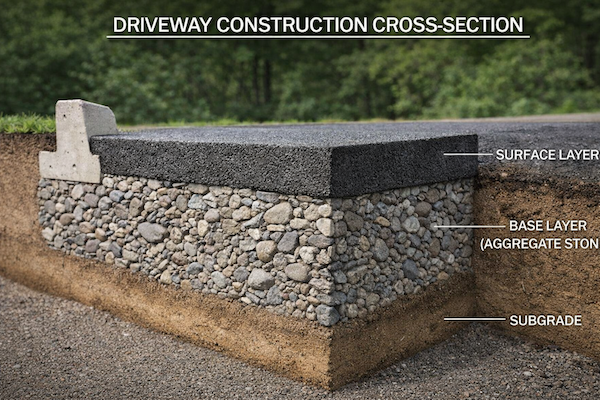
We place compacted gravel beneath every driveway we pour. The gravel creates a stable foundation and gives water somewhere to go. Without it, moisture sits directly under the slab.
Homeowners sometimes ask if concrete can be poured directly on dirt for a driveway. We don't do it that way. Dirt shifts when it gets wet, and it moves even more when temperatures change. In North Jersey, that kind of movement can crack a new driveway within a year or two. And when vehicles are driving over it daily, the stress on the slab accelerates the damage.
Clay soil shows up all over Essex and Bergen counties. That type of soil holds a lot of moisture, which makes the problem worse. We lay gravel down to create separation between the clay and the concrete. ACI has standards for base preparation depending on soil type and the load the driveway will carry.1 Those are the standards we follow.
Ground Preparation for Driveways Requires Extra Attention
We begin by excavating the area to a depth appropriate for the soil conditions and drainage requirements. The ground is graded to direct water away from your home and off the driveway. Standing water on a driveway creates problems, especially in winter when it freezes.
We set forms along the edges to hold the concrete in place while it cures. The forms must be level and secure. If they shift during the pour, the finished driveway won't be even.
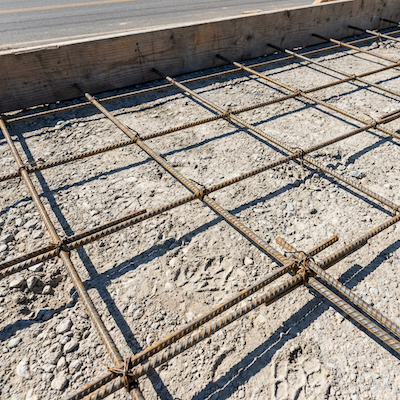
Rebar or wire mesh gets placed inside the forms before the pour. A driveway carries significantly more weight than a sidewalk or walkway, so reinforcement is part of every driveway project we do.
Every property is a little different. Slope, soil type, and how many vehicles use the driveway all factor in. We evaluate the site before starting and adjust our prep work to match the conditions.
We Pour Concrete Driveways Year-Round in North Jersey
We pour driveways throughout the year. Each season has its own advantages, and we adjust our methods based on the conditions. The ground must be workable, and the temperature must be right for the concrete to cure properly.
Some homeowners in West Orange and Hackensack prefer to schedule their driveway project before summer. Others book in fall or winter when contractor schedules tend to open up. Either approach works.
Concrete cures best when temperatures remain between 50 and 80 degrees. When we're working outside that range, we take additional steps. In colder weather, we can use insulated blankets to protect the fresh pour. The project doesn't stop. We simply adjust our methods.
Once concrete is mixed, it must be poured and finished within 90 minutes.6 Our crews plan each pour so the timing stays on track from delivery to finish. If you're in Paramus, Clifton, or Wayne and considering a new driveway, give us a call or text.

A Well-Poured Concrete Driveway Lasts Decades in Our Climate
A concrete driveway is a long-term investment. When poured correctly, it can last 25 to 40 years. That's the kind of return homeowners in Livingston and Short Hills are looking for.
The strength of the concrete itself matters. We use ready-mix concrete that meets ASTM C94 specifications.2 The mix is designed for the right balance of strength, workability, and durability. Rebar or wire mesh reinforces the slab from within.
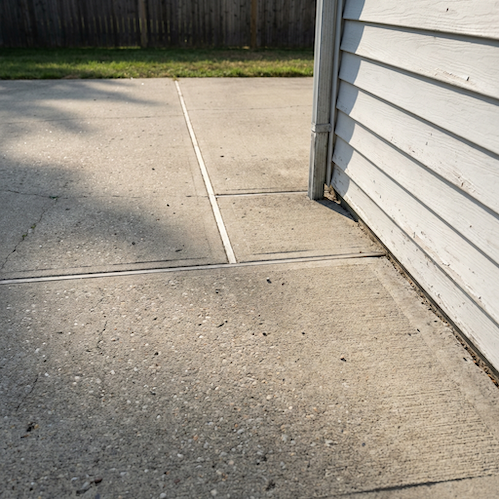
Control joints are cut into the surface at regular intervals. These are planned lines that give the concrete a place to expand and contract with temperature changes. Without control joints, cracks form randomly and spread over time.
Our winters here in North Jersey can take a toll on outdoor surfaces. Freeze-thaw cycles are relentless. Water seeps into small cracks, freezes, and then expands. That cycle breaks down poorly poured driveways over time. A proper base, quality mix, and correct finishing techniques can prevent that from happening. ACI-standard practices are what separate a driveway that lasts from one that doesn't.1
A New Concrete Driveway Adds Curb Appeal and Value to Your Home
A concrete driveway does more than handle daily traffic. It can add value to your property. The National Association of Realtors5 puts exterior improvements high on the list of features that buyers notice.
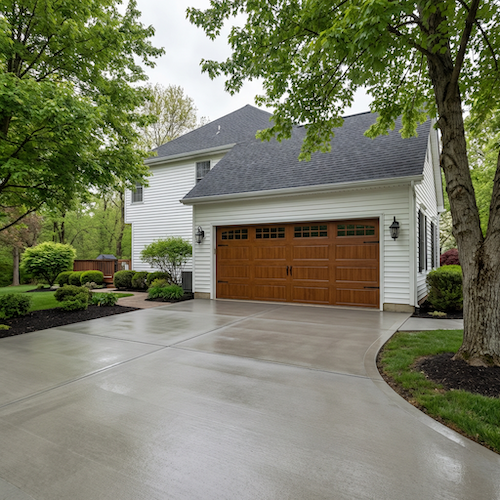
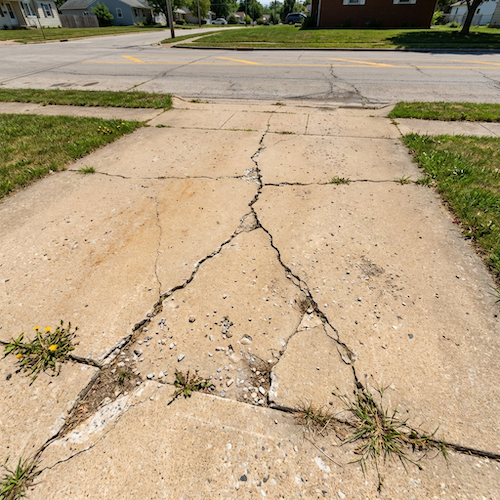
Your driveway is one of the first things people see when they visit or drive by. A cracked, uneven surface sends one message, while a clean, well-poured driveway sends another entirely. In neighborhoods like Glen Ridge and Maplewood, that difference can matter.
Buyers shopping in Bergen and Essex counties often have exterior condition on their checklist. A quality driveway signals that the property has been cared for, and that can make a real difference when it comes time to sell.
Your family benefits from it every day, too. Pulling into a smooth, level driveway that holds up year after year is something you notice. That's value you can see, and value that holds over time.
Replacing a driveway is one of the larger projects most homeowners take on, and many of our customers prefer to spread the cost over monthly payments rather than pay all at once. We offer financing through our partner Acorn Finance with pre-qualified offers from a network of lenders. The pre-qualification step uses a soft credit pull, so it will not affect your credit score. Learn more about financing options.
Common Driveway Installation Mistakes We See Across North Jersey
Contractors who rush through a driveway pour tend to cut corners. We get calls from homeowners in Wayne, Paramus, and other towns asking us to fix concrete that wasn't done right the first time.
No gravel base underneath is the biggest one. We've repaired driveways that were only a couple of seasons old because they were poured directly on dirt. The slab settled unevenly, and cracks spread from there.
Some contractors pour the slab too thin to save on materials. That doesn't hold up, especially under vehicle weight. A driveway must be thick enough to handle cars and trucks driving over it daily. Going too thin ends up costing more when the slab fails and needs to be torn out.
Skipping reinforcement is another mistake we see often. A driveway without rebar or wire mesh is more likely to crack under the stress of daily use. The reinforcement holds the slab together even when hairline cracks develop.
Control joints are something else we see done wrong. Either they're skipped entirely or spaced too far apart. Without proper joint placement, the concrete cracks wherever it wants instead of along the planned lines.
How long does a concrete driveway last?
A properly poured concrete driveway can last 25 to 40 years. In Northern New Jersey, our freeze-thaw cycles can take a toll on outdoor surfaces, so how the driveway is constructed makes a real difference.
Factors that affect how long your driveway will last:
- •A compacted gravel base appropriate for your soil conditions and vehicle load, per ACI standards1
- •Reinforcement with rebar or wire mesh inside the slab
- •Properly spaced control joints to manage expansion and contraction
- •Ready-mix concrete that meets ASTM C94 specifications2
When a qualified masonry contractor handles the base prep, reinforcement, and finishing, your driveway can hold up for decades in our regional climate.
A concrete driveway is just one part of the concrete work we do across North Jersey, so if your project covers more than that, we can help there too.
If yours isn't ready for a full replacement yet, we can also repair a cracked or sinking driveway instead.
Frequently Asked Questions
How long does concrete driveway installation take in North Jersey?
Most residential driveways take 3 to 7 days to complete. That includes excavation, base prep, forming, pouring, and cure time. Weather can also play a role, especially if we're working around rain in Bergen or Essex counties.
Do I need a permit for a concrete driveway in North Jersey?
It depends on your municipality. Some towns require a permit for driveway work, and others may not. We recommend checking with your local building department before the project begins. We can help point you in the right direction.
Can you pour a concrete driveway over an existing surface?
In some cases, yes. The existing surface must be stable and in reasonable condition. We evaluate the current driveway and recommend the best approach. In many situations, removing the old surface and starting fresh produces a better long-term result.
Is concrete or asphalt better for a driveway?
Concrete lasts longer and requires less maintenance over time. Asphalt may cost less upfront but needs resealing every few years and has a shorter lifespan. Concrete also handles heavier vehicle loads without rutting or softening in summer heat.
How thick should a concrete driveway be?
That depends on the soil conditions and expected vehicle traffic. A qualified contractor will evaluate your property and recommend the appropriate thickness. Going too thin to save on materials often leads to early failure and a costly replacement.
Do I need rebar in my concrete driveway?
Rebar or wire mesh reinforces the slab and helps prevent cracking under vehicle weight. Whether your driveway requires rebar depends on the size, soil conditions, and expected use. Our crews evaluate each project and include reinforcement where it's needed.
How long before I can drive on new concrete?
Most driveways can handle vehicle traffic after 7 days. Full cure takes approximately 28 days. We recommend avoiding heavy trucks or equipment during that period so the concrete can reach its full strength.
What is the 90 minute rule for concrete?
Once concrete is mixed, it must be poured and finished within 90 minutes. After that window, the mix begins to set and becomes difficult to work with. Our crews plan every pour so the timing stays on track from delivery to finish.
More Concrete Services
Ready for a New Concrete Driveway?
If you've got a project you've been putting off, or something that needs attention now, we're here to help. No pressure, just honest advice.
Financing options are available. See your monthly payment options.
Need A Mason Contractor? Request An Estimate!
Fill out the form and we'll get back to you promptly.