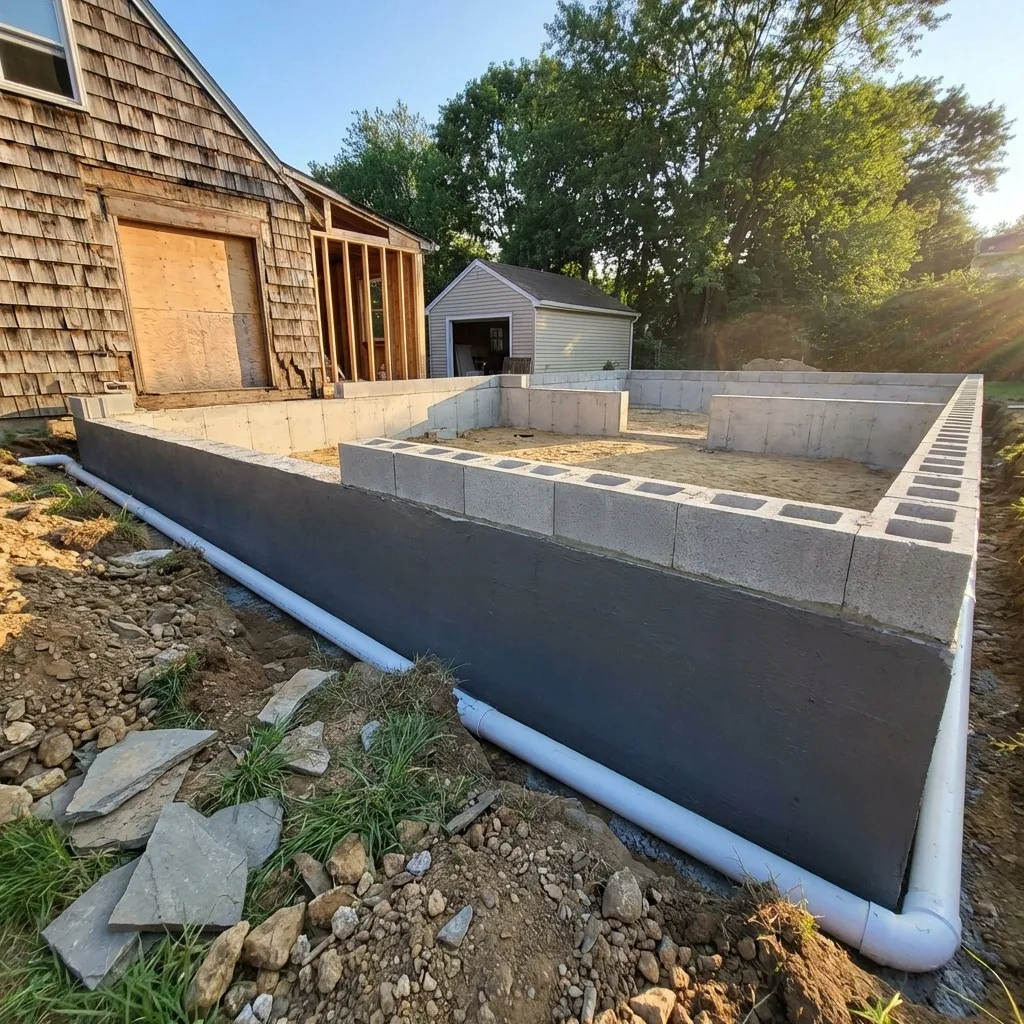
Concrete Foundations in Totowa, NJ Serving North Jersey
New concrete foundations for custom homes, additions, walkout basements, and outbuildings, built for North Jersey soil and weather.
Concrete Foundation Installation: A Masonry Pro Construction Specialty
At Masonry Pro Construction, we have been installing concrete foundations for over 35 years.
Biagio started as a union bricklayer and built his career in the ground. Gino has spent 14 years in the field across Bergen, Passaic, Essex, and Morris Counties. When you hire us, one of them is on your job every day.
We install foundations for custom homes, additions, walkout basements, and outbuildings. Every pour is sized to your specific home design, your lot conditions, and the soil under your feet.
North Jersey Soil Changes How a Foundation Has to Be Built
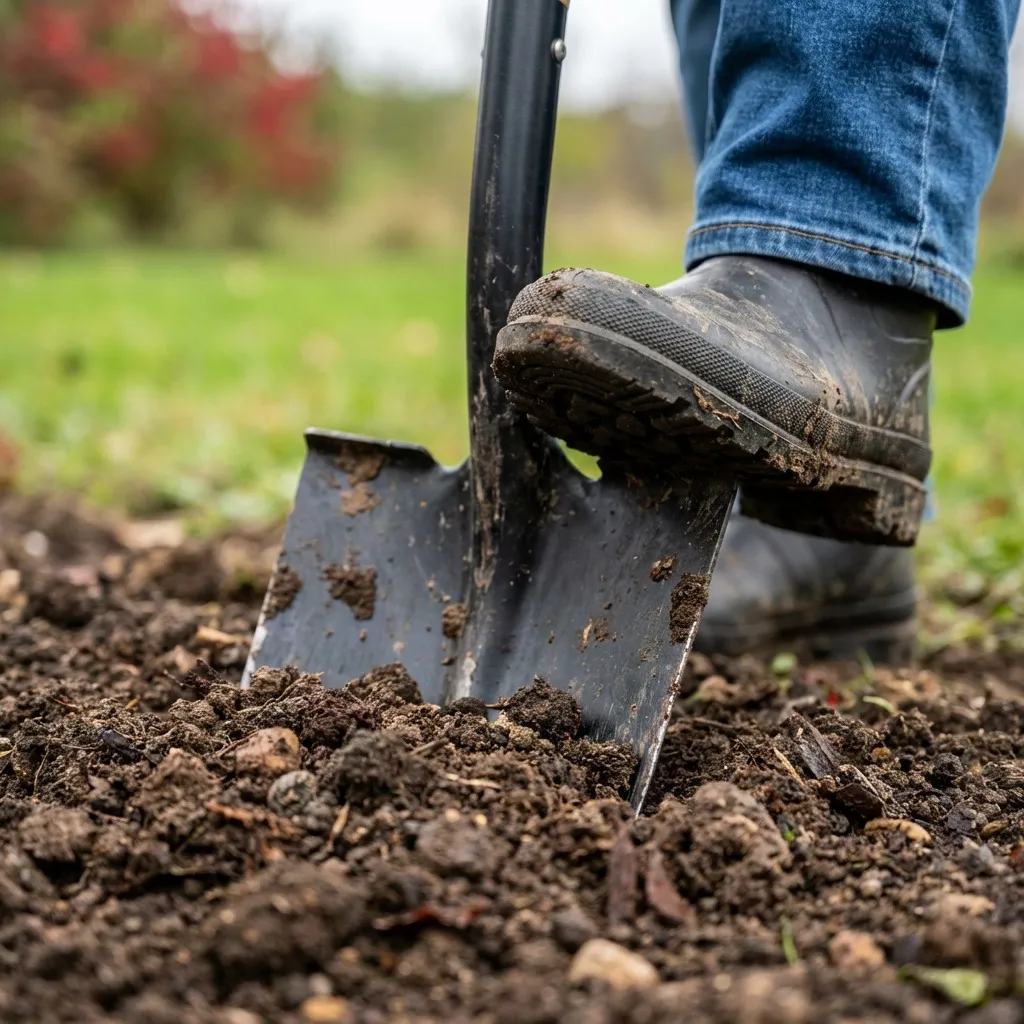
North Jersey ground is a mix of clay, bedrock, rock, sand, and dirt. During our seasonal weather, our particular soil mixes with water, expanding significantly and then contracting during the dry periods.¹ Foundation walls can shift and footings pushed out of place when foundations are not properly poured and placed.
We don't guess at what's underground. That is why every new foundation project begins with a site assessment that looks at soil conditions, drainage patterns, slope of the property, and soil reports.
Winters in North Jersey Require a Different Type of Material
North Jersey winters are hard on concrete. Not using the right material could cause the concrete to crumble faster than it should.
Biagio learned what works and what fails through decades of work. He doesn't choose materials based on cost. He chooses what lasts.
That's why we use concrete that endures rapid freezing and thawing (ASTM C666).² This type of concrete has tiny air pockets that give frozen water room to expand, which is how concrete survives freeze-thaw cycles without cracking. Even better, it's built for North Jersey winters.
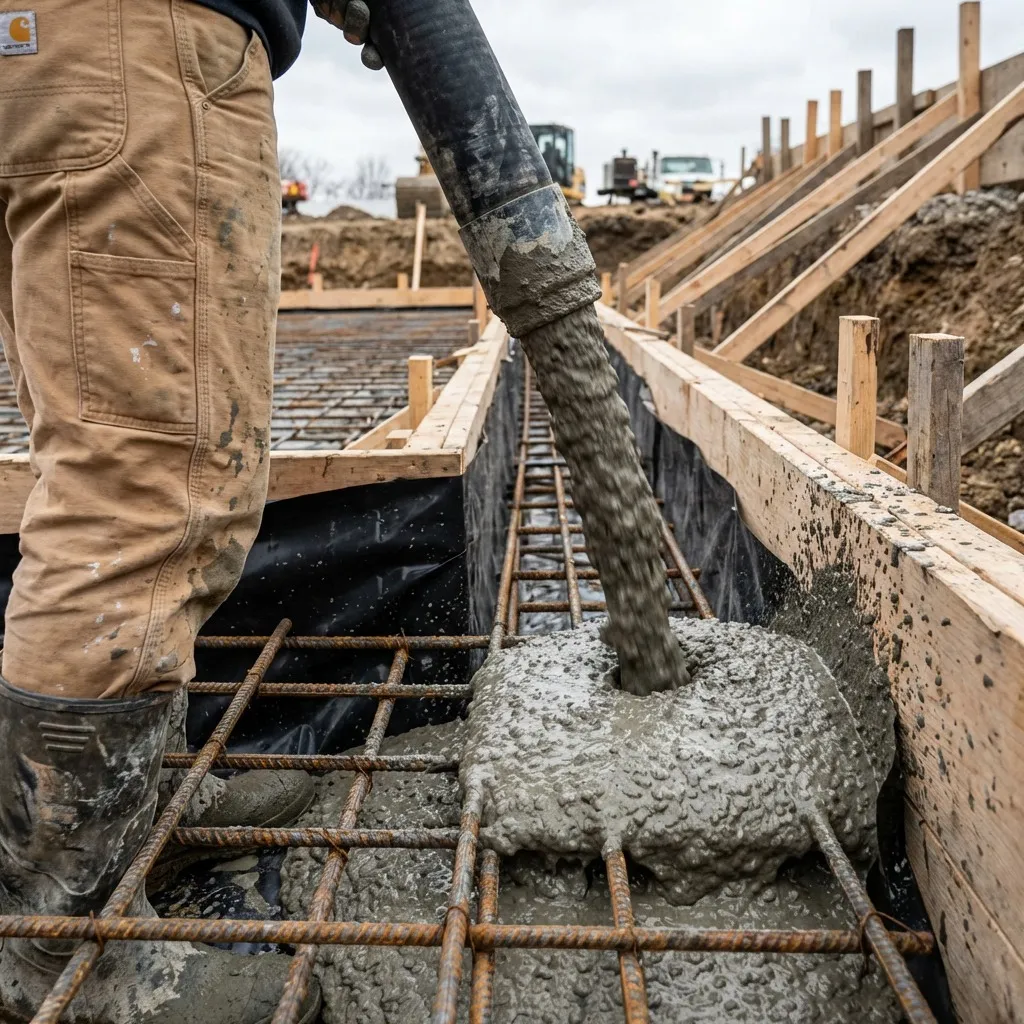
When we pour a foundation, we use less water in the mix, keeping the concrete stronger which makes it last longer. Steel rebar is used to help the walls resist pressure from soil pushing against them. We pick the system that fits your home design and keeps your basement warm, so we may use insulated blocks. And we don't forget the waterproof protection that keeps groundwater away from the walls before we backfill.
A Specific Foundation for Your Specific Needs
You know not every house is the same. It makes sense that not every foundation is the same, either. The type of structure you are building, the slope of your lot, and the soil conditions all factor into which foundation system is right for your project.
We handle:
- Full and walkout basement foundations
- Slab-on-grade foundations
- Insulated Concrete Form (ICF) foundations for energy-efficient needs
- Pier-and-beam foundations
We've seen a lot of homes that don't solve your problem because the foundations are not installed correctly. As masonry professionals we know how to build your foundation right from the start.
Start to Finish: The Steps We Take
Most residential pours for custom homes take two to four weeks.
Site Visit
Our foundation installation process begins with a site visit with either Biagio or Gino. This is a free service and we do not charge for this step. We review the soil conditions, the drainage patterns, and the plans for your home.
Written Estimate
From there, we talk about an estimate before any work begins. We do not give verbal ballpark figures.
Excavation & Footings
Using the building plans to outline the foundation, we dig to the correct depth and begin with the footings. We pour the concrete, adding rebar for strength.
Foundation Walls
Once we have the footings set, we can begin on the foundation walls. Every wall is formed and poured to match your home design and site conditions.
Waterproofing & Drainage
We never skip waterproofing and drainage boards. Water will find its way into your foundation. It's not a matter of if, but when.
Backfill & Grading
Backfill is then packed down with the ground sloping away from the building on all sides.
Final Walkthrough
Once the job is completed, Gino will walk the project with you so you know what was built and why each decision was made.
Cost of a New Foundation
The type and size of the foundation determine different materials and labor costs. If the ground contains heavy clay deposits or the soil is loose and unstable, these all carry different ways in which we approach the solution. Engineering permits may need to be obtained which would also factor into your cost.
We give you a written, itemized estimate before any work begins. Biagio or Gino will walk the site with you, go through what they found, and give you a number that reflects what is actually going in the ground.
New foundations sit alongside the rest of our North Jersey concrete services, from footings to flatwork.
Concrete Foundation FAQs
Does a new foundation require a permit in New Jersey?
Yes, a new foundation requires a permit under the New Jersey Uniform Construction Code.³ Inspections are required at certain stages of the process, usually before the footings are poured and again before walls are backfilled. We pull the permits and schedule inspections. You do not have to manage that.
How deep do footings need to be?
Footings should be between 36" to 42" below the frost line. The soil conditions or past frost records can also affect how deep the footings need to go. We verify the required depth for your specific location before we form the footings.
What is the difference between a poured concrete foundation and a block foundation?
A poured concrete foundation is built as one continuous wall. It has no seams or joints that can crack or where water can seep in. A block foundation is built with mortar joints, and every joint is a potential water entry point and a location where cracking can develop over time. For our climate, we prefer a continuous wall as they perform better and are stronger for our North Jersey seasons.
How long does a concrete foundation installation take?
For a typical home foundation in North Jersey, from first dig to backfill, runs two to four weeks. This includes footing and wall forming, pouring the concrete and cure time, waterproofing, and drainage installation. Permit turnaround, inspection scheduling, and weather all affect the timeline. We give you a realistic schedule at the start of the job, not an optimistic one.
Can you pour a foundation in cold weather?
Yes, we can and we have. Using the correct materials make all the difference. ACI 306R cold weather concreting guidelines cover cold weather scenarios.⁴ When temperatures drop below 40°F, concrete must be protected from freezing during the curing period. We use insulating blankets and, when necessary, heated enclosures to maintain proper curing conditions. We do not pour when conditions put the work at risk.
Do I need waterproofing on a new foundation?
Yes. Here's why. Clay soils hold rainwater against the foundation walls for extended periods of time. High water tables in low-lying areas create water pressure that pushes water through any gap in the wall. Exterior waterproofing and drainage board applied before backfill is not something we skip on a new pour in this region. They are what separates a dry basement from one that has problems within the first five years.
More Concrete Services
Ready to Get Started?
If you've got a project you've been putting off, or something that needs attention now, we're here to help. No pressure, just honest advice.
Need A Mason Contractor? Request An Estimate!
Fill out the form and we'll get back to you promptly.