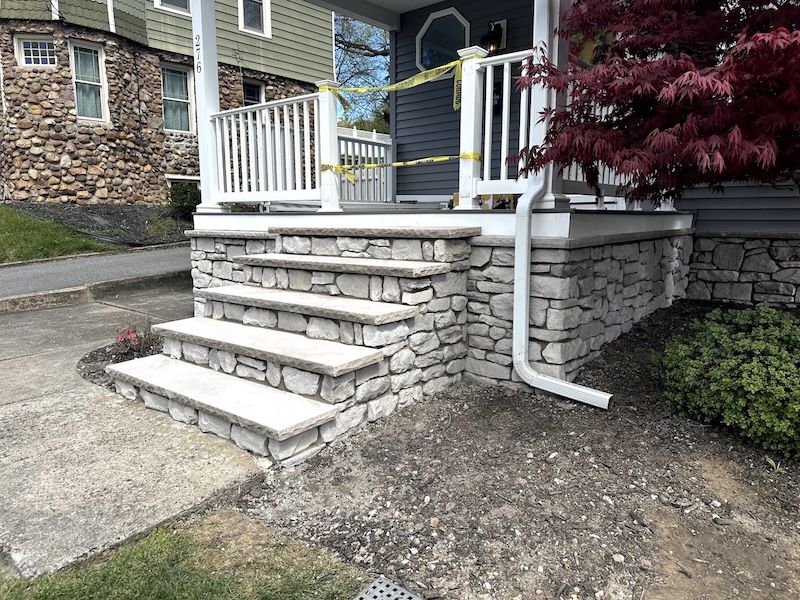
Stone Masonry Repair in Totowa, NJ Serving North Jersey
North Jersey's freeze-thaw cycles crack mortar and split stone faster than most homeowners expect. This page covers stone masonry repair for walls, chimneys, steps, foundations, and veneers. We offer year-round scheduling, on-site assessments, and same-week availability for urgent repairs. Fully insured masonry contractors trained in both traditional and modern stone repair methods.
Get a Free QuoteCrumbling Mortar, Cracked Stone, and Spalling Are Signs Your Stonework Needs Repair
Notice white powder on your stone wall? That is efflorescence. Preservation Brief 2 (U.S. National Park Service)[1] It means moisture is moving through the masonry and pulling minerals to the surface. On its own, it is mostly cosmetic. But paired with cracked mortar joints or loose stones, it points to a bigger issue. We've been repairing stonework as a masonry contractor serving North Jersey for 35+ years.
North Jersey gets 80 or more freeze-thaw cycles in a typical winter. Water gets into a joint, freezes, expands, and cracks the mortar from the inside out. Do that 80 times and the damage adds up fast. Bergen County homes built with local fieldstone or brownstone are especially prone to this because those materials are softer than granite or quartzite.
Spalling is another one to watch for. That is when the face of a stone flakes off in layers. It usually means water got trapped behind the surface and froze. Once spalling starts, the exposed stone underneath wears down even faster.
Catching any of these early keeps the repair small. Wait too long and a few bad joints turn into a section that needs to come apart and be rebuilt.
A Skilled Masonry Contractor Handles Stone Repairs a Handyman Cannot
Stone repair is not just about filling cracks. Stone Restoration — International Masonry Institute[2] The mortar needs to match the original in strength, flexibility, and color. Using the wrong mix can damage the surrounding stone. A Type S mortar on a soft brownstone wall, for example, will cause the stone to crack before the mortar does. That is the opposite of what you want.
Homeowners in Passaic and Morris Counties sometimes call a general handyman for this kind of work. That can be OK for a small cosmetic patch, but anything structural, like a leaning wall, a cracked chimney, or stone steps pulling away from a foundation, will need someone who understands load paths and mortar chemistry.
New Jersey's Uniform Construction Code requires permits for structural masonry work. Cutting into a bearing wall or modifying a load-bearing element requires a permit from the local building department in towns such as Montclair, Wayne, and Morristown. A licensed masonry contractor handles that process. A handyman typically does not.
Old Mortar Must Be Removed Before New Mortar Bonds to Stone
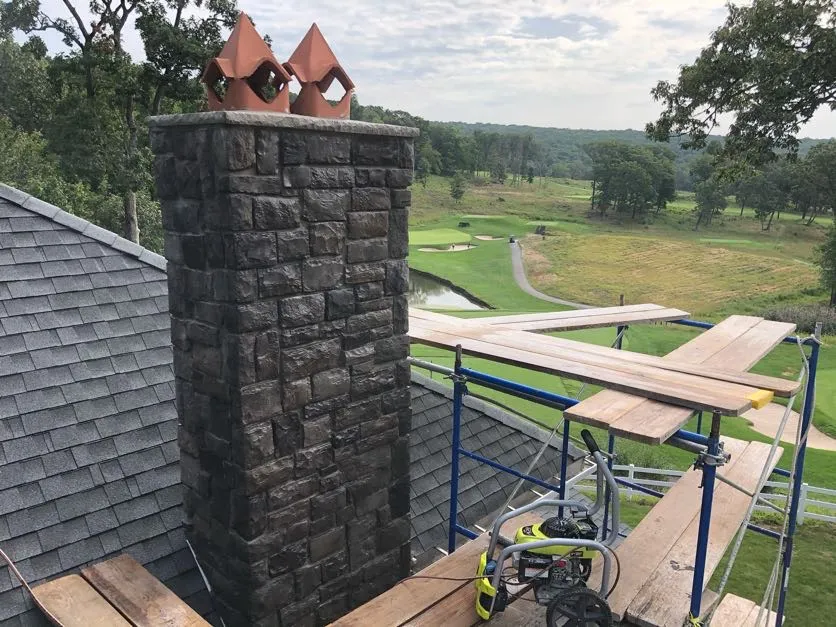
Have you ever seen a mortar patch that popped out within a year or two? That usually means someone spread new mortar right over the old. Preservation Brief 2 (U.S. National Park Service)[1] It does not bond that way. The National Park Service recommends removing old mortar to a depth of at least twice the joint width before repointing. That gives the new material enough surface area to grip.
The removal itself matters too. Hand chisels and thin grinder blades work on most joints, but aggressive power tools can chip the edges of softer stone. Brownstone and limestone, which appear on many older homes in Essex County and in Ridgewood, scratch and chip easily if the tool slips.
Once the old mortar is out, the joint gets cleaned of dust and loose material, then dampened. Dry stone pulls water out of fresh mortar too quickly, weakening the bond. A damp surface allows the mortar to cure at the right rate, which is what gives you a joint that lasts 30 to 50 years.
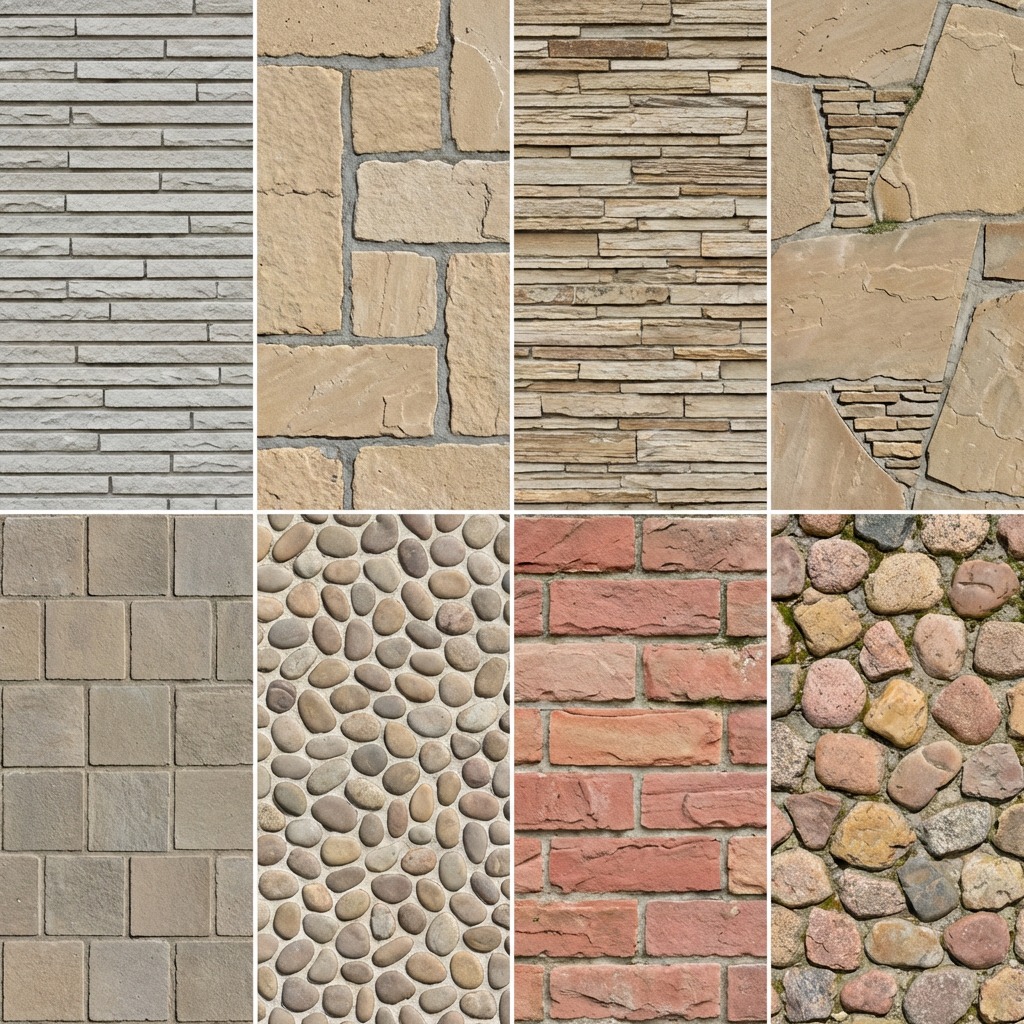
Stone Masonry Repair Restores Walls, Steps, and Facades to Solid Condition
Most stone repair falls into one of a few categories. Masonry Repair and Restoration — MCAA[10] Repointing is the most common. That is removing and replacing worn mortar joints. Dutchman repair is for stones that have a damaged face but are still structurally sound. A thin section of matching stone gets cut and fitted over the damaged area. It looks clean and avoids pulling the entire stone out of the wall.
For cracked stone steps, we usually pin the crack with stainless steel anchors and fill with a color-matched composite mortar. Full stone replacement is required only when the unit is split through or has lost too much material to anchor.
North Jersey's clay-heavy soils in Clifton, Little Falls, and Totowa create ground movement that stresses stone walls and steps over time. Wyckoff and Glen Rock see similar issues on sloped lots. Proper repair accounts for that movement. Sometimes a repair includes adding a drainage channel or weep holes so water pressure does not rebuild behind the wall and cause the same failure again.
Common Stone Masonry Repairs
- Repointing: removing and replacing worn mortar joints
- Dutchman repair: fitting a thin matching stone over a damaged face
- Crack pinning: stainless steel anchors with color-matched composite mortar
- Full stone replacement: only when the unit is split through or has lost too much material
- Drainage correction: adding weep holes or channels to prevent water pressure rebuild
Proper Mortar Match and Joint Tooling Protect Your Stone for Decades
You can tell a lot about a repair job by looking at the mortar joints. ASTM C270 — Standard Specification for Mortar for Unit Masonry[4] If the new mortar is a different shade or the joint profile does not match the rest of the wall, it most likely indicates an issue during planning.
ASTM C270 sets the standards for mortar used in unit masonry. For most residential stone in North Jersey, Type N mortar is the standard. It has sufficient flexibility to accommodate thermal expansion without cracking. Type O is even softer and works better on historic brownstone and limestone. Using a harder mortar, such as Type S or Type M, on softer stone is a mistake that becomes apparent within a few years as new cracks in the stone itself.
Joint tooling is the finishing step. The profile of the joint, whether it is concave, flush, or raked, affects how water runs off the surface. A concave joint sheds water most effectively and holds up the longest in our climate. Historic districts in Montclair, Ridgewood, and Morristown may require the original joint profile to be matched for preservation compliance.
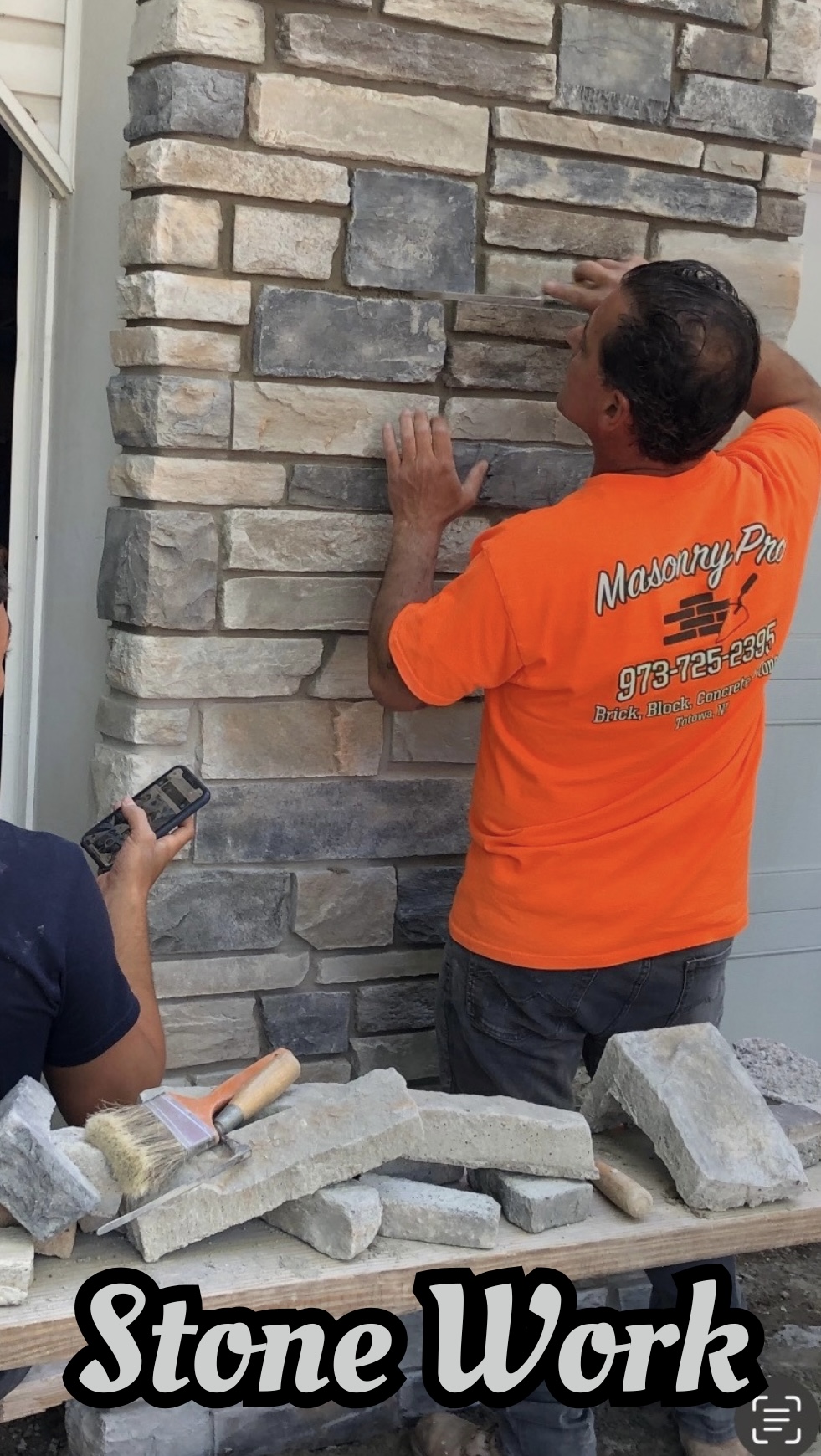
Seasonal Inspections Stop Small Stone Damage From Becoming Costly Repairs
A quick walk around your property in the spring can save you thousands down the road. Care and Cleaning for Natural Stone — Natural Stone Institute[7] After a North Jersey winter, check stone walls and steps for new cracks, loose stones, or mortar that crumbles when you press on it. Those are signs that freeze-thaw did its work over the cold months.
Salt and de-icing agents used across Bergen, Passaic, and Morris Counties speed up mortar breakdown on steps and walkways. If your front steps or walkway are regularly salted, expect the mortar joints in those areas to wear faster than the rest of your stonework.
Look at your chimney too. It takes the most weather exposure of any stone feature on the house. And honestly, most homeowners never look at it until something falls off or a leak shows up inside. A yearly check from ground level with binoculars can catch issues early. If you see anything crumbling or shifted, give us a call or text and we will come out for a closer look.
How Do You Repair Damaged Stone Masonry in North Jersey?
Inspect the stone wall for cracking, spalling, and mortar loss.
Identify the stone type and original mortar composition.
Remove deteriorated mortar to a depth of at least twice the joint width.
Clean joints of dust and debris, then dampen surfaces.
Pack new mortar matched to original strength and color in thin layers.
Tool joints to match the existing profile.
Keep repaired area moist for at least 72 hours to cure properly.
See Our Stone Masonry Work in Action
Frequently Asked Questions
How do I know if my stone wall in North Jersey needs repointing or full repair?
If mortar has eroded more than a quarter inch deep, stones are loose, or cracks run through the joints, you likely need more than surface patching. Efflorescence and water staining are early warning signs. A free on-site assessment from our team will tell you exactly what the wall needs and whether repointing alone will handle it or if stones need to be reset or replaced.
Can you put new mortar on top of old mortar on a stone wall?
No. Old mortar must be removed to at least twice the joint width so the new mortar bonds properly. Layering new over old creates a weak connection that cracks and falls out quickly, often within one or two winters in North Jersey.
What type of mortar do North Jersey masons use for stone repair?
Type N or Type O mortar is standard for most residential stone repair. These softer mortars flex with temperature changes instead of cracking. Harder mortars like Type S or Type M can damage softer stone like brownstone and limestone, which are common on older homes in this area.
Do I need a permit for stone masonry repair in North Jersey?
Repointing and surface repairs typically do not require a permit under New Jersey's Uniform Construction Code. Structural work that involves cutting into walls, modifying bearing elements, or rebuilding sections does require a permit through your local building department.
How long does professional stone masonry repair last?
Properly done repointing lasts 30 to 50 years when the correct mortar type and joint preparation are used. The biggest factor is whether the old mortar was fully removed before the new mortar went in. Shortcuts in prep cut the lifespan by half or more.
When is the best time of year to schedule stone repair in North Jersey?
Spring through fall is the best window because mortar needs temperatures above 40 degrees to cure correctly. That said, we handle emergency repairs year-round. Winter work is possible with heated enclosures, but scheduling during warmer months gives the mortar the best conditions for a long-lasting bond.
Ready for Your Stone Masonry Repair?
If you've got a project you've been putting off, or something that needs attention now, we're here to help. No pressure, just honest advice.
Need A Mason Contractor? Request An Estimate!
Fill out the form and we'll get back to you promptly.