
Retaining Wall Repair in Totowa, NJ Serving North Jersey: Fix Cracks, Leaning, and Drainage Problems Before They Get Worse
Is your retaining wall leaning, cracking, or pulling apart? You're not alone, and you're probably not looking at a full rebuild either.
We've been doing retaining wall repair across North Jersey for over 35 years. Most of the damaged walls we see in Bergen, Passaic, Essex, and Morris Counties can be fixed without tearing the whole thing down, especially when drainage is the underlying cause. Clay-heavy soil and 40+ freeze-thaw cycles each winter put constant pressure on these walls, so failure is usually about how the wall was built and drained, not about how old it is.
Send us a few photos or call for a free on-site look. We'll tell you what's wrong and what the right repair actually looks like.
Get a Free InspectionCracking, Leaning, and Bulging Are the First Signs a Retaining Wall Needs Repair
Horizontal cracks can be more serious than vertical ones. A vertical crack usually means minor settling. A horizontal crack could mean the soil behind the wall is pushing harder than the wall can handle.² Wall repair is a big part of what we do as a Totowa masonry contractor.
A retaining wall that is leaning forward or bulging at the center can tell you the same thing. The pressure is winning. North Jersey's clay-heavy glacial soil expands when wet and shrinks when dry. That constant push-pull cycle accelerates damage in block and stone walls.
Homeowners in Montclair and Wayne see this often. Hillside properties in those areas are on soil that never remains stable. If your wall shows any of these signs, it's worth getting a professional look before the damage spreads.

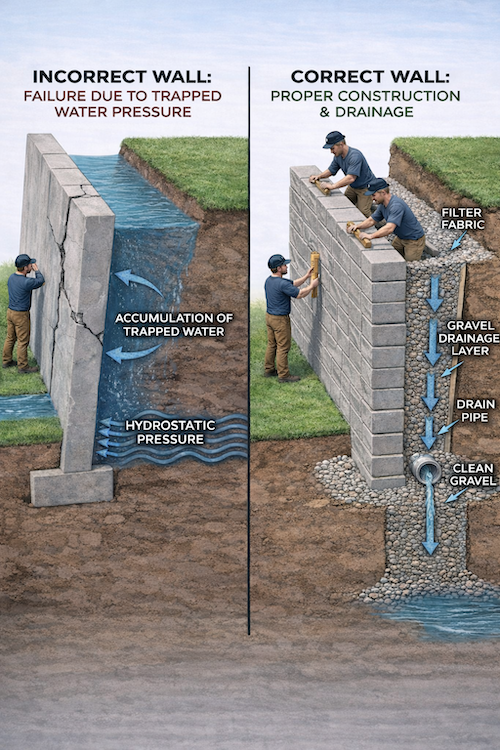
Poor Drainage Is the Leading Cause of Retaining Wall Failure in North Jersey
Water trapped behind a retaining wall creates hydrostatic pressure. That pressure can push the wall forward, crack mortar joints, and eventually cause failure.¹ Most of the damaged walls we inspect in Ridgewood and Glen Rock have drainage problems.
North Jersey averages 50 inches of rain per year. Combine that with 40+ freeze-thaw cycles and water expands 9% when it freezes. That expansion can crack block, stone, and concrete joints from the inside out.
Weep holes, French drains, and gravel backfill are the three most common drainage repairs. Seasonal drainage checks are worth doing, especially after winter. Give us a call, and we can assess whether your wall's drainage system is still functioning properly.

North Jersey Retaining Walls Over Four Feet Require a Permit and Engineer
Walls under four feet typically require a zoning permit only. Walls over four feet require a construction permit and engineering calculations from a NJ-licensed Professional Engineer.⁷ Footings must extend at least three feet below grade per NJ Administrative Code.⁶
Permit requirements can vary by municipality. Millburn, Nutley, and Garfield each have specific retaining wall application processes. An experienced masonry contractor in North Jersey can handle the permit paperwork as part of the job.
Our team coordinates with engineers regularly and manages the submission process for homeowners across Bergen, Passaic, and Morris Counties. If you're unsure what your project requires, give us a call and we can walk you through it.
Most Damaged Retaining Walls Can Be Repaired Without a Full Rebuild
Not every damaged wall needs to come down. Common repair methods include wall anchors and tiebacks for leaning walls, new drainage systems for water problems, shotcrete facings for surface damage, selective block or stone replacement, and repointing mortar joints.⁴ A full rebuild is typically only necessary when the foundation has failed.
Many homes in Paterson, Clifton, and Woodland Park sit on sloped lots with retaining walls from the 1960s through 1980s. These older block walls often need drainage upgrades and joint repair rather than total replacement.
Give us a call, and we can determine whether your wall can be repaired or if a full retaining wall installation is the better option.
Seasonal Inspections Help Prevent Costly Retaining Wall Failures
Retaining walls should be inspected annually. New cracks, forward lean, blocked weep holes, soil erosion at the base, and vegetation growing through joints are all indicators that something may be wrong.³ Identifying these issues early can help avoid expensive emergency repairs.
Spring inspections after North New Jersey's winter are especially important. Frost heave and snowmelt can shift walls overnight. Post-storm assessments also matter in flood-prone areas like Little Falls and Pompton Plains.
HOA boards and rental property owners in particular benefit from scheduled inspections to reduce liability. Give us a call, and we can discuss a seasonal inspection plan for your walls.
What causes retaining wall failure in North Jersey?
Retaining wall failure in North Jersey occurs when the wall can no longer hold back the soil behind it. The most common cause is water buildup from poor drainage, made worse by the region's clay soil and 40+ freeze-thaw cycles each winter.
- Hydrostatic pressure from clogged or missing drain systems
- Freeze-thaw expansion cracking block, stone, and concrete joints
- Foundation settling in North Jersey's variable glacial soil conditions
See Our Retaining Wall Repair Work in North Jersey
Frequently Asked Questions
How do I know if my retaining wall in North Jersey needs repair or full replacement?
Minor cracks, loose mortar, and small drainage issues usually indicate repair is sufficient. A wall that leans more than two inches, has foundation settlement, or shows widespread instability likely requires a rebuild. A masonry contractor can assess this during a free on-site inspection.
Do I need a permit to repair a retaining wall in North Jersey?
Walls under four feet typically require a zoning permit. Walls over four feet require a construction permit and engineering calculations from a NJ-licensed Professional Engineer. Your contractor can handle the permit paperwork.
Who is responsible for a retaining wall between two properties in New Jersey?
The property owner whose land the wall supports is typically responsible. If a shared boundary is involved, both owners may share responsibility. Check your property survey and consult your municipality's code enforcement office.
Does homeowners insurance cover retaining wall repair in New Jersey?
Most policies cover sudden damage from covered events such as a fallen tree or vehicle impact. Gradual deterioration, poor drainage, and normal wear are usually excluded. Document your wall's condition with photos before filing any claim.
Can I repair a retaining wall myself in North Jersey?
Minor cosmetic fixes like repointing small mortar joints and clearing weep holes are manageable. Structural repairs on walls over four feet require a permit and engineering sign-off. Improper DIY repair on a load-bearing wall risks collapse and code violations.
How long does a professional retaining wall repair take in North Jersey?
Most targeted repairs including drainage fixes, anchor installation, and repointing take one to three days. A full section rebuild may take one to two weeks depending on wall height, permit timeline, and weather conditions.
Ready to Fix Your Retaining Wall?
If you've got a project you've been putting off, or something that needs attention now, we're here to help. No pressure, just honest advice.
Need A Mason Contractor? Request An Estimate!
Fill out the form and we'll get back to you promptly.