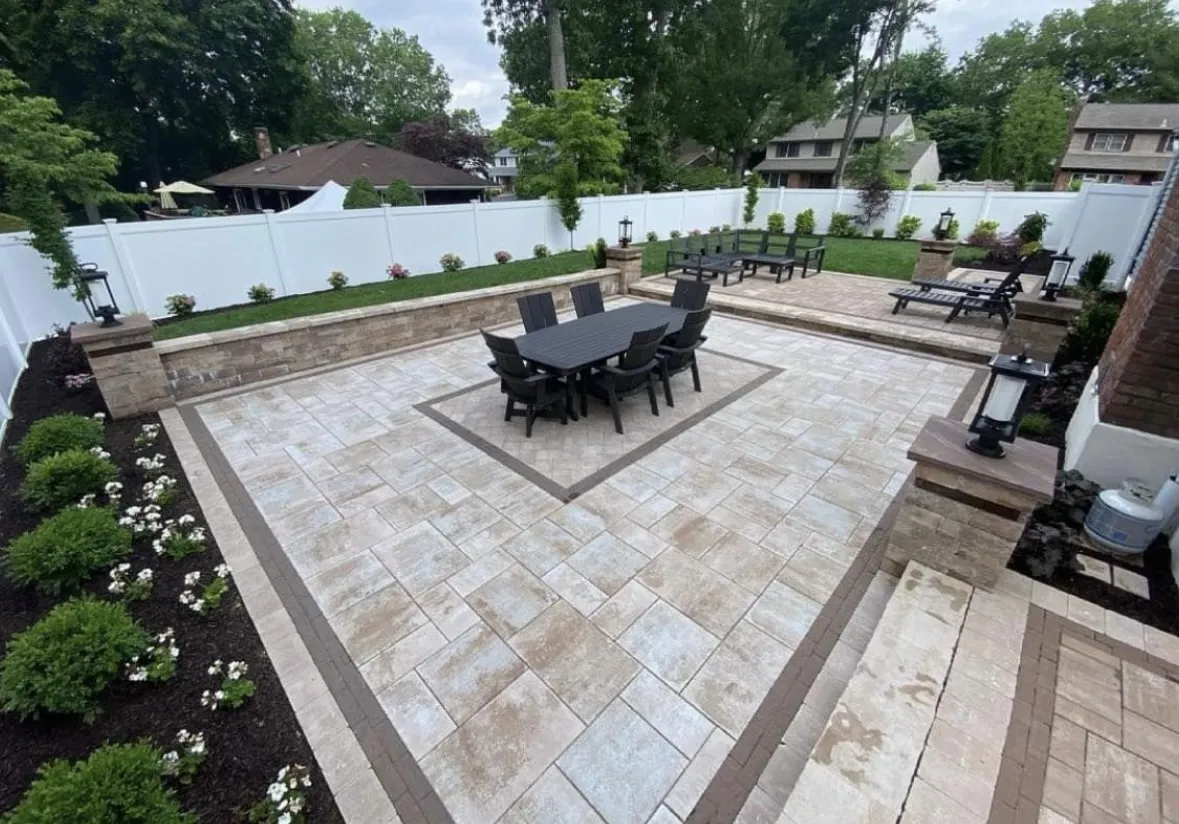
You know what project comes up a lot more than it used to? Patios. Homeowners in Bergen, Passaic, Essex, and Morris Counties want a spot outside where they can set up a grill, put a table out, maybe have a fire pit going. It has been our most common request for years now and it doesn't seem to be slowing down.
Most people already know they want a patio. The real question is what to build it with. Stamped concrete, poured concrete, or pavers. And honestly, after spending 35 years installing all three across North Jersey, we have a pretty strong opinion on this. Pavers hold up better here. Not because they cost more or look fancier, but because of what the ground does in this part of the state, and how each material handles it.
North Jersey Ground Movement Is the Real Issue
This is something a lot of homeowners don't think about until there is a problem. The soil across Bergen, Passaic, Essex, and Morris Counties has a lot of clay in it because the ground here was formed from glacial deposits that go back thousands of years.1 And clay is tricky because it holds water, swells up when it gets wet, and then shrinks back as it dries out. When winter hits and that water freezes, the ground expands even more. Northern New Jersey can go through 60 or more of these freeze-thaw cycles in just one winter.2
That kind of constant back-and-forth movement is hard on any outdoor surface, but it is especially rough on rigid materials like poured concrete and stamped concrete. Those are single slabs, so when the ground shifts underneath, the slab has no way to move with it.
Pavers deal with this differently because each one is its own separate unit sitting on a compacted base with sand between the joints. If the ground shifts a little, the pavers can move with it and adjust without breaking apart.
How Long Can a Paver Patio Actually Last
Good concrete pavers are made to meet ASTM C936, which is the national standard for interlocking paving units.3 What that means in practice is the pavers need a minimum compressive strength of 8,000 psi, and they also have to pass freeze-thaw testing under ASTM C1645 without losing more than 225 grams per square meter of surface after 28 cycles.4
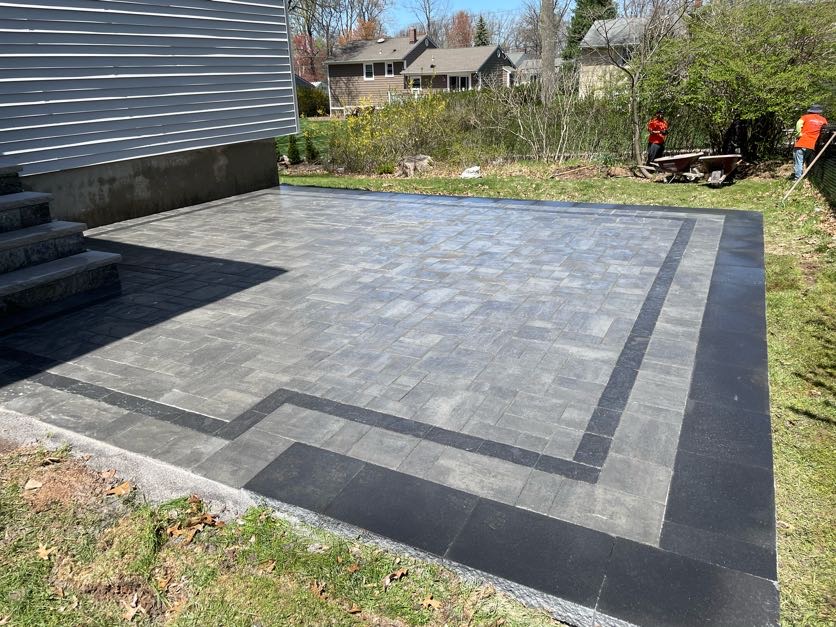
When the base underneath is done right, a paver patio in North Jersey can last anywhere from 25 to 50 years. We still see patios we put in 20 years ago that look and feel the way they should, and most of that comes down to how the base was built, not the pavers themselves.
Stamped concrete can also last a long time, somewhere around 25 to 30 years if it was installed well and gets resealed on schedule. But in a climate like ours with all the freeze-thaw, the cracking tends to show up sooner than you might expect. With pavers, if one unit cracks or shifts, you pull that one out and drop a new one in.
Why Base Prep Matters More Here Than Most Places
The Interlocking Concrete Pavement Institute says pedestrian paver areas need at least 4 inches of compacted aggregate base when the soil drains well.5 That is the minimum starting point. In North Jersey, where clay soil does not drain well at all, we almost always have to go beyond that, but it depends on what foundation is already in place and how much water the site holds.
Building a proper paver base in this region means digging down to stable ground, compacting the subgrade so it is solid, laying aggregate in lifts and compacting each one separately, and then spreading bedding sand on top before the pavers can go down. If someone skips any of those steps or rushes through them, the patio is going to show it over time.
And honestly, this is probably the single biggest difference between a patio that holds up and one that doesn't. We have gone back and fixed more patios where the original contractor skimped on the base than we can count at this point.
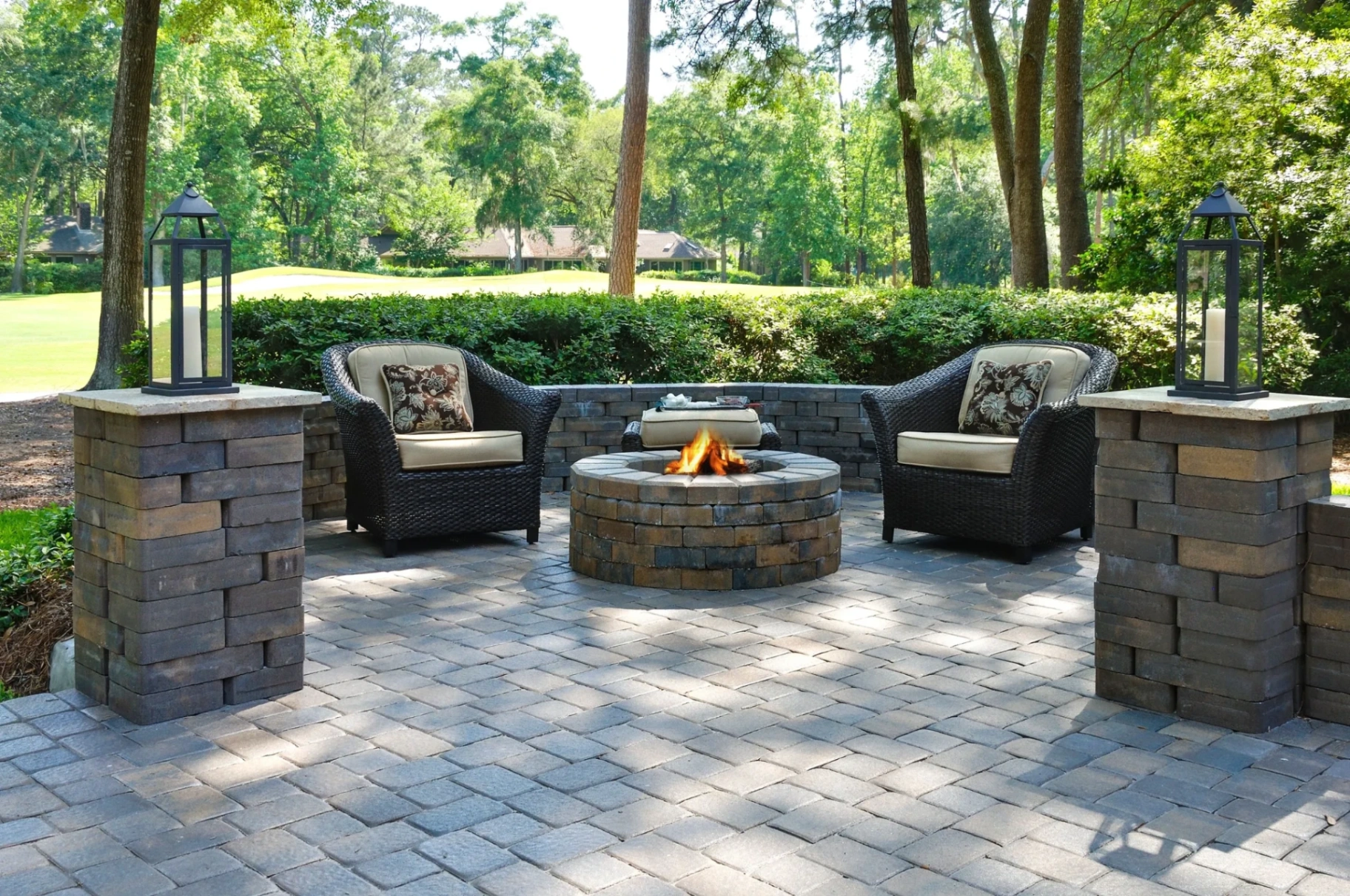
What Happens When Something Needs to Be Fixed
Any outdoor surface in North Jersey is going to need some attention at some point. That is just what happens when you live in a freeze-thaw climate. The real question is how much the repairs will cost and how easy they are to deal with.
With pavers, if a section has settled, you can lift those specific pavers out, fix whatever is going on with the base underneath, and lay them back down. If one paver cracks or gets a stain that won't come out, you swap it for a new one. The rest of the patio around it is not affected at all, which is one of the reasons why pavers can actually save money over the long run. Need help? Paver patio repair is one of our specialties.
Stamped concrete doesn't give you that option. When a slab section cracks, the repair gets complicated because you can not just patch a stamped pattern and expect it to match what was already there.
Material and Design Options for North Jersey Properties
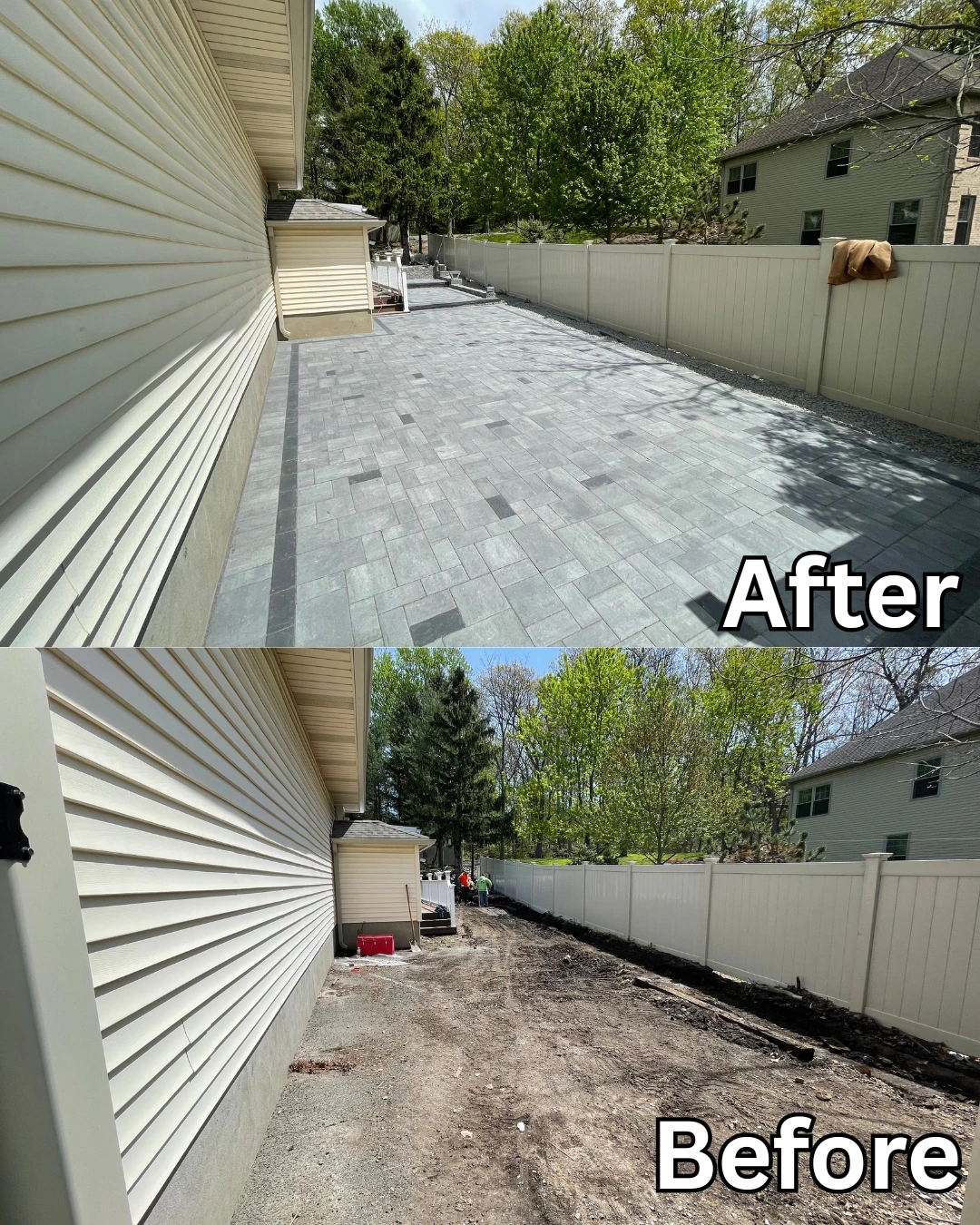
Pavers come in concrete, brick, and natural stone, and each one gives you a different look. Concrete pavers are what we install the most for residential patios around here because the color and pattern options are wide and the price point is reasonable.
Brick pavers have a more traditional feel to them, and they tend to look great with the Colonial and Tudor homes you see all over Montclair, Ridgewood, and Morristown. Then there is natural stone like bluestone, which is a premium choice that a lot of homeowners in Morris and Bergen Counties ask about. Learn more about our paver and natural stone patio work.
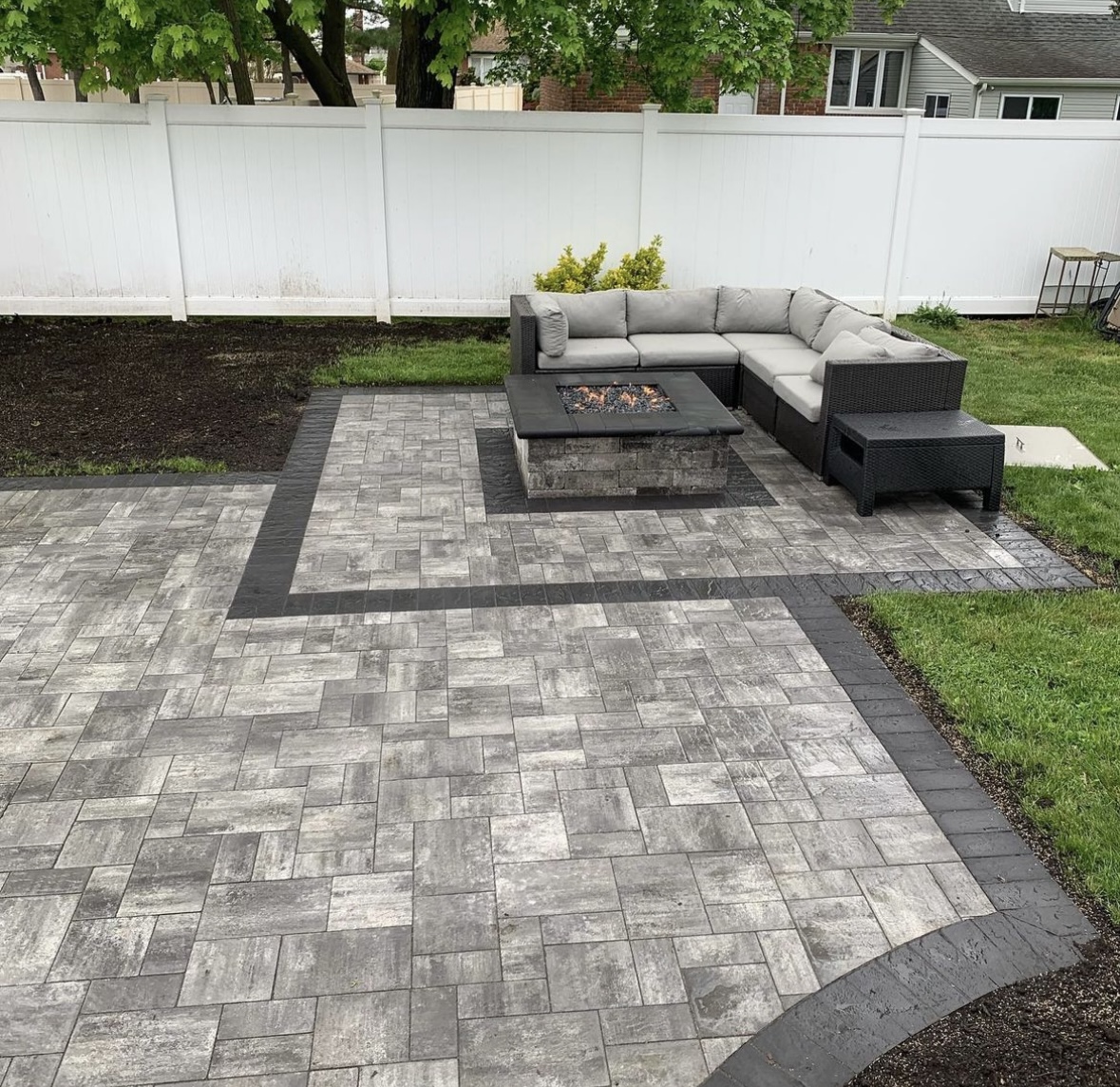
You are not stuck with a basic rectangle either. Herringbone, running bond, basket weave, and circular patterns can all be done with standard paver sizes. And you can mix things up, like running a bluestone border around the edge with concrete pavers in the middle, so you get a custom look without paying for the entire patio in natural stone.
Maintenance and Home Value
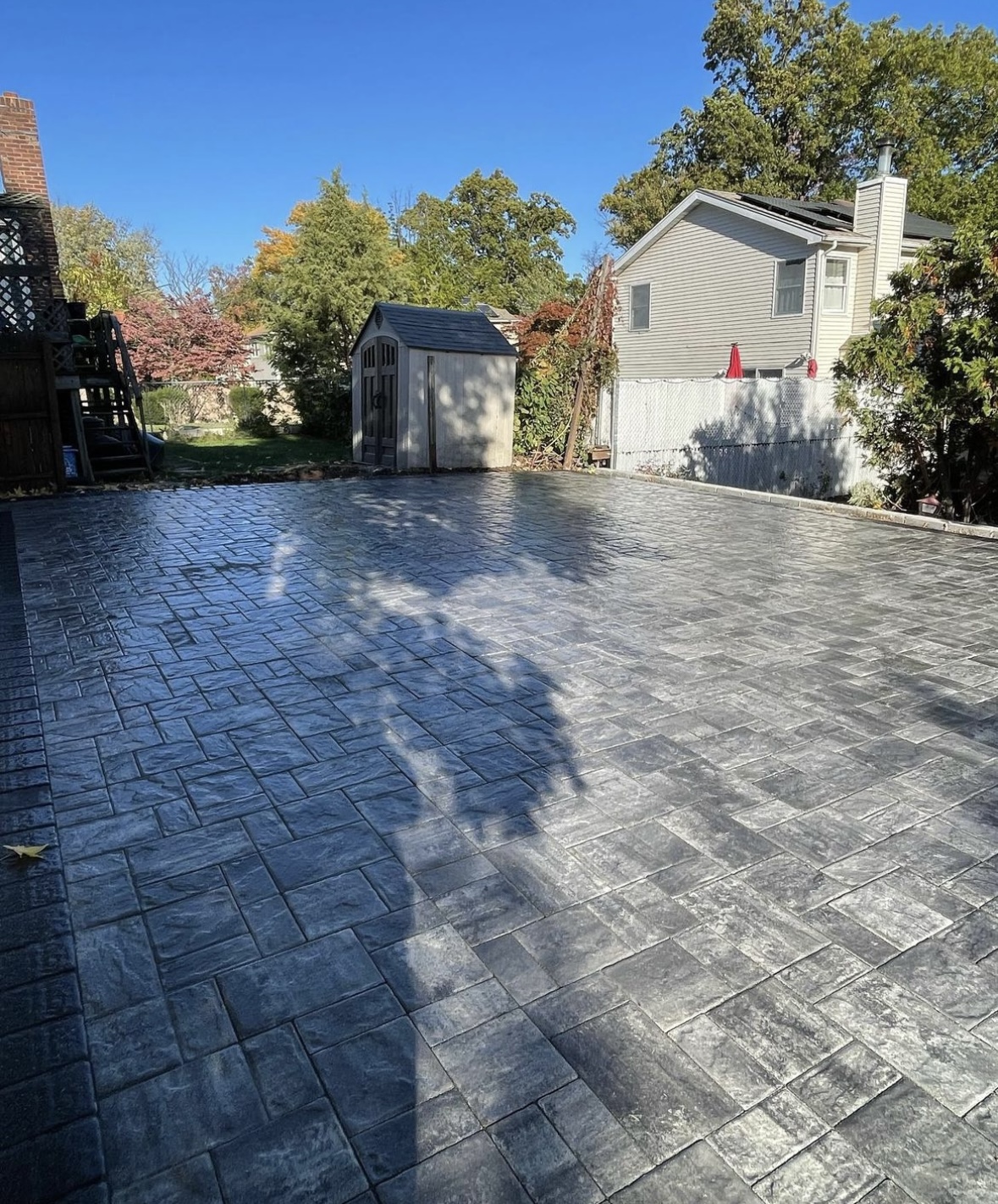
The upkeep on paver patios is pretty simple. All you need to do is sweep it off and rinse it with a hose every once in a while. If the patio is shaded or faces north, it's possible that algae will build up over time, and you may need to power wash once a year to remove it.
The sand between the joints is called polymeric sand, and it does two things. It locks the pavers together, and it keeps weeds from growing up between them. Over time, it can wear down, so you will want to add some extra every few years.
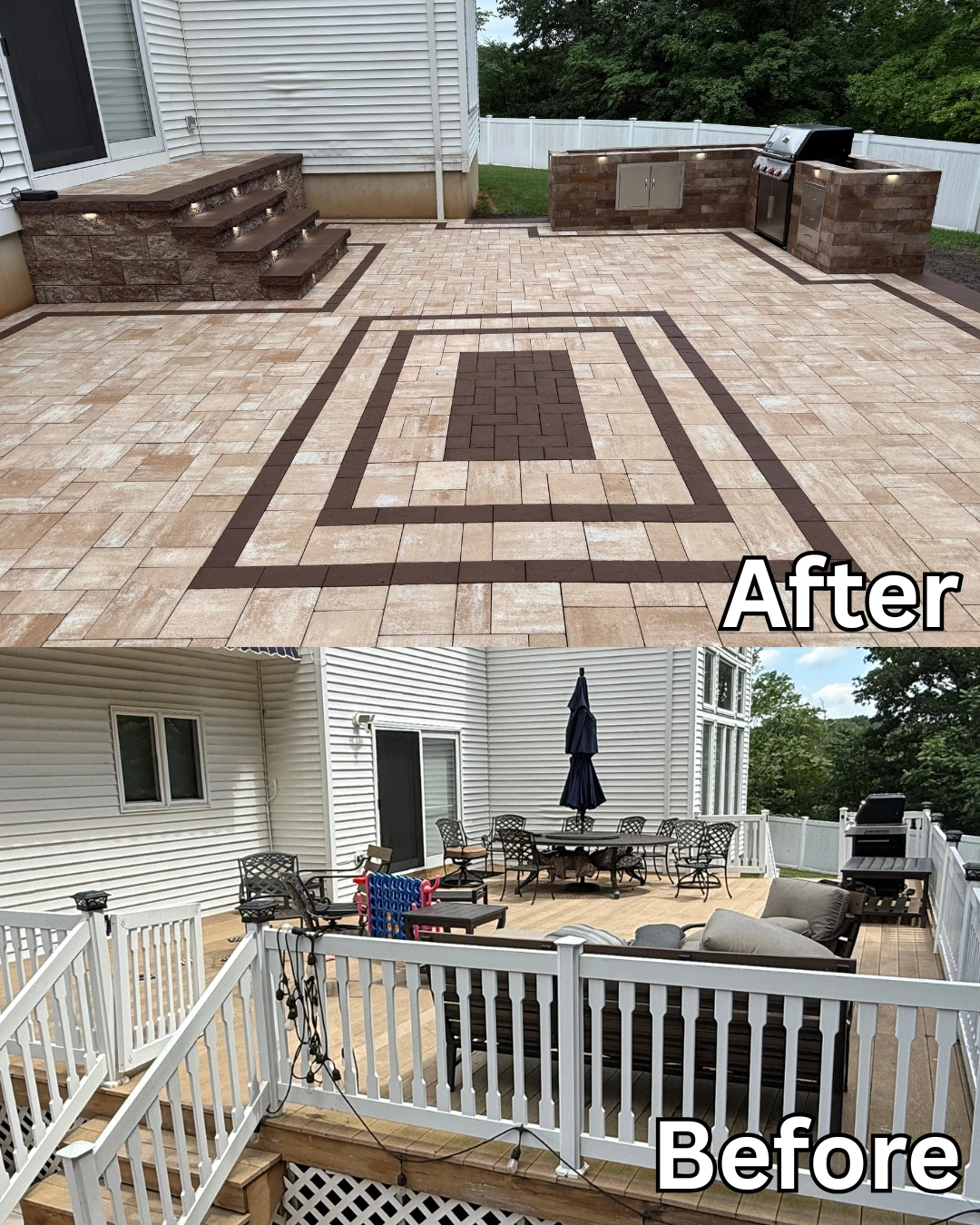
Outdoor living spaces are something buyers in North Jersey want. A patio with room for seating, a grill setup, and maybe a fire pit can really make a backyard feel like it's part of the house. Pair it with an outdoor kitchen and you've essentially added livable square footage to your home.
Frequently Asked Questions
How much does a paver patio cost in North Jersey?
There are many factors that can affect the price. It depends on how big the patio is, what type of paver you go with, and how much prep work the site needs. For a basic concrete paver patio, you are generally looking at $20 to $35 per square foot installed. That number can go up if you are using natural stone, or if the property needs extra grading, drainage, or retaining walls to make the project work. We always do a site visit first and give you a written estimate based on what is actually involved.
Are pavers better than stamped concrete for North Jersey weather?
From what we have seen over 35 years, yes. Pavers handle freeze-thaw better because each one can shift on its own when the ground moves, instead of cracking the way a rigid slab does.³ They are also a lot easier to repair if something does go wrong down the road. Stamped concrete can look great when it is first done, but with the amount of freeze-thaw we get in this area, the cracking risk goes up and the repairs get more expensive.
How long does it take to install a paver patio?
For most residential patios, somewhere between 3 and 7 days depending on the size, how much digging is involved, and how complex the layout is. A straightforward 300 to 400 square foot patio on a site with good access can usually be finished in under a week. If the project includes retaining walls, drainage work, or multiple levels, that timeline stretches out. We always give you a realistic schedule up front so you know what to expect.
Do I need a permit for a paver patio in North Jersey?
It depends on the town and how big your patio is going to be. A lot of municipalities across Bergen, Passaic, Essex, and Morris Counties set limits on how much impervious surface you can add to a property, and once you go past that number, you might need a grading or zoning permit. Some towns will also require dry wells for managing stormwater. We handle the permit research as part of the project so it is one less thing you have to worry about.
What kind of maintenance does a paver patio need?
Not much. Sweeping and the occasional rinse are usually enough. The polymeric sand between the joints wears down over time, so you will want to add more every few years. Sealing is optional but it can help keep the color looking fresh. The biggest thing to keep an eye on is settling after winter. If you spot any low areas or shifted pavers early, you can fix them before they turn into a bigger issue.
Can you install a paver patio in the winter?
It is possible depending on conditions. Pavers are dry-laid, meaning there is no mortar involved in a standard installation, so curing temperature is not a concern the way it would be with concrete. The real challenge in winter is frozen ground, because excavation and compaction get a lot harder when the soil is frozen solid. That is why most homeowners plan their patio projects between April and November.