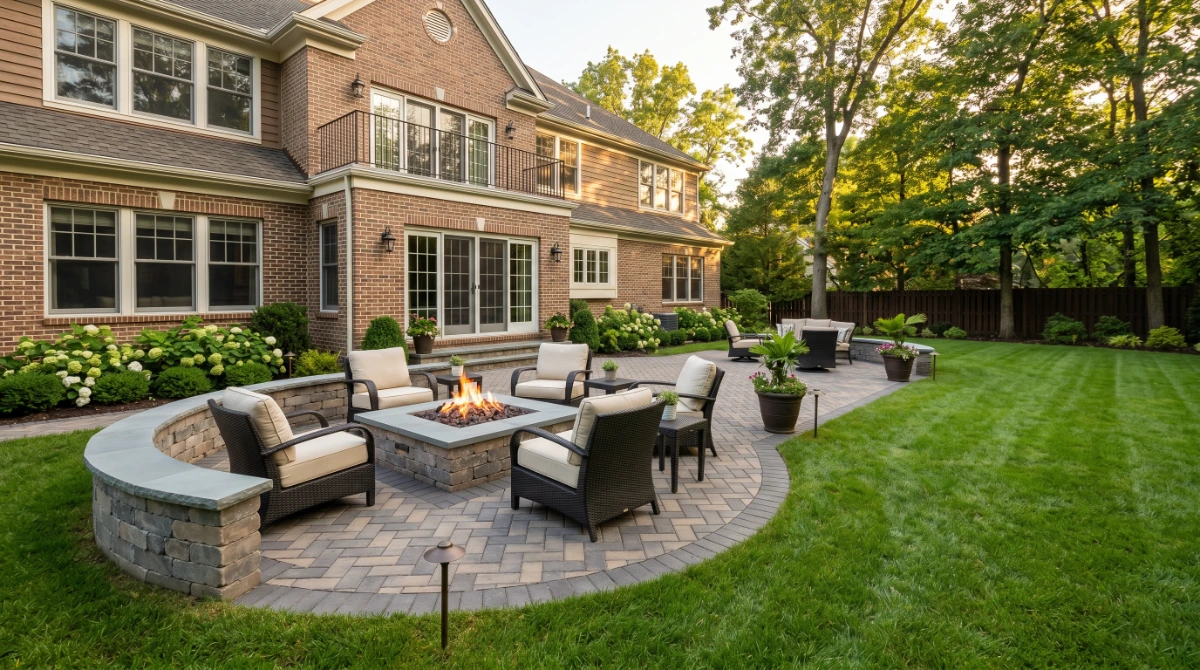
If you were to get a quote from three different paver or masonry contractors on what a paver patio costs these days, you are most likely to walk away with three different prices. Each of those quotes could differ by a few thousand dollars. This will certainly leave many homeowners more confused than when they started. That price difference is real, and it usually comes down to choices most people never see on the surface. There are various factors that can drastically affect the price, such as the material used and the prep work required before laying the pavers. We are Masonry Pro Construction, a family-run masonry company based in Totowa, NJ. Biagio has been laying pavers and stonework across North Jersey for more than 35 years, with his son Gino working alongside him for the last fourteen or so years. So this page is less about a single price tag and more about what moves the number up or down, because once you understand the reasons, the quotes you get start to make a lot more sense.
Paver patio costs in North Jersey can vary widely depending on the patio's size, the material you choose, and how much prep your yard needs before a single paver is set. Let us walk through it the way we would standing in your backyard.
The Short Answer on Price
Most paver patios in North Jersey run somewhere between $20 and $35 per square foot installed, depending on the material and what the site needs. That range covers everything from a straightforward concrete paver square to natural stone with curves and a built-in border. Layered against the sizes we build most often, the estimated ranges look like this:
- A smaller patio, roughly 250 to 400 square feet, usually runs about $7,500 to $9,800
- An average patio, often in the 500 to 700 square foot range, tends to land between $15,000 and $20,000
- A large patio at 800 square feet or more, especially with a seat wall, steps, or a fire pit worked in, can run $25,000 to $50,000
These are estimated ranges and not a quote, because two patios of the same size can price very differently once you factor in the material, the ground underneath, and how much the yard slopes. The rest of this page covers what actually pushes a project toward one end of the range or the other.
The Material You Choose Matters
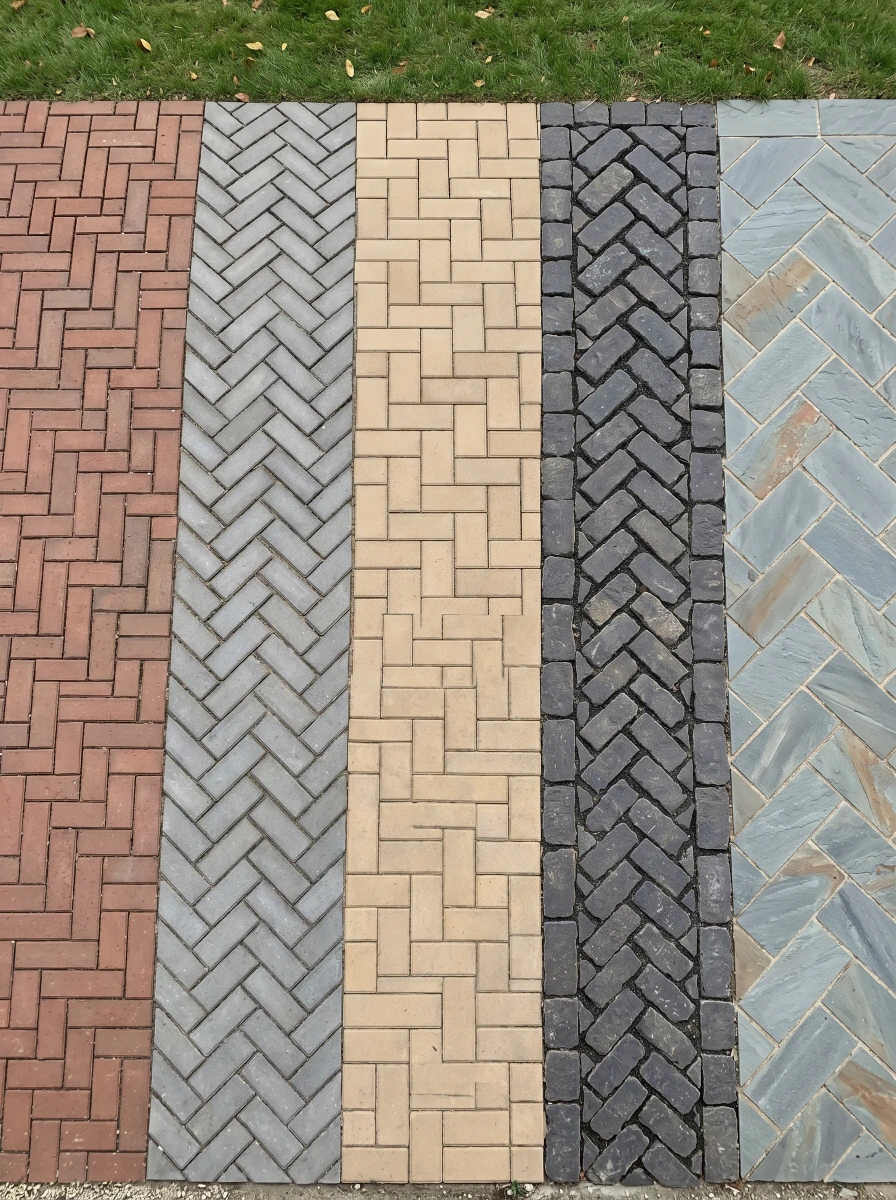
Material is usually the first hurdle, and it's the part homeowners enjoy most, because it is where the overall look of the patio is decided. Concrete pavers are the most common choice around us, and brands like Cambridge, Techo-Bloc, Belgard, Nicolock, and EP Henry all make them in dozens of colors, shapes, and surface textures. On material alone, concrete pavers tend to run around $4 to $10 per square foot, with premium lines at the higher end. Natural stone is a different world, and bluestone or flagstone can run $12 to $25 or more per square foot just for the raw material, which is a big reason a stone patio will almost always cost more than a paver one of the same size. Travertine sits in the middle, and because it stays cooler underfoot, it is often installed around pool decks.
Now for the part where North Jersey changes the math, because our winters can be hard on any outdoor hardscape. According to the Office of the New Jersey State Climatologist at Rutgers, the northern part of the state sees the coldest stretches in New Jersey, with long periods of subfreezing days each winter. That means repeated freeze-and-thaw cycles, where water can seep into tiny gaps, freeze, expand, and then thaw again, over and over for months. A denser, higher-quality paver handles that cycle better and holds its color longer against road salt and sun, which is part of why premium brands tend to cost about 20 to 40 percent more than basic pavers and usually carry longer warranties, too. That difference might not matter much in a mild climate, but here it can be the line between a patio that still looks sharp in fifteen years and one that starts to chip, fade, and flake a lot sooner.
A lot of people start their planning early by searching the internet and browsing colors and styles. They may have seen an outdoor patio at a neighbors, or watched an episode on HGTV, or in a magazine, something like a specific Cambridge blend or a Techo-Bloc style. Deciding on the paver style, color, texture, early on can actually help. By already picking out the paver you want, that price carries through the rest of the budget and can set the tone for the other decisions.
Why a Bigger Patio Can Cost Less Per Square Foot
You might expect the price per square foot to stay the same, no matter how big your patio is, but that's usually not true. In fact, the price often decreases as the patio size increases.
The main reason for this is that many costs are fixed before the first pavers are laid. Costs like bringing in the crew and equipment to your property, digging the area, and preparing the base are upfront and don't vary much with project size.
So, when you start to calculate the costs for a smaller patio, these fixed expenses make each square foot seem more expensive. But for a larger patio, those costs spread out over a larger area. This lowers the price per square foot, even though the overall cost goes up. It's like a balancing act.
A small patio can feel costly per foot, while a larger one gives you more space for your money. This is something to keep in mind if you're unsure about the size, since making the patio a little bigger is often less expensive than you might think.
The Part You Will Never See Is the Part That Matters Most
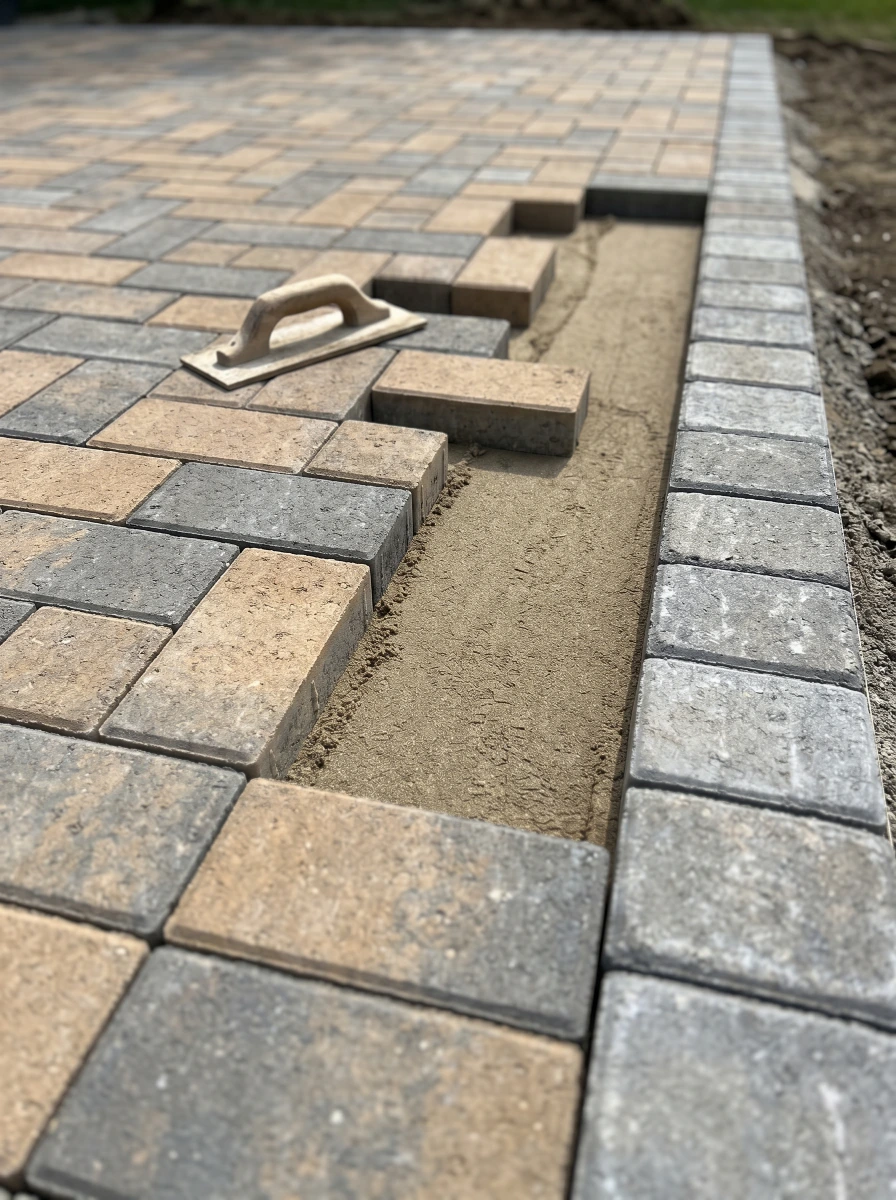
The base is everything, and it is the one thing you cannot point to once the patio is finished. It sits under the pavers, out of sight, and it is also the first place a cheap job cuts corners. A patio is only as stable as what is beneath it, so when a quote comes in surprisingly low, the base is usually where the savings came from.
North Jersey soil makes this even more important. A lot of the area sits on heavy clay, the kind that holds water and shifts as it freezes and thaws, and clay can be rough on a patio base if it is not handled right. You can actually look up what is under your own property through the USDA Web Soil Survey, and across much of Passaic and Essex County you will find clay heavy series that drain slowly. Proper prep means digging down several inches, often eight to twelve, then building the base back up with crushed stone compacted in layers so it will not settle later. On clay heavy lots, and we see plenty of those, the right approach often adds a layer of geotextile fabric and a perforated drainage pipe to move water away from the patio, which can add a few dollars per square foot.
It is not glamorous and it does not show up in a photo, but it is the difference between a patio that stays flat and one that starts to sink and wobble within a few years. When you compare two quotes that are far apart, this is almost always where the gap lives. One contractor priced a proper base, and the other priced a thinner one that looks identical on day one and tells a very different story by year three.
Your Land Has a Say in the Price Too
Every yard is a little different, and the shape your property is in before work starts can move the number around. A flat, open backyard with easy access is the cheapest scenario, because the crew can get equipment and material in and out without a fight. Things get pricier when the yard slopes and needs grading, or when there is an old concrete slab or a tired patio that has to come out first.
Tight access matters more than most people expect, since hauling tons of base stone and pavers by hand through a narrow side gate takes a lot longer than rolling it straight in. None of these are deal breakers. They are just real costs that depend on what we find when we walk the property with you.
Slope is the one that surprises people most. When the grade drops far enough across the patio area, we will usually add a low wall or a single step so the finished space is actually usable, and that does move the price. It is not padding, it is what makes a patio work on a yard that is not flat, and it is one of the more common reasons a quote comes in above what someone expected.
Pattern and Design Are Where It Becomes Yours
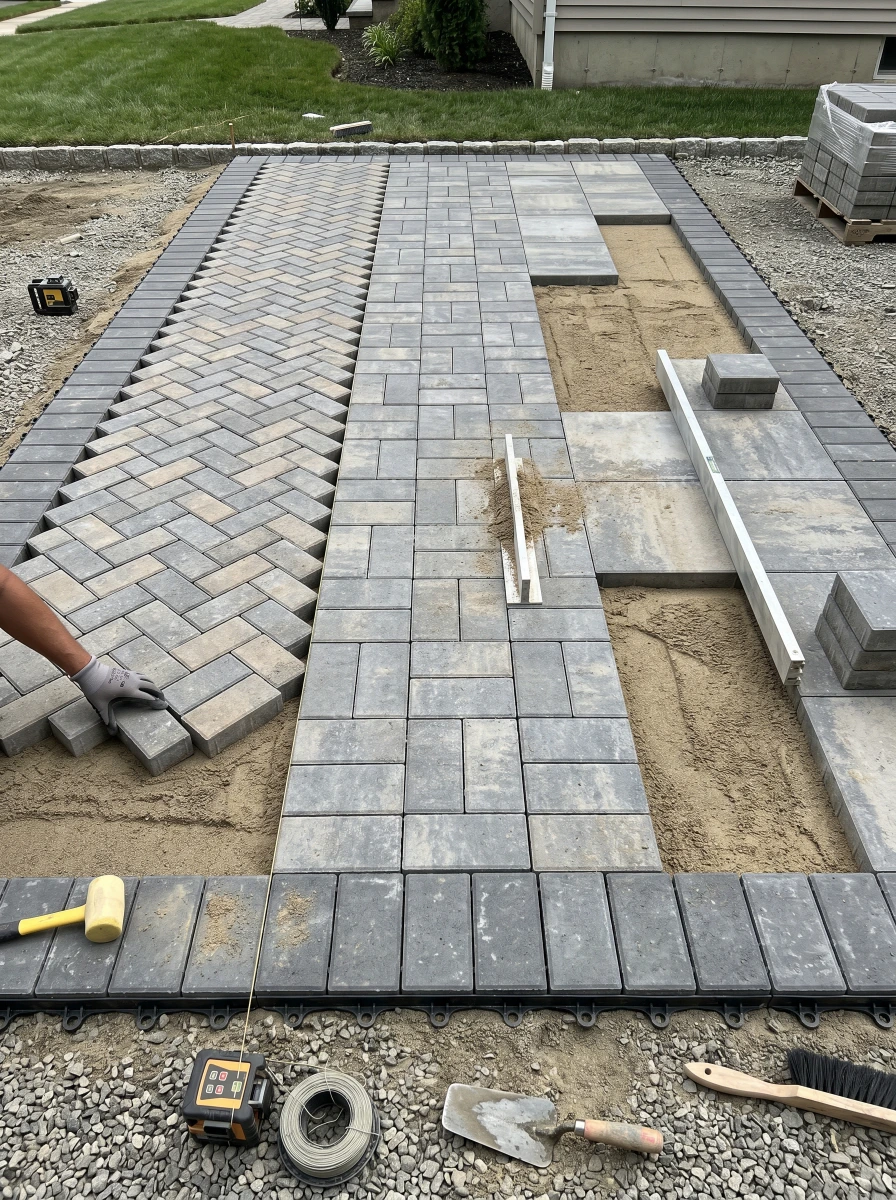
This is the fun part, and it is also where a patio stops looking like everyone else's. A simple running bond layout in one color is clean and budget friendly, and there is nothing wrong with it at all. But once you start adding a herringbone pattern, a contrasting border, curves instead of straight lines, or two or three paver sizes blended together, the work changes. Those designs take more cuts, more planning, and more material to account for waste, so yes, they do add to the cost.
What you get back is a patio that feels designed for your home instead of pulled off a shelf. A soldier course border framing the edge, a banding detail running through the field, an inlay where the dining table will sit, these are the touches that turn a plain rectangle into something custom. So the design choices that raise the price are usually the very same ones that make the patio uniquely yours, and for a lot of homeowners that trade is well worth it. It is the difference between a patio and your patio, and it is the part you will point out to everyone who visits.
What It Costs to Keep It Looking Good
Pavers are low maintenance, though not no maintenance, and the upkeep is cheap compared to the install. Every couple of years the joint sand can wear down and may need refreshing, which keeps the pavers locked together and helps hold weeds back. A wash now and then handles most of the rest. One of the quiet advantages of pavers over a poured or stamped surface is that if one ever cracks or stains, you can lift that single paver and swap it, instead of patching a whole slab. In our freeze and thaw climate that flexibility is a real plus, and it is a big reason we steer most North Jersey homeowners toward pavers over stamped concrete in the first place.
Common Questions About Paver Patio Cost in North Jersey
How much does a paver patio cost in North Jersey?
Most paver patios in North Jersey run about $20 to $35 per square foot installed, so an average patio in the 500 to 700 square foot range often falls between $15,000 and $20,000, while smaller patios start around $7,500. The final number depends on the material, the size, and how much prep your yard needs. These are estimated ranges, and a free on site estimate is the only way to get a real figure for your project.
Why are some paver patio quotes so much cheaper than others?
A much lower quote usually means a thinner base or lower grade material, which are the parts you cannot see on day one. The base is where corners get cut, and a patio built on a poor base can start to sink within a few years. It is worth asking any contractor exactly how deep they dig and what goes under the pavers before you sign anything.
Which pavers hold up best in New Jersey winters?
Denser, premium grade concrete pavers from brands like Techo-Bloc, Cambridge, and Belgard tend to handle our freeze and thaw cycles and road salt better than budget pavers. They hold their color longer and resist cracking and flaking. They cost a bit more up front, but in a climate like North Jersey's, that extra durability usually pays off over the life of the patio.
How long does it take to install a paver patio?
Most residential paver patios take somewhere between two and five days, depending on the size, the design, and how much excavation and base work the site needs. A small, simple patio can go faster, while a large patio with curves, a border, or a built in feature takes longer. Weather and yard access can shift the timeline too.
Do I need a permit for a paver patio in North Jersey?
It depends on your town, since many North Jersey municipalities require a zoning permit for a new patio, and the rules vary from one borough to the next. Some towns also limit how much of your lot can be covered by hard surfaces. We can help you figure out what your specific town requires before any work starts.
Are pavers a better choice than stamped concrete here?
For most North Jersey homes, yes. Stamped concrete can crack along the lines our freeze and thaw winters create, and once it cracks, the whole slab is hard to repair cleanly. Pavers flex with the ground and let you replace a single stone if needed, which holds up better over time in our climate.
Get a Real Number for Your Patio
Every patio is a little different, and the only way to know your number is to look at your actual yard, your soil, and the design you have in mind. We offer free on site estimates across Bergen, Passaic, Essex, and Morris County, with no trip fee, and you will get a straight answer about what your project really takes.
Masonry Pro Construction is family owned, fully licensed, and insured, NJ HIC License #13VH06777200, and we have been building patios and masonry across North Jersey for more than 35 years. Give us a call or send over a few photos of your space, and we will walk you through what is possible.