Everyone picks out the pavers. Almost nobody asks what goes under them. That's a shame, because the base is what decides whether your patio stays flat for twenty years or starts to dip by year three.
We're Masonry Pro Construction, a family company and masonry contractor in Totowa. Biagio has been building patios across North Jersey for more than 35 years, and his son Gino runs the jobs in the field. This page walks through how we build a base, layer by layer, and why our local ground changes the recipe. For the full picture of how a project runs, see our page on paver patio installation in Totowa.
How Deep We Dig for a Paver Patio
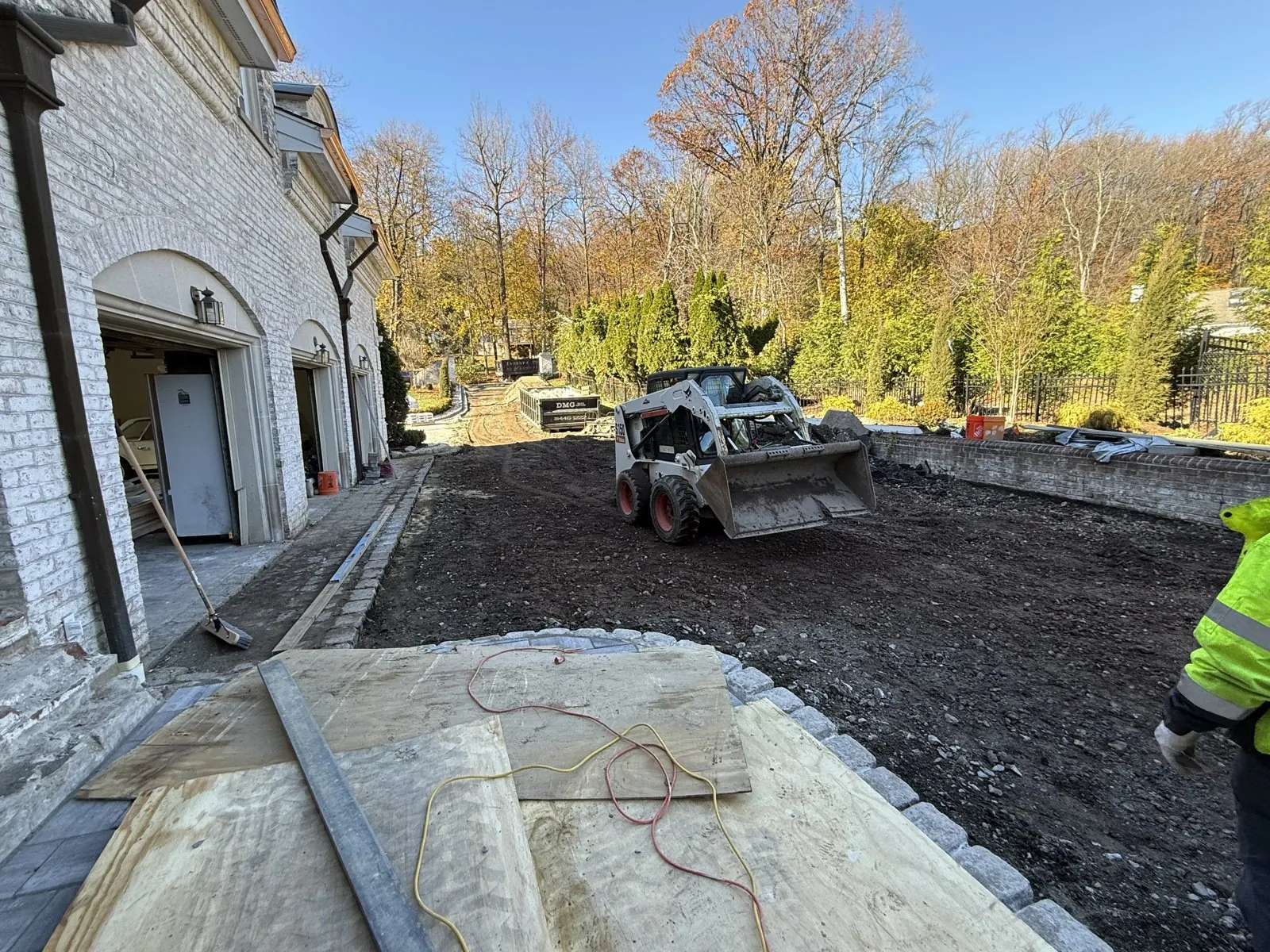
There's no single number, because every yard is different. A typical patio here gets about 6 inches of compacted stone. Add the bedding sand and the pavers on top, and the dig runs about 9 to 10 inches in total.
Driveways get more. A driveway usually gets an 8 inch stone base, so we dig about 11 to 12 inches.
When the ground is firm and drains well, which a lot of North Jersey yards do, a shallower dig can work. Soft soil, loose fill from an old project, or a spot where water sits all tell us to go deeper. We decide that on site, after we've seen what comes out of the hole.
The Stone Layer, Built in Lifts
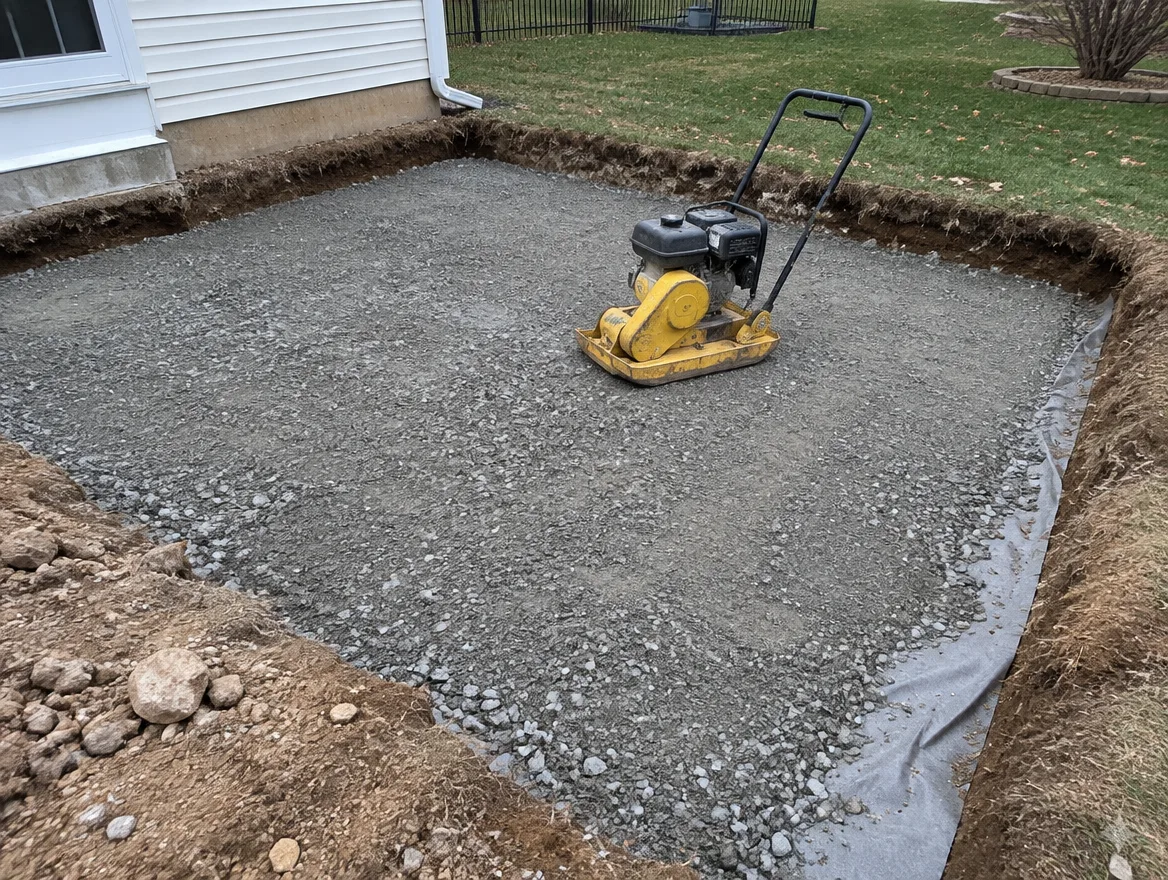
The base is dense-graded crushed stone. It's a mix of stone sizes, so the small pieces fill the gaps between the bigger ones. When it's compacted, it locks into a hard layer that doesn't shift.
We never dump the full depth in at once. We spread about 4 inches, run the plate compactor over it, then spread the next 4 inches and compact again. An 8 inch driveway base is two of those layers. Thickness is measured after compaction, not before, because loose stone can lose a good part of its height once it's packed down.
This is also where the slope goes in. We set the pitch in the stone so rain runs off where it should, usually away from the house. If the pitch isn't in the base, no amount of fussing with the pavers will fix it later.
One Inch of Sand, Screeded Flat
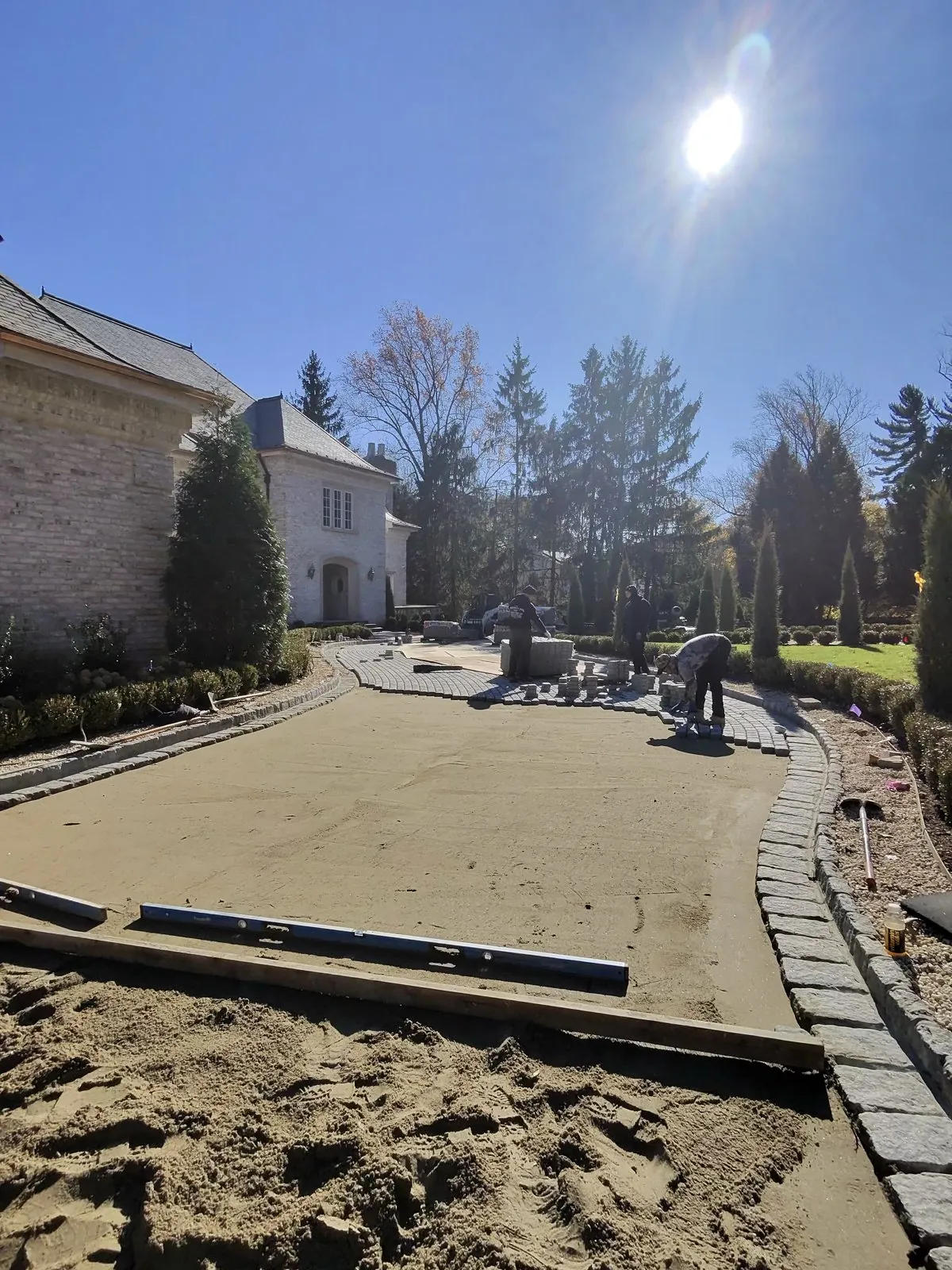
On top of the stone goes about 1 inch of coarse concrete sand. We set metal screed rails on the compacted stone, fill between them, and pull a straight board across to get it perfectly level. Then the rails come out and the gaps get filled by hand.
One inch is the target for a reason. Cambridge, Techo-Bloc, and Belgard all call for a thin sand layer in their installation guides, and following their guides is part of what keeps the manufacturer's warranty good. The Interlocking Concrete Pavement Institute1 sets the same kind of standard for the whole industry. Too much sand is a common shortcut, and it's one of the main reasons pavers start to rut and sink.
Why North Jersey Ground Changes the Recipe
Most of our area sits on glacial till, the dense, rocky mix the glaciers left behind. Soils like the Boonton3 and Haledon series, common across Passaic and Essex counties, have a packed layer a foot or two down that water has a hard time getting through. You can look up what's under your own yard in the USDA Web Soil Survey2.
Water that can't drain sits under the patio. In January it freezes, expands, and pushes up. North Jersey gets a lot of those freeze and thaw swings every winter4, so a base that holds water is going to move.
That's why two extra pieces sometimes go in:
- Separation fabric. On clay or silty ground, we lay fabric under the stone so the soil can't work its way up into the base and soften it.
- Drain pipe. We look at where the water comes from and where it can go. Sometimes sloping the patio away from the house is enough. Where water collects under the paved area, we run a perforated pipe to carry it out to an outlet.
Edges That Hold It All Together
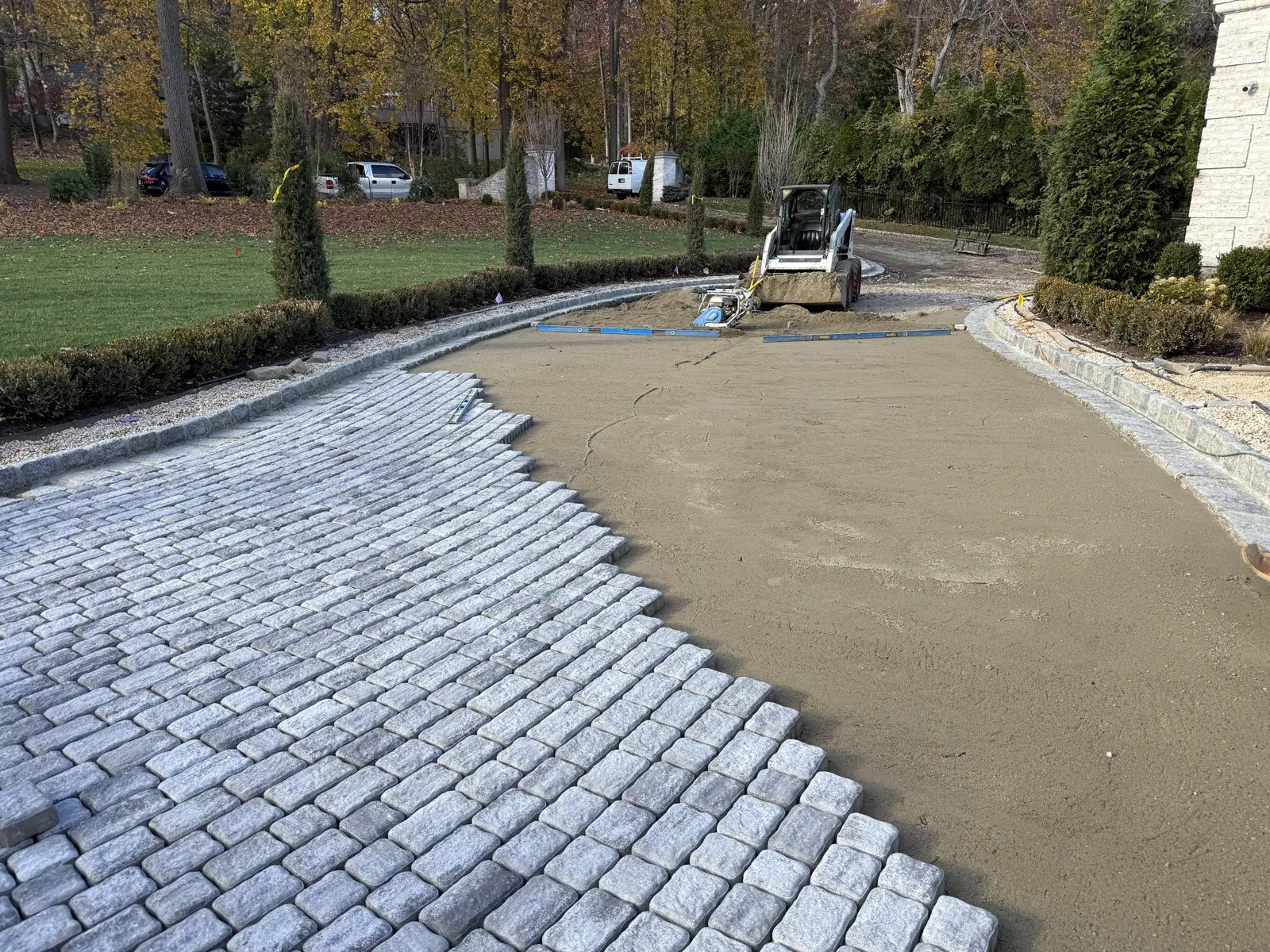
The border and edge restraint keep the whole field of pavers from creeping outward. Without a solid edge, the outside rows slowly spread apart, the joints open, and the sand washes out. We set the borders on the same compacted base as the field, so the edge is just as solid as the middle.
Fixing a Patio Someone Else Built
We get a lot of calls about patios that are only a few years old and already sinking. The signs are easy to spot: low spots that hold water after rain, pavers that rock when you step on them, and borders that are pulling away from the field.
We don't just pull the pavers and put them back. We lift the bad section and look at the stone base, the bedding sand, and the edge restraint underneath. The goal is to find the cause first. A downspout dumping water on one corner, for example, gets fixed before a single paver goes back down. Otherwise the same corner sinks again next spring.
Common Questions About Paver Patio Base in North Jersey
How deep should a paver patio base be in New Jersey?
Most patios we build here get about 6 inches of compacted crushed stone, plus about 1 inch of sand and the pavers on top. That means digging about 9 to 10 inches in total. Soft or wet ground calls for more.
What kind of stone goes under pavers?
We use dense-graded crushed stone, a mix of stone sizes. The mix packs together when it's compacted, so it forms a hard layer that doesn't shift.
How thick should the sand be under pavers?
About 1 inch of coarse concrete sand, screeded level. That's what Cambridge, Techo-Bloc, and Belgard call for, and too much sand is a common reason pavers sink.
Do I need fabric under my paver patio?
On clay or silty ground, yes. Separation fabric keeps the soil from mixing up into the stone base. On firm, well-drained ground it often isn't needed.
Why is my paver patio sinking?
Usually it's the base. It may be too thin, not compacted in layers, or sitting where water collects. We lift the section, check the stone, sand, and edges, and fix the cause before resetting the pavers.
Want to Know What's Under Yours?
If you're planning a patio, or you've got one that's starting to sink, we'll come out and take a look. We offer free on site estimates across Bergen, Passaic, Essex, and Morris counties. To see how a full project runs from layout to cleanup, visit our page on paver patios in Totowa.
Masonry Pro Construction is family owned, fully licensed, and insured, NJ HIC License #13VH06777200.