Every winter, North Jersey homeowners do the right thing and salt their front steps so nobody slips. Then spring comes, and the top of the steps is flaking, the edges are crumbling, and a stone tread or two has come loose.
We're Masonry Pro Construction, a family company and masonry contractor in Totowa. Biagio spent 30 years as a union bricklayer before starting the company, and his son Gino runs the jobs in the field. This page explains what salt does to steps, how to tell a small repair from a bigger problem, and what each one costs. For the full range of step work we do, see our page on steps and stoops repair in Totowa.
What Salt Actually Does to Your Steps
Salt itself isn't the whole story. The damage comes from salt plus water plus our winters. Concrete and mortar soak up a little water. When steps stay wet and the temperature swings above and below freezing, that water freezes, expands, thaws, and does it again. Salt keeps the surface wet longer and adds pressure inside the top layer.
Over a few winters, the top of the concrete starts to flake off in thin pieces. Contractors call it scaling. Mortar joints soften and wash out. Once water gets behind a stone tread or under a landing, the freeze and thaw cycle starts working on the masonry underneath too.
North Jersey gets plenty of those swings2, so steps here take a real beating. The Portland Cement Association1 has long warned about deicers and scaling on concrete.
Signs Your Steps Need Attention
- Flaking or pitting on the surface, especially on the treads where people walk and salt piles up
- Mortar joints that are soft, sandy, or missing
- A stone tread that rocks when you step on it
- Cracks along the edges of the treads or the landing
- A landing that has dropped or tilted away from the house
- Steps pulling away from the foundation or the door threshold
When a Targeted Repair Is Enough
A lot of salt damage looks worse than it is. If the steps are still solid underneath, the fix can be small:
- A few bad mortar joints. We cut out the soft mortar and repoint the joints.
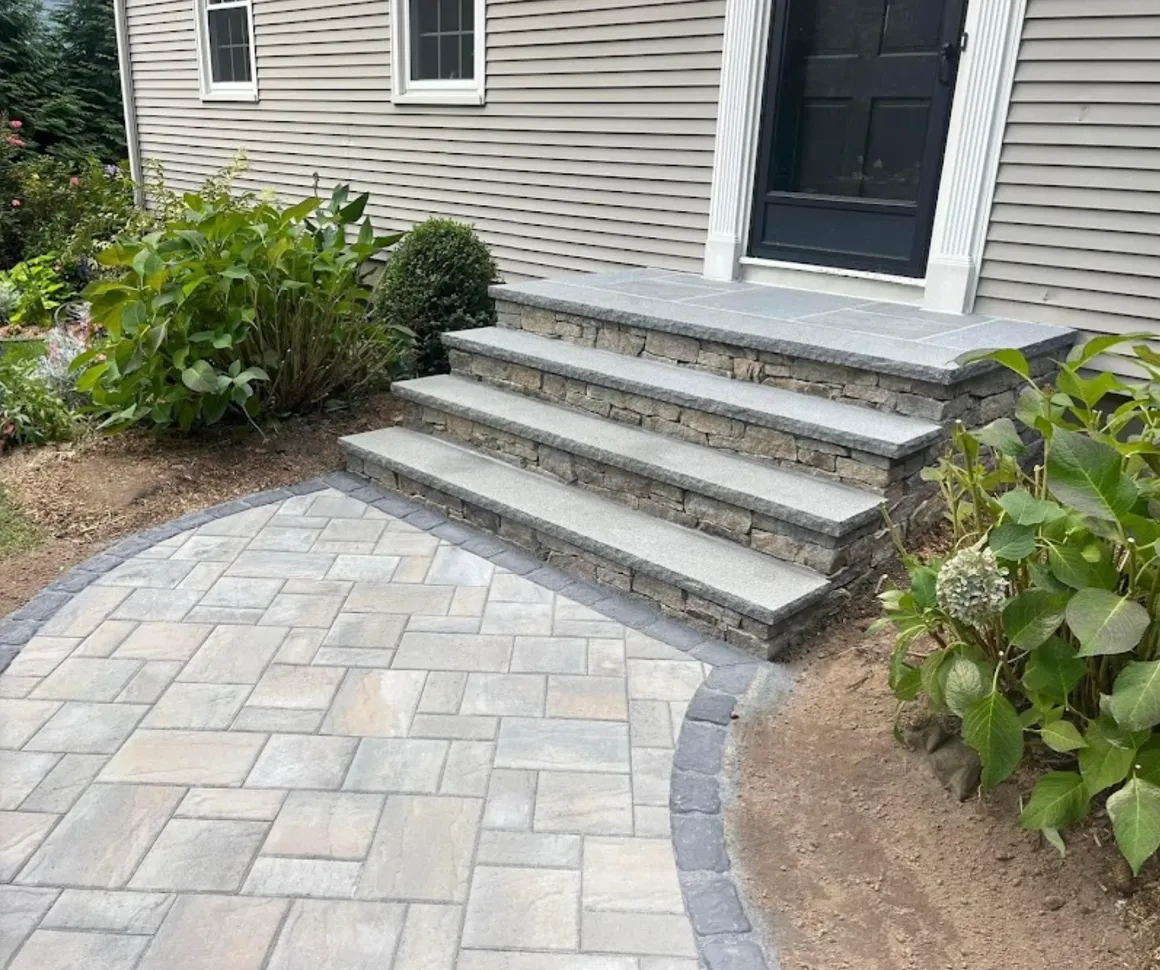
- One loose bluestone tread. We check the masonry under it first. If the base is solid, we lift the tread, clean it up, and reset it.
Resetting one tread on a solid base is a much smaller job than fixing a landing that's settling or breaking apart. That's why we look underneath before we quote anything.
When It's Time to Rebuild a Section

Sometimes the salt damage is a symptom of something bigger. We start talking about rebuilding when:
- The whole stoop has shifted away from the house or out of level
- Several steps are loose, not just one
- The masonry under the landing is crumbling
At that point, patching the surface won't last. Rebuilding that section lets us fix what's underneath, so the new steps aren't fighting the same problem.
What It Costs
On our North Jersey jobs:
- A small repair, like re-mortaring a few joints, usually runs around $450.
- More involved masonry repairs start around $900.
- A full rebuild prices like new steps: about $4,500 to $6,000 for 1 to 3 steps, around $7,000 for 4 to 6 steps, and $10,000 or more for 7 or more steps or a wide entry with a large landing.
These are estimated ranges, not a quote. The number depends on the material, how many steps, the width, and what we find underneath.
How to Go Easier on Your Steps This Winter
You still have to keep your steps safe. A few habits help:
- Shovel first, salt second. Less snow left on the steps means less salt needed.
- Use only what you need. A thin, even layer works better than a pile.
- Sweep up leftover salt once the ice is gone, so it isn't sitting on the steps all season.
- Keep water off the steps. A gutter or downspout that dumps onto the stoop keeps it wet and makes everything worse.
Common Questions About Salt Damage on Front Steps
Why are my concrete steps flaking?
Usually it's deicing salt combined with freeze and thaw. When steps stay wet through repeated freezing and thawing, the top layer of concrete starts to flake. Salt makes it worse by keeping the surface wet longer.
Can salt-damaged steps be repaired?
Often, yes. A few bad mortar joints or one loose bluestone tread on solid masonry may only need a targeted repair. If the whole stoop shifted or the masonry under the landing is crumbling, we look at rebuilding that section.
How much does front step repair cost?
On our North Jersey jobs, a small repair like re-mortaring a few joints runs around $450. More involved masonry repairs start around $900. These are estimated ranges.
What should I do about a loose stone tread on my steps?
Have the masonry underneath checked first. If the base is solid, the tread can usually be reset. If the landing is settling or breaking, that's a bigger repair.
How can I protect my steps from salt damage?
Shovel before you salt, use only as much as you need, sweep up leftover salt once the ice melts, and keep gutters and downspouts from dumping water onto the steps.
Want Us to Look at Your Steps?
We'll come out, check the steps and what's underneath, and tell you straight whether it's a small repair or a bigger job. Free on site estimates across Bergen, Passaic, Essex, and Morris counties. For more on the step work we do, visit our page on steps and stoops repair.
Masonry Pro Construction is family owned, fully licensed, and insured, NJ HIC License #13VH06777200.